|
1c. Molly Malone, Grafton Street, Bewley's Cafe, Nassau Street and the Kilkenny Designer Outlet Store Scenes from DUBLIN CITY and surrounding area
Notes on the
Kilkenny Designer Outlet store
[Author and photographer © Dr Phil Brown PhD plus help from AI these days, page updated June 18th 2026]
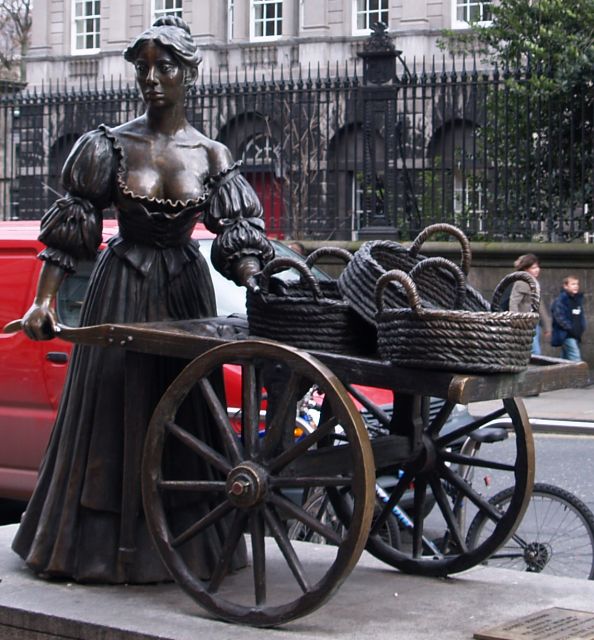
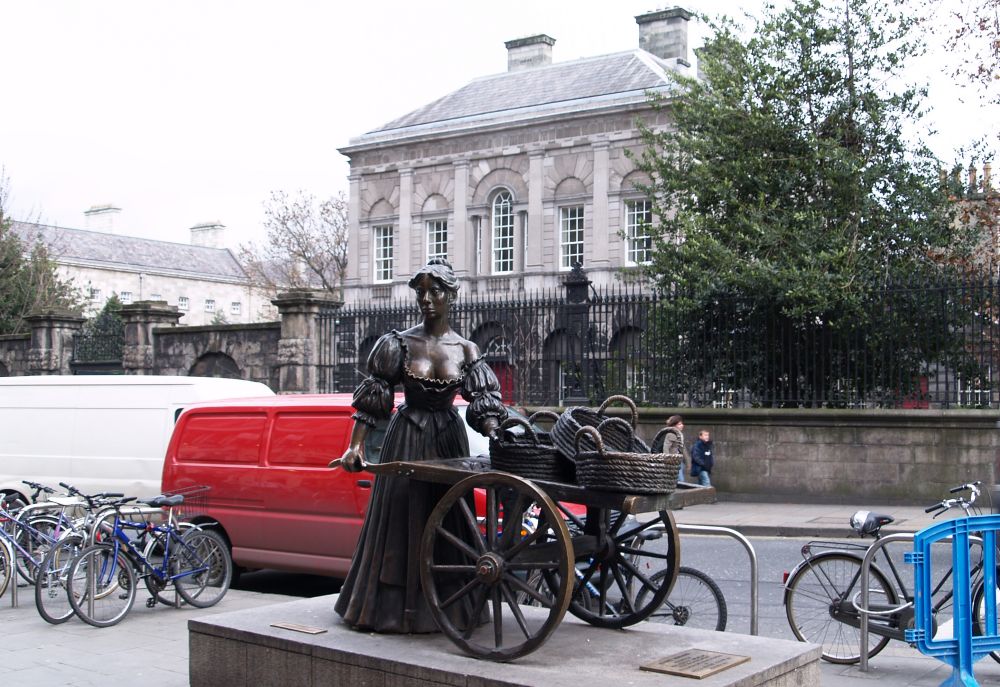
Iconic figure of Molly Malone ! The sculpture of Molly Malone was originally installed on Grafton Street in 1988 but was moved in 2014 to Suffolk Street to allow for the Luas tram tracks, however, it is still one of the most visited and photographed statues in the city.
*
Molly has now been moved to 5a. Three St A's of different age and uses!
A bunch of 'traditional' musicians playing traditional music around the statue of Molly Malone here (but not now) at the bottom of Grafton Street, across from the University Provost's house, Dublin!
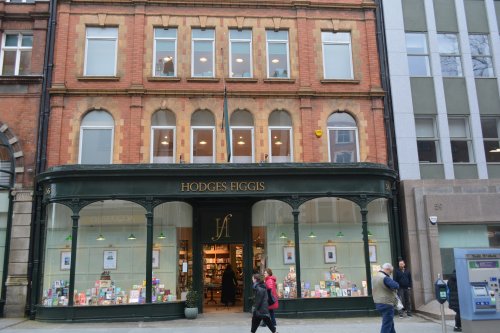
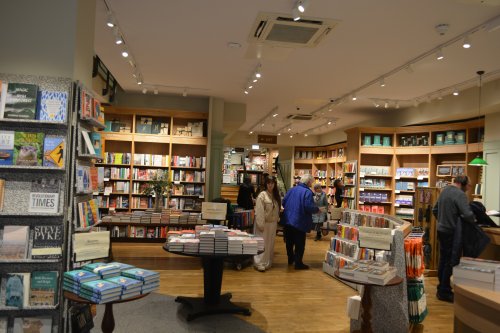
In Grafton Street, the front entrance and interior of the wonderful booksellers Hodges Figgis & Co. Ltd. Bookshop.
Busy sunny Grafton Street, Dublin, the best known shopping street in Dublin, neigh in all Ireland! Pedestrianised Grafton Street runs up from Trinity College to St Stephen's Green is the smartest shopping street in Dublin combined with its street cafes and restaurants, high street brand shops, some quite exclusive!, always packed with tourists, shoppers and live entertainers from music to art to poetry. This stylish area of Dublin is fortunately pedestrianized to accommodate the energetic and talented buskers and street theatre artists.
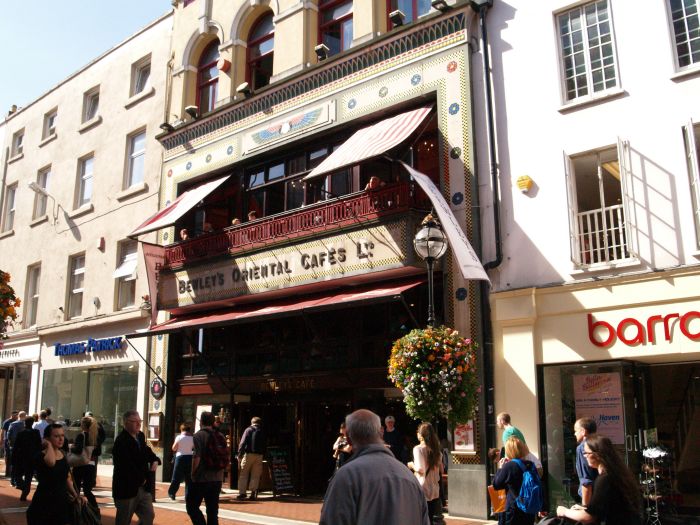
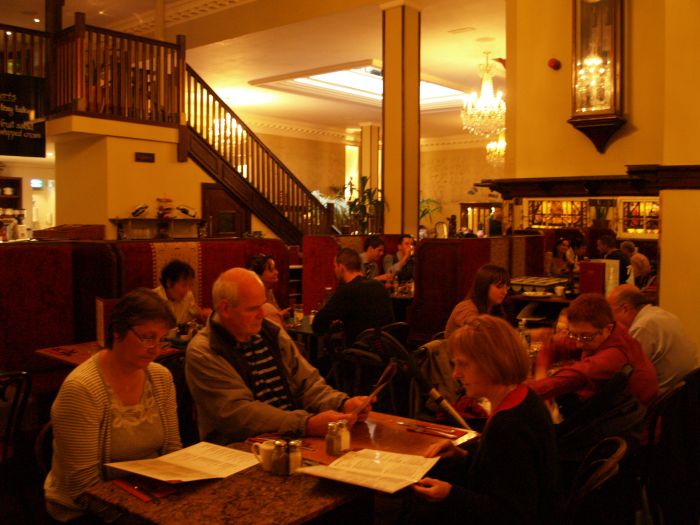
Bewley's Oriental Cafe Ltd. on Grafton Street, Dublin: Bewley’s Cafe in Grafton Street is a place where you’ll find great coffee in Ireland hand roasted in the Café, together with tasty cakes and desserts from the Café bakery, delicious soups with great Irish bread, open sandwiches, salads, pizzas and pastas, and all are freshly made to order and served in magnificent surroundings of mahogany, marble sculptures and the brightly coloured oriental stained glass.
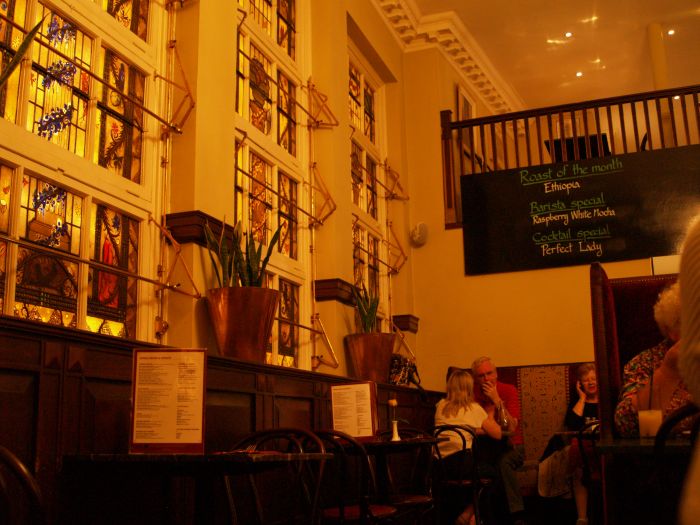
Bewley's Cafe, Grafton Street, Dublin still retains most of its original architecture and decoration.
The balcony of Bewley's Cafe in Grafton Street.
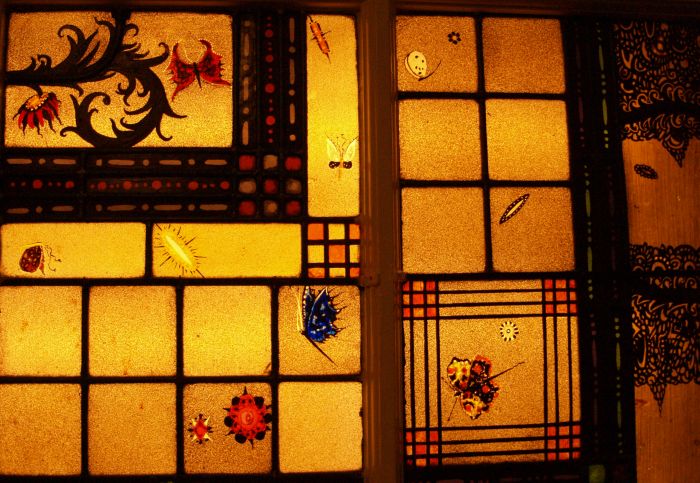
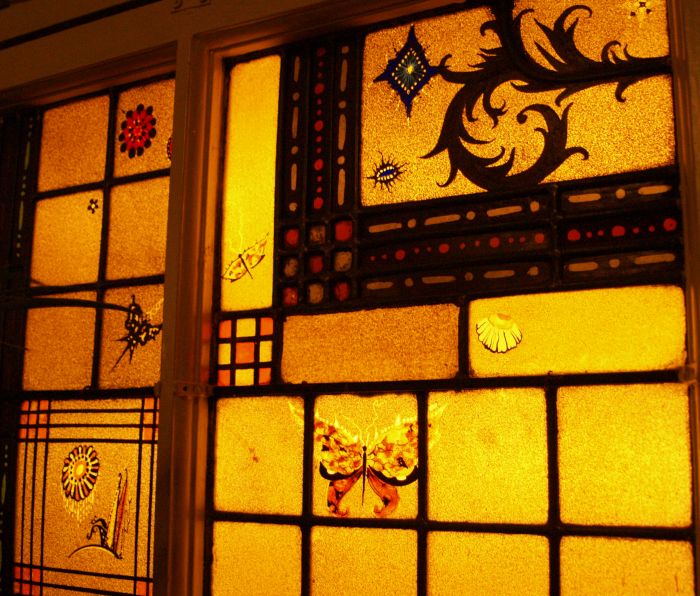
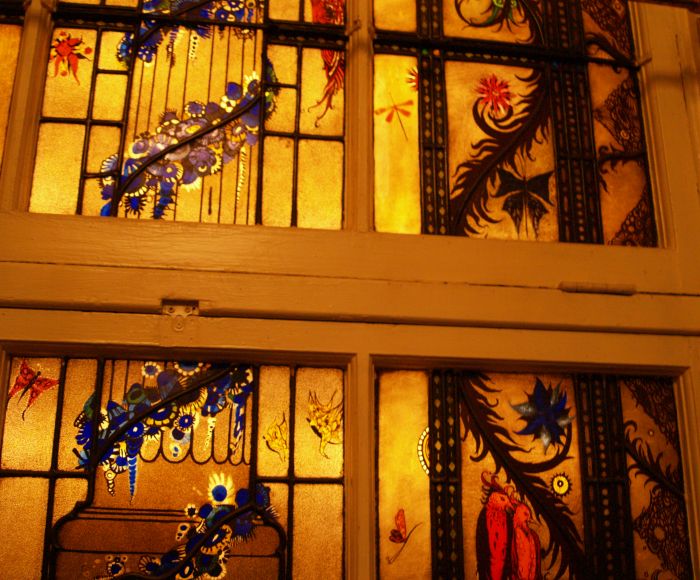
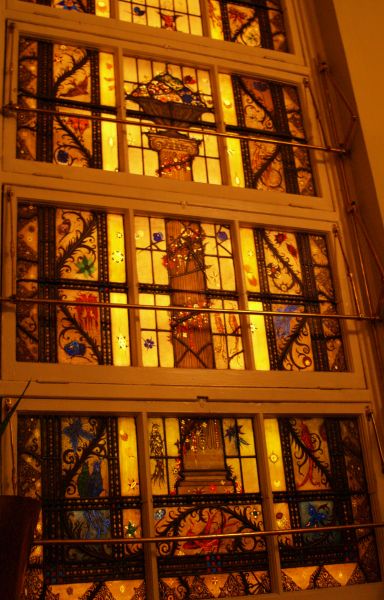
The beautifully and elaborately decorated oriental styled stained glass windows in Bewley's Cafe.
Painted glass windows abound in Bewley's Cafe
plants, birds, butterflies etc. etc.!
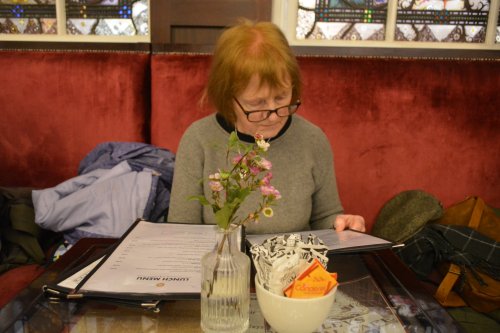
Food is a serious business in Bewley's!
More of the elaborate painted windows of Bewley's in Grafton Street
-
-
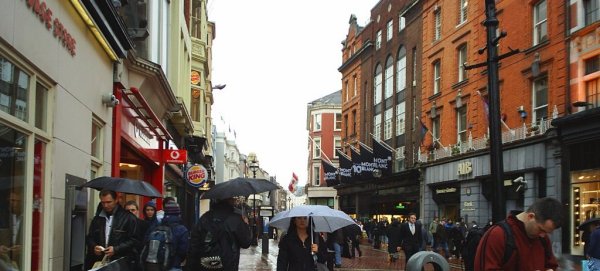
Busy and bustling Grafton Street, Dublin, even in the lovely Irish rain!
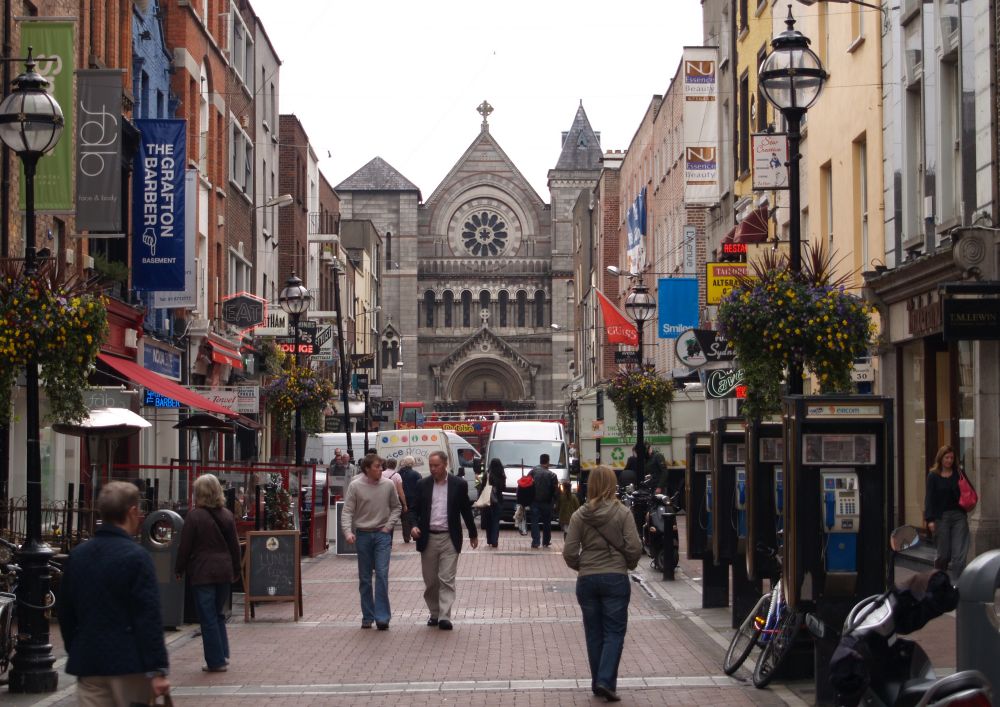
Looking down Anne Street South off Grafton Street, Dublin. The facade of St Anne's Church, Dublin, is seen at the end.
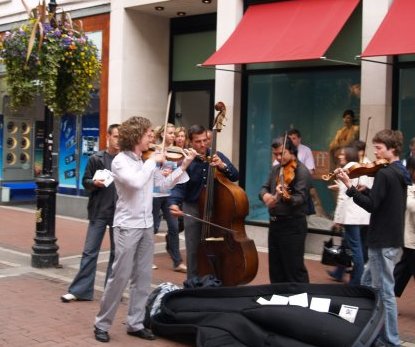
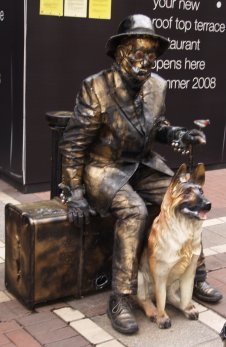
Classical street musicians and a 'street artist' in Grafton Street - now which great literary figure is portrayed here with his dog!
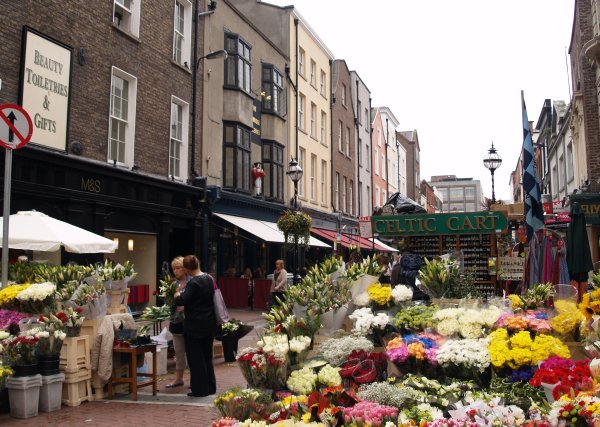
Looking down Duke Street and market stalls off Grafton Street, Dublin.
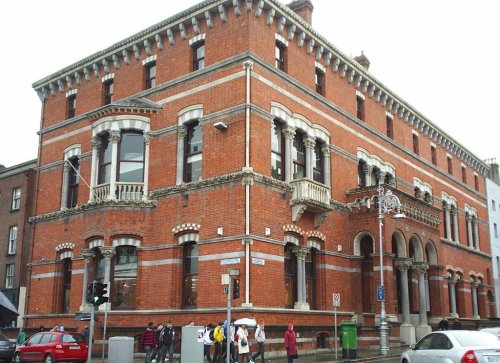
This iconic listed building may be used by Partners and Corporate Members of the Alliance Française for their private activities and events, the address of this building is 1 Kildare Street, Dublin, a very stylish brick and stone building with a touch of Moorish architecture? It is on the corner with Nassau Street.
Notes on Molly Malone The story of Molly Malone blends folklore, song, myth‑making, and modern Dublin identity, and her bronze statue has become one of the city’s most photographed landmarks. What follows is a structured, evidence‑based account of the legend, the song, and the sculpture — grounded in the most authoritative sources available. Who Is Molly Malone?Molly Malone is the heroine of the famous Dublin ballad “Cockles and Mussels” (also known as “In Dublin’s Fair City”). The song tells of a young fishmonger who wheeled her barrow through Dublin’s streets selling shellfish and who died young of a fever. After her death, her ghost continues to cry her street‑call: “Alive, alive‑oh!” Was she a real person?
When was the song written?
Molly Malone in Dublin FolkloreOver time, Molly became a
symbol of Dublin’s working‑class women — resilient, witty,
and tied to the city’s maritime life. The Molly Malone StatueCreation and Unveiling
Appearance
Location
Traditions and Tourism
Why Molly Malone MattersMolly Malone endures because she sits at the crossroads of:
As one historian notes, Molly Malone “outlasted actual Dublin characters in the popular imagination,” showing the power of historical fiction in shaping civic identity. Notes on Bewley's Cafe, Dublin The story of Bewley’s Café,
Grafton Street is one of Dublin’s richest blends of
architecture, art, design, food culture, and social history.
It is not just a café — it is a landmark of Irish artistic
heritage, a meeting place for writers and revolutionaries,
and one of the most distinctive architectural interiors in the
country. Bewley’s Café, Grafton Street — The Full StoryOrigins & Historical DevelopmentBewley’s story begins with the Bewley family, Quaker tea and coffee importers who brought Ireland’s first direct tea shipments from China in 1835. Ernest Bewley opened the Grafton Street café in 1927, creating what he envisioned as a “grand European café” for Dublin. From the start, it became a cultural hub:
Today it remains Ireland’s oldest and largest grand café, operating almost continuously for nearly a century. Architecture — Egyptian Revival Meets Art DecoBewley’s is one of the most architecturally distinctive buildings in Dublin. Egyptian Revival Façade (1927)The façade was designed during the
wave of Egyptomania that swept Europe after the discovery of
Tutankhamun’s tomb in 1922.
Interior LayoutThe building incorporates two original Georgian townhouses, still visible in the twin fireplaces inside. Inside, the design blends:
The result is a uniquely atmospheric “grand café” environment. Art & Design — A Living GalleryBewley’s is one of the most important public displays of Irish art outside a museum. 1. Harry Clarke Stained Glass WindowsThe café’s greatest treasures are the six stained glass windows by Harry Clarke, completed shortly before his death in 1931. Clarke’s windows are:
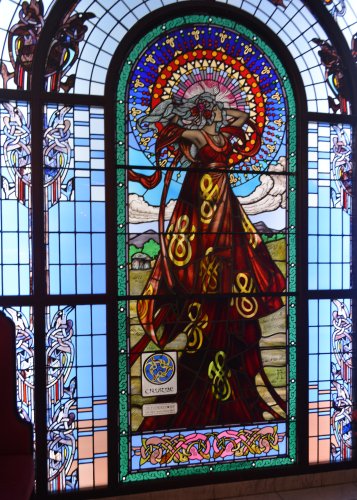
They are considered among the finest examples of commercial stained glass in Ireland. 2. Jim Fitzpatrick — “Cruitne”Fitzpatrick, famous for the iconic
Che Guevara poster, created “Cruitne”, a large
stained glass work inspired by Irish myth. 3. Pauline Bewick — “Café Society”Bewick’s stained glass panels depict Dublin characters — “the Punk and the Princess” — reflecting the city’s evolving social life. 4. Other Artistic Elements
Bewley’s is effectively a public art museum woven into a café. Food Culture — What Bewley’s Is Known ForBewley’s has always combined continental café culture with Irish baking traditions. Signature Offerings
AtmosphereThe café is known for its:
Designers & Architects — Who Shaped Bewley’s?Ernest BewleyFounder and visionary behind the 1927 café. Harry ClarkeIreland’s greatest stained glass artist; his windows define the interior. Jim FitzpatrickModern stained glass artist; creator of “Cruitne”. Pauline BewickOne of Ireland’s most celebrated contemporary artists. Architectural Influences
The result is a unique fusion found nowhere else in Ireland. Why Bewley’s MattersBewley’s is:
It remains one of the most atmospheric places in Dublin to sit with a coffee and feel the layers of the city’s history around you. Notes on Grafton Street, Dublin Grafton Street isn’t just a shopping street — it’s one of Dublin’s great urban stages, a place where architecture, commerce, music, and characters have mingled for over 300 years. What follows is a deep, structured, richly detailed history, tailored to your interest in heritage, architecture, and cultural storytelling. The History of Grafton Street, Dublin1. Origins: From Medieval Lane to Georgian Boulevard
2. Architectural CharacterGrafton Street’s architecture is a layered palimpsest of Georgian, Victorian, and early 20th‑century commercial design. Georgian Remnants
Victorian & Edwardian Commercial BuildingsThese give Grafton Street its distinctive character:
Bewley’s Café (1927) — A Landmark
3. Famous Shops & InstitutionsGrafton Street has always been a place of luxury, fashion, and spectacle. Brown ThomasDublin’s premier department store, evolving from Switzer’s. Weir & SonsA Dublin institution for watches and jewellery since 1869. Bewley’s CaféA cultural landmark, beloved by writers, artists, and students. Other notable names through the decades
4. Characters of Grafton StreetGrafton Street has always been full of performers, eccentrics, and Dublin characters. The BuskersGrafton Street is Ireland’s most famous busking location — a launchpad for major artists:
The street’s acoustics — narrow, enclosed, lively — make it a natural performance space. Street Characters & Traditions
5. Important Buildings & Architectural HighlightsHere are the most architecturally significant sites, each linked for deeper exploration:
6. Grafton Street as a Cultural StageGrafton Street is more than architecture — it’s a living theatre. Literary Connections
Social History
7. Artistic IdentityGrafton Street has inspired:
Its colour, movement, and characters make it one of Dublin’s most visually expressive streets. Notes on Nassau Street, Dublin Nassau Street is one of Dublin’s most
historically layered, architecturally
varied, and culturally significant streets
— a place where medieval holy wells, Georgian expansion, Victorian
commerce, and modern redevelopment all overlap. What Nassau Street IsNassau Street runs along the south side of Trinity College Dublin, linking Grafton Street to Kildare Street. It is a short but dense corridor of shops, institutions, and historic sites, forming a boundary between Dublin’s commercial core and its political–academic quarter. 1. Early History — St Patrick’s Well LaneBefore it was Nassau Street, this was
St Patrick’s Well Lane, named after a
12th‑century holy well inside what is now Trinity College.
The well still exists and can be visited by arrangement with the Provost’s Office of Trinity College. 2. Renaming in the 18th Century — The House of Orange‑NassauThe street was renamed Nassau
Street between 1749 and 1756, honouring
the House of Orange‑Nassau, the dynasty of
King William III. One house even erected a bust of William with the couplet:
3. Architecture — A Street of Lost and Surviving LayersNassau Street’s architecture is a patchwork of Georgian, Victorian, and modern commercial buildings, with many historic structures lost to 20th‑century redevelopment. Georgian & Victorian Era Many early buildings were demolished, but historically the street included:
Trinity College FrontageThe entire north side is defined by:
This gives the street a strong institutional and academic character.20th‑Century Redevelopment From the 1960s onward, large sections of Nassau Street were demolished:
Nassau House itself was approved for demolition in 2016, with a new mixed‑use development due by 2022. 4. Important Buildings & Sites TodayTrinity College Dublin (north side)
Setanta CentreA major 1970s commercial complex occupying a large frontage. Retail LandmarksNassau Street is known for tourist‑oriented shops, including:
These visits gave the street unusual international visibility. 5. Notable People Associated with Nassau StreetSt PatrickThrough the legend of the well, the
street is tied to Ireland’s patron saint. Jonathan SwiftWrote Verses on the Drying Up of
St Patrick’s Well (1729). James Joyce & Nora BarnacleNassau Street is famous as the place
where James Joyce first met Nora Barnacle on
10 June 1904 — the day immortalised as
Bloomsday. Bill ClintonVisited shops on Nassau Street twice
(2000 and 2017), generating international media attention. 6. Nassau Street in Literature & CultureJames Joyce — DublinersNassau Street appears in the story
“Two Gallants”, where characters walk past
Trinity’s railings. PhotographyHistoric photographs (1890–1910) show
Nassau Street as a lively corridor of pedestrians, trams, and
Victorian shopfronts. 7. Why Nassau Street MattersNassau Street is a microcosm of Dublin’s evolution:
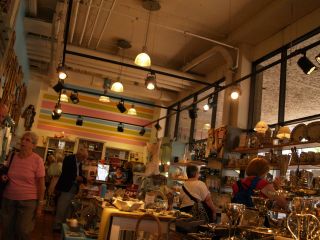
It remains one of the city’s most historically resonant short streets — a place where Dublin’s religious, political, academic, and commercial histories intersect. Notes on the Kilkenny Designer Store, Dublin The Kilkenny Design Store on
Nassau Street, Dublin is far more than a retail shop — it
is the public face of Ireland’s national design revolution,
born from a groundbreaking state‑led experiment in the 1960s that
transformed Irish craft, design, and entrepreneurship. What Kilkenny Design IsThe Nassau Street store is Ireland’s largest emporium of Irish‑designed products, showcasing jewellery, fashion, homeware, ceramics, glass, textiles, and contemporary craft from the country’s leading makers. It is the flagship of a national brand that grew out of the Kilkenny Design Workshops (KDW) — one of the most influential design initiatives in Irish history. 1. Origins — The Kilkenny Design Workshops (1963)The story begins in 1963,
when the Irish Government founded the Kilkenny Design
Workshops in Kilkenny City.
The Workshops were inspired by
Scandinavian design centres, emphasising clean
lines, functional beauty, and export‑ready craftsmanship. The initiative was so successful that visitors wanted to buy the products directly, prompting the creation of retail outlets. 2. The First Shops — Kilkenny to Dublin
This Dublin shop became the national showcase for Irish craft, design, and innovation — the place where the public could see the best of the Workshops’ output. 3. The Nassau Street Store — Architecture & AtmosphereWhile not a single architectural monument like Bewley’s, the Nassau Street store is significant for its scale, layout, and role as a design gallery. Key architectural and design features
The building’s importance lies not in stylistic flamboyance but in its function as Ireland’s first purpose‑built national design store. 4. Irish Art, Craft & Design — What Kilkenny ShowcasesKilkenny Design has always championed Irish makers, from traditional craftspeople to contemporary designers. Craft Disciplines Represented
Designers & MakersKilkenny has supported and stocked work by many of Ireland’s most celebrated designers:
These makers helped define modern Irish design identity. 5. Evolution into a National Brand1998–1999: Re‑launch and New Ownership
Under their leadership, the Nassau Street store flourished and new outlets opened nationwide. 2021–Present: New Leadership & Expansion
6. Contemporary Irish Design — The New WaveKilkenny continues to evolve with Ireland’s design landscape. New Irish brands featured
The Heritage Collection (2023)Kilkenny launched its first
own‑brand label, drawing on archival stitches, colours, and
patterns from the original Workshops. This marks a return to the spirit of the 1960s Workshops — designing and producing original Irish craft. 7. Why the Kilkenny Store MattersKilkenny Design is important because it:
It is one of the few retail spaces in Ireland where craft, design, heritage, and commerce meet seamlessly.
Dublin
Scenes and Notes Index
Dublin Irish Capital docspics Ireland images pictures photos © Phil Brown * Holidays in Ireland, Holidays in Dublin, Luxury Hotels, Dublin City Centre Accommodation, Cheap Flights to Dublin, Dublin art galleries, Dublin museums, top tourist attractions in Dublin, tourism information for Dublin, guided bus tours of Dublin, guided walks of Dublin, pubs, bars, cafes and restaurants in Dublin, classical music venues in Dublin, traditional music concerts in Dublin docspics images photos of Grafton Street shops stores cafes Bewley's Cafe Nassau Street, Dublin in Ireland © Dr Phil Brown Tourist information on Grafton Street shops stores cafes Bewley's Cafe Nassau Street, Dublin, top tourist attractions near Grafton Street shops stores cafes Bewley's Cafe Nassau Street, Dublin Things to do near Grafton Street shops stores cafes Bewley's Cafe Nassau Street, Dublin, What to see near Grafton Street shops stores cafes Bewley's Cafe Nassau Street, Dublin, Walks near Grafton Street shops stores cafes Bewley's Cafe Nassau Street, Dublin, weekend breaks near Grafton Street shops stores cafes Bewley's Cafe Nassau Street, Dublin family holidays near Grafton Street shops stores cafes Bewley's Cafe Nassau Street, Dublin, Top tourist attractions near Grafton Street shops stores cafes Bewley's Cafe Nassau Street, Dublin, luxury hotels near Grafton Street shops stores cafes Bewley's Cafe Nassau Street, Dublin, self-catering holiday cottages flats near Grafton Street shops stores cafes Bewley's Cafe Nassau Street, Dublin, B&B near Grafton Street shops stores cafes Bewley's Cafe Nassau Street, Dublin, friendly pubs near Grafton Street shops stores cafes Bewley's Cafe Nassau Street, Dublin, cafes near Grafton Street shops stores cafes Bewley's Cafe Nassau Street, Dublin, eating out in fine restaurants near Grafton Street shops stores cafes Bewley's Cafe Nassau Street, Dublin, bargain holiday breaks near Grafton Street shops stores cafes Bewley's Cafe Nassau Street, Dublin, wining & dining weekends near Grafton Street shops stores cafes Bewley's Cafe Nassau Street, Dublin, touring coach tours including Grafton Street shops stores cafes Bewley's Cafe Nassau Street, Dublin, pretty villages near Grafton Street shops stores cafes Bewley's Cafe Nassau Street, Dublin, historic towns near Grafton Street shops stores cafes Bewley's Cafe Nassau Street, Dublin, visiting museums near Grafton Street shops stores cafes Bewley's Cafe Nassau Street, Dublin, local art galleries near Grafton Street shops stores cafes Bewley's Cafe Nassau Street, Dublin, guided walks from Grafton Street shops stores cafes Bewley's Cafe Nassau Street, Dublin, history of Grafton Street shops stores cafes Bewley's Cafe Nassau Street, Dublin, architecture of Grafton Street shops stores cafes Bewley's Cafe Nassau Street, Dublin trains to Grafton Street shops stores cafes Bewley's Cafe Nassau Street, Dublin buses to Grafton Street shops stores cafes Bewley's Cafe Nassau Street, Dublin coach tours to Grafton Street shops stores cafes Bewley's Cafe Nassau Street, Dublin historic houses near Grafton Street shops stores cafes Bewley's Cafe Nassau Street, Dublin historic churches near Grafton Street shops stores cafes Bewley's Cafe Nassau Street, Dublin historic buildings near Grafton Street shops stores cafes Bewley's Cafe Nassau Street, Dublin good places to eat near Grafton Street shops stores cafes Bewley's Cafe Nassau Street, Dublin tourist attractions near Grafton Street shops stores cafes Bewley's Cafe Nassau Street, Dublin tourist information for Grafton Street shops stores cafes Bewley's Cafe Nassau Street, Dublin docspics images photos of Grafton Street shops stores cafes Bewley's Cafe Nassau Street, Dublin in Ireland © Dr Phil Brown Tourist information on Grafton Street shops stores cafes Bewley's Cafe Nassau Street, Dublin, top tourist attractions in Grafton Street shops stores cafes Bewley's Cafe Nassau Street, Dublin Things to do in Grafton Street shops stores cafes Bewley's Cafe Nassau Street, Dublin, What to see in Grafton Street shops stores cafes Bewley's Cafe Nassau Street, Dublin, Walks in Grafton Street shops stores cafes Bewley's Cafe Nassau Street, Dublin, weekend breaks in Grafton Street shops stores cafes Bewley's Cafe Nassau Street, Dublin family holidays in Grafton Street shops stores cafes Bewley's Cafe Nassau Street, Dublin, Top tourist attractions in Grafton Street shops stores cafes Bewley's Cafe Nassau Street, Dublin, luxury hotels in Grafton Street shops stores cafes Bewley's Cafe Nassau Street, Dublin, self-catering holiday flats cottages in Grafton Street shops stores cafes Bewley's Cafe Nassau Street, Dublin, B&B in Grafton Street shops stores cafes Bewley's Cafe Nassau Street, Dublin, friendly pubs in Grafton Street shops stores cafes Bewley's Cafe Nassau Street, Dublin, cafes in Grafton Street shops stores cafes Bewley's Cafe Nassau Street, Dublin, eating out in fine restaurants in Grafton Street shops stores cafes Bewley's Cafe Nassau Street, Dublin, bargain holiday breaks in Grafton Street shops stores cafes Bewley's Cafe Nassau Street, Dublin, wining & dining weekends in Grafton Street shops stores cafes Bewley's Cafe Nassau Street, Dublin, touring coach tours including Grafton Street shops stores cafes Bewley's Cafe Nassau Street, Dublin, pretty villages in Grafton Street shops stores cafes Bewley's Cafe Nassau Street, Dublin, historic towns in Grafton Street shops stores cafes Bewley's Cafe Nassau Street, Dublin, visiting museums in Grafton Street shops stores cafes Bewley's Cafe Nassau Street, Dublin, local art galleries in Grafton Street shops stores cafes Bewley's Cafe Nassau Street, Dublin, guided walks in Grafton Street shops stores cafes Bewley's Cafe Nassau Street, Dublin, history of Grafton Street shops stores cafes Bewley's Cafe Nassau Street, Dublin, architecture of Grafton Street shops stores cafes Bewley's Cafe Nassau Street, Dublin trains to Grafton Street shops stores cafes Bewley's Cafe Nassau Street, Dublin buses to Grafton Street shops stores cafes Bewley's Cafe Nassau Street, Dublin coach tours to Grafton Street shops stores cafes Bewley's Cafe Nassau Street, Dublin historic houses in Grafton Street shops stores cafes Bewley's Cafe Nassau Street, Dublin historic churches in Grafton Street shops stores cafes Bewley's Cafe Nassau Street, Dublin historic buildings good places to eat in Grafton Street shops stores cafes Bewley's Cafe Nassau Street, Dublin tourist attractions in Grafton Street shops stores cafes Bewley's Cafe Nassau Street, Dublin tourist information for things to do and see in Grafton Street shops stores cafes Bewley's Cafe Nassau Street, Dublin |
||||||||||||



























 Enter place, museum, street, building, gallery, feature, anything of
interest in Dublin or the rest of Ireland!
Enter place, museum, street, building, gallery, feature, anything of
interest in Dublin or the rest of Ireland!