Advanced Organic Chemistry: Carbon-13 NMR spectrum of methanol CH3OH

HOME PAGE * SEARCH * GCSE Level Chemistry age ~14-16 * Advanced Level Chemistry age ~16-19

Interpreting & explaining the 13C NMR spectrum of methanol CH3OH

[Author © Dr Phil Brown GRIC, PhD: Doc Brown's advanced level organic chemistry exam revision notes suitable for students of UK A level chemistry courses & US K12 grade 11, grade 12 and AP honors chemistry courses: Molecular spectroscopy analysis of methanol [spectra page updated RE-EDIT]

 email doc brown  Re-edit 13C NMR spectrum of methanol CH3OH

 This is a BIG chemistry website, PLEASE take time to explore it

 Links associated with methanol  *  [privacy policy, cookies and disclaimer]

 C-13 NMR spectroscopy - spectra index

Practise exam questions on the 13C NMR spectrum of methanol with answers!


Introductory note on the 13C NMR spectrum of methanol

Students and teachers please note that my explanation of the carbon-13 NMR spectrum of methanol is designed for advanced, but pre-university, chemistry courses.

The description does not involve the chemical shift δ spin-spin coupling effects for methanol and the relative size of the carbon-13 NMR shifts does not give the ratio of the carbon atoms in the different non-equivalent chemical environments of the methanol molecule.

The most common solvent used for investigating the C13 NMR spectrum of compounds like methanol, is CDCl3 and other deuterated solvents.

CH3OH C-13 nmr spectrum of methanol analysis of chemical shifts ppm interpretation of 13C chemical shifts ppm of methanol C13 13-C nmr methyl alcohol spin-spin coupling for line splitting doc brown's advanced organic chemistry revision notes 

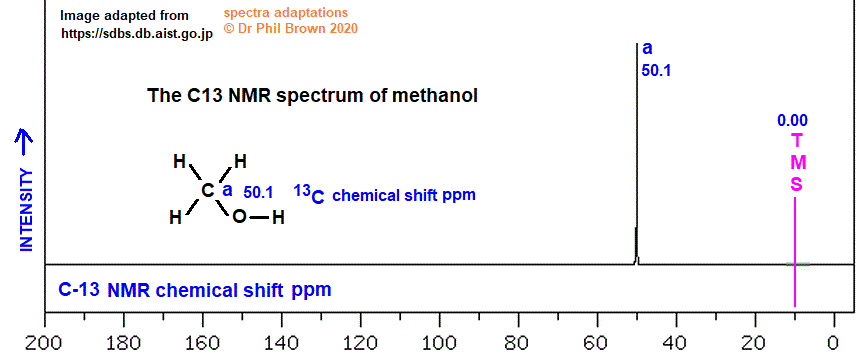
TMS is the acronym for tetramethylsilane, formula Si(CH3)4, whose 13C atoms are arbitrarily given a chemical shift of 0.0 ppm. This is the 'standard' in 13C NMR spectroscopy and all other 13C resonances, called chemical shifts, are measured with respect to the TMS, and depend on the individual (electronic) chemical environment of the 13C atoms in an organic molecule - methanol here.

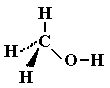
Methanol  CH4O alcohols and ether structure and naming (c) doc b alcohols and ether structure and naming (c) doc b alcohols and ether structure and naming (c) doc b alcohols and ether structure and naming (c) doc b

The molecular structure and naming of aliphatic alcohols and ethers

Interpreting the C-13 NMR spectrum of methanol

As you can see from the diagram above there is only one chemical shift line in the C-13 NMR spectrum of methanol indicating one 13C chemical environment of the carbon atom.

CH3OH

Note the effect on the 13C chemical shift of the oxygen atom in the methanol molecule - electronegative atoms tend to increase the chemical shift compared to less electronegative carbon atoms.

The carbon-13 NMR spectra a provides direct evidence of only one chemical environment of the carbon atom in methanol - hardly unexpected!


QUESTIONS

Advanced A-level chemistry - practise exam questions on the 13C NMR spectrum of methanol

alcohols and ether structure and naming (c) doc bA joint AI-doc b re-edit experiment!

Jot down your responses and check out the answers:  ANSWERS

If you think there are any errors, please email me asap at chem55555@hotmail.com

I don't mind if students/teachers do a selected printout of these questions and answers.


Q1. How many ¹³C NMR signals does methanol show?

A. 2     B. 3     C. 1     D. 4


Q2. Where does the carbon signal of methanol typically appear?

A. 0–20 ppm B. 50–60 ppm C. 100–150 ppm D. 160–220 ppm


Q3. Why is methanol's carbon signal downfield compared with hydrocarbons?

A. The carbon is sp² hybridised

B. The carbon is attached to oxygen

C. The carbon is part of a benzene ring

D. The carbon is double‑bonded


Q4. What splitting pattern is normally observed for methanol's ¹³C signal?

A. Singlet B. Doublet C. Triplet D. Quartet


Q5. Why is methanol's ¹³C signal typically stronger than expected for a single carbon?

A. Carbon‑13 is very abundant

B. Proton decoupling enhances signal intensity

C. Methanol contains multiple carbon environments

D. The OH proton couples strongly


Q6. What happens to methanol's ¹³C NMR spectrum when D2O is added?

A. The carbon signal disappears

B. The carbon signal shifts dramatically

C. The carbon signal remains essentially unchanged

D. The carbon signal splits into a doublet

Correct answer: C


Q7. Which statement correctly describes methanol's carbon environment?

A. It is sp² hybridised

B. It is sp hybridised

C. It is sp³ hybridised

D. It is aromatic


Q8. Which molecule would show a similar ¹³C chemical shift to methanol?

A. Ethane     B. Ethanol    C. Benzene     D. Propene


Q9. Why does methanol show only one peak even though it contains three CH3 hydrogens?

A. ¹³C NMR only detects carbon atoms

B. The hydrogens are invisible

C. The hydrogens cancel each other out D.

The OH group masks the CH3 signal


Q10. A student claims methanol's ¹³C peak should split because the carbon is attached to three hydrogens. Why is this incorrect?

A. Hydrogens do not couple with carbon

B. Proton decoupling removes splitting in standard ¹³C spectra

C. Methanol contains no hydrogens D. The carbon is sp² hybridised


Jot down your responses and check out the answers:  ANSWERS

If you think there are any errors, please email me asap at chem55555@hotmail.com

I don't mind if students/teachers do a selected printout of these questions and answers.


Key words & phrases: CH3OH Interpreting the C-13 NMR spectra of methanol, C-13 nmr spectrum of methanol, understanding the carbon-13 nmr spectrum of methanol, explaining the line pattern in the high resolution C-13 nmr spectra of methanol, revising the C-13 nmr spectrum of methanol, ppm chemical shifts of the C-13 nmr spectrum of methanol, how to construct the diagram of the C-13 nmr spectrum of methanol, how to analyse the chemical shifts in the carbon-13 NMR spectrum of methanol deducing the chemical environment of all the carbon atoms in methanol examining the c13 nmr spectrum of  methanol analysing the 13-c nmr spectrum of methanol how do you sketch and interpret the C-13 NMR spectrum of methanol interpreting interpretation of the C-13 NMR spectrum of methanol 13C NMR spectrum of methanol methyl alcohol assignment of C13 chemical shifts in methanol Explanatory diagram of the 13C C-13 carbon-13 NMR spectrum of the methanol molecule in terms of its molecular structure. Listing data of all the chemical shift peaks in ppm in the carbon-13 NMR spectrum of methanol. How to explain the C-13 NMR spectrum of methanol. How to deduce the number of different carbon atom environments in the methanol molecule from its carbon-13 NMR spectrum to help work out the molecular structure of the methanol molecule. The uses and distinctive features of the carbon-13 NMR spectrum of the methanol molecule explained. What does the c-13 carbon-13 NMR spectrum tell us about the methanol molecule? How do you interpret the chemical shifts of the C-13 NMR spectrum of methanol How to interpret the C-13 NMR spectrum of methanol Explanatory diagram of the 13C C-13 carbon-13 NMR spectrum of the  number of different carbon atom environments in the methanol molecule from its carbon-13 NMR spectrum to help work out the molecular structure of the methanol molecule? The uses and distinctive features of the carbon-13 NMR spectrum of the methanol molecule explained. What do the number and values of the chemical shifts from the c-13 carbon-13 NMR spectrum tell us about the methanol molecule? explaining the decoupled carbon-13 NMR spectrum of methanol  with a detailed interpretation diagram of all the C-13 chemical shifts and intensities


Links associated with methanol

The mass spectrum of methanol

The H-1 NMR spectrum of methanol

The infrared spectrum of methanol

The chemistry of ALCOHOLS revision notes INDEX

C-13 NMR spectroscopy index

ALL SPECTROSCOPY INDEXES

All Advanced Organic Chemistry Notes

Use My Google search site box

Email doc b: chem55555@hotmail.com

Index of advanced (pre-university) organic chemistry revision notes

 The chemistry of alkanes and the petrochemical industry

 The chemistry of alkenes

 The chemistry of organic halogen compounds

 The chemistry of alcohols

 The chemistry of aldehydes and ketones

 The chemistry of carboxylic acids and derivatives

 The chemistry of organo-nitrogen compounds

 The chemistry of aromatic compounds


Website content © Dr Phil Brown 2000+. All copyrights reserved on revision notes, images, quizzes, worksheets etc. Copying of Doc Brown's pre-university advanced level chemistry website material is NOT permitted. Exam revision summaries & references to science course specifications are unofficial. These organic chemistry revision notes on spectroscopy (13C NMR spectrum of methanol, explanations of the detailed analysis and how to interpret the spectra notes) are suitable for use of pre-university students studying AQA advanced level chemistry, Edexcel advanced level chemistry, OCR advanced level chemistry, IB advanced level chemistry, WJEC (Eduqas) advanced level chemistry, CIE advanced level chemistry, CCEA advanced level chemistry, US grade 11-12 AP honors chemistry courses and they will also prove useful to 1st year undergraduate students of chemistry.
ANSWERS

Advanced A-level chemistry - practise exam questions on the 13C NMR spectrum of methanol

alcohols and ether structure and naming (c) doc b

If you think there are any errors, please email me asap at chem55555@hotmail.com

I don't mind if students/teachers do a selected printout of these questions and answers.


Q1. How many ¹³C NMR signals does methanol show?

A. 2     B. 3     C. 1     D. 4

Correct answer: C

Explanation: Methanol contains only one carbon atom, so it produces one ¹³C NMR signal.

Common misconception: Students sometimes think each “environment” gives a signal — but ¹³C NMR counts carbon atoms, not hydrogen environments.


Q2. Where does the carbon signal of methanol typically appear?

A. 0–20 ppm B. 50–60 ppm C. 100–150 ppm D. 160–220 ppm

Correct answer: B

Explanation: A carbon attached to oxygen is strongly deshielded, giving a shift around 50–60 ppm.

Common misconception: Students often place CH₃ carbons at ~10 ppm, forgetting that electronegative atoms shift signals downfield.


Q3. Why is methanol's carbon signal downfield compared with hydrocarbons?

A. The carbon is sp² hybridised

B. The carbon is attached to oxygen

C. The carbon is part of a benzene ring

D. The carbon is double‑bonded

Correct answer: B

Explanation: Oxygen is highly electronegative and withdraws electron density, deshielding the carbon and shifting its signal downfield.

Common misconception: Students sometimes think downfield shifts always mean double bonds — but electronegativity also causes deshielding.


Q4. What splitting pattern is normally observed for methanol's ¹³C signal?

A. Singlet B. Doublet C. Triplet D. Quartet

Correct answer: A

Explanation: Routine ¹³C NMR uses proton decoupling, so carbon signals appear as singlets.

Common misconception: Students often expect n+1 splitting like in ¹H NMR — but ¹³C spectra are usually decoupled.


Q5. Why is methanol's ¹³C signal typically stronger than expected for a single carbon?

A. Carbon‑13 is very abundant

B. Proton decoupling enhances signal intensity

C. Methanol contains multiple carbon environments

D. The OH proton couples strongly

Correct answer: B

Explanation: Broadband proton decoupling increases signal intensity (NOTE enhancement), making even single‑carbon molecules show strong peaks.

Common misconception: Students sometimes think intensity reflects number of carbons — but ¹³C peak height is not proportional to carbon count.


Q6. What happens to methanol's ¹³C NMR spectrum when D2O is added?

A. The carbon signal disappears

B. The carbon signal shifts dramatically

C. The carbon signal remains essentially unchanged

D. The carbon signal splits into a doublet

Correct answer: C

Explanation: Replacing OH protons with OD via D2O does not significantly change the carbon environments. 13C NMR detects the chemical environments of 13C carbon atoms, not 1H protons, so the 13C NMR spectrum of methanol is unchanged.

Common misconception: Students often assume D₂O affects ¹³C spectra like it does ¹H spectra — but ¹³C signals are unaffected.


Q7. Which statement correctly describes methanol's carbon environment?

A. It is sp² hybridised

B. It is sp hybridised

C. It is sp³ hybridised

D. It is aromatic

Correct answer: C

Explanation: Methanol's carbon is sp³ hybridised, bonded to three hydrogens and one oxygen.

Common misconception: Students sometimes think attachment to oxygen implies sp² — but hybridisation depends on bonding, not electronegativity.


Q8. Which molecule would show a similar ¹³C chemical shift to methanol?

A. Ethane     B. Ethanol    C. Benzene     D. Propene

Correct answer: B

Explanation: Ethanol's carbon attached to oxygen also appears around 50–60 ppm, similar to methanol.

Common misconception: Students often think ethanol's CH3 carbon appears at ~10 ppm — but the CH2–O carbon is the one near 60 ppm.


Q9. Why does methanol show only one peak even though it contains three CH3 hydrogens?

A. ¹³C NMR only detects carbon atoms

B. The hydrogens are invisible

C. The hydrogens cancel each other out D.

The OH group masks the CH3 signal

Correct answer: A

Explanation: ¹³C NMR detects carbon nuclei, not hydrogen environments. Methanol has one carbon, so one peak.

Common misconception: Students sometimes confuse ¹H and ¹³C NMR rules — ¹³C counts carbons, not protons.


Q10. A student claims methanol's ¹³C peak should split because the carbon is attached to three hydrogens. Why is this incorrect?

A. Hydrogens do not couple with carbon

B. Proton decoupling removes splitting in standard ¹³C spectra

C. Methanol contains no hydrogens D. The carbon is sp² hybridised

Correct answer: B

Explanation: In typical ¹³C NMR, proton decoupling removes C–H coupling, so signals appear as singlets.

Common misconception: Students often apply the n+1 rule from ¹H NMR, forgetting that ¹³C spectra are usually decoupled.


If you think there are any errors, please email me asap at chem55555@hotmail.com

I don't mind if students/teachers do a selected printout of these questions and answers.

TOP OF PAGE and indexes