HOME PAGE * SEARCH * KS3 Basic Science Quizzes for students aged ~13-14
GCSE level Biology * Chemistry * Physics age ~14-16 * Advanced pre-university Chemistry ~16-18
|
2i. The ionic bonding of the compound aluminium fluoride AlF3 [Author © Dr Phil Brown GRIC, PhD: Doc Brown's chemistry exam revision notes on the ionic bond of aluminium fluoride, suitable for students of UK GCSE Science level AQA, Edexcel, OCR, WJEC Eduqas and CCEA GCSE chemistry courses, ~US grades 9-10 chemistry, also useful for more advanced pre-university A level chemistry courses [ionic bonding page updated RE-EDIT] GCSE Foundation tier (easier) m/c QUIZ on structure, properties & chemical bonding of materials GCSE Higher tier (harder) m/c QUIZ on structure, properties and chemical bonding of materials All my GCSE level chemistry revision notes All my advanced level chemistry revision notes All my structure and bonding notes Part 2 Ionic Bonding: compounds and properties email doc brown * [privacy, cookies and disclaimer] Example 2i. A Group 3 metal combining with a Group 7 halogen non–metal
*
e.g. aluminium + fluorine ==> aluminium fluoride AlF3 or ionic formula Al3+(F–)3 In terms of electron arrangement in the formation of the ionic compound aluminium fluoride, the aluminium donates its three outer electrons to three fluorine atoms forming a triple positive aluminium ion and three single negative fluoride ions.
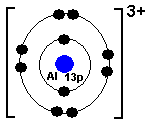
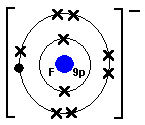
Al (2.8.3) + 3F (2.7) ==> Al3+ (2.8) 3F– (2.8) can be summarised electronically as [2,8,3] + 3[2,7] ==> [2,8]3+ [2,8]–3 so both the aluminium and fluoride ions have a full outer shell like a noble gas ONE to form Note in this electron diagram, only the original outer electrons are shown above. The outer electrons of the aluminium atom (2.8.3) is transferred to the outer shell of the fluorine atoms (2.7) giving them a complete octet shell of outer electrons, just like a noble gas (2.8). At the same time, the aluminium ion also attains a stable noble gas electron structure (2.8).
full electronic structure diagram of aluminium fluoride, the blue circle represents the nucleus. The electronic dot & cross diagram for the ionic bonding in the ionic compound aluminium fluoride
the simpler dot and cross Lewis diagram for the formation of aluminium fluoride
Extra comments on aluminium fluoride The structure of solid aluminium fluoride consists of a giant ionic lattice of aluminium ions and fluoride ions - a precise alternating 3D arrangement of positive and negative ions attracting each other.. Melting point of aluminium fluoride is 1290oC, as you would expect aluminium fluoride to have a high melting point from the strong ionic bonding. The melting point of aluminium fluoride is very high because of the strong electrical force of attraction between the aluminium ions and fluoride ions. This means the solid aluminium fluoride particles need much higher kinetic energies of vibration to break apart from the giant ionic lattice to form a liquid. Liquid aluminium fluoride will conduct electricity because the ions are free to move and carry an electric current. It is added to molten aluminium oxide ore to lower the melting point of the mixture prior to electrolysis to extract aluminium from bauxite ore. See also Using the ionic bonding model to describe and explain the properties of ionic compounds
Learning objectives for the ionic compound formed by combining aluminium and fluorine
What next? GCSE Foundation tier (easier) m/c QUIZ on structure, properties & chemical bonding of materials GCSE Higher tier (harder) m/c QUIZ on structure, properties and chemical bonding of materials Sub-index for: Part 2 index Ionic Bonding: compounds and properties Index for |
||||||||||||||||||||||||||||||||||||||||||||||||||||||||||||||||||||||||||||||||||||||||||||||||||||||||||||||||||||||||||||||||||||||||||||||||||||||
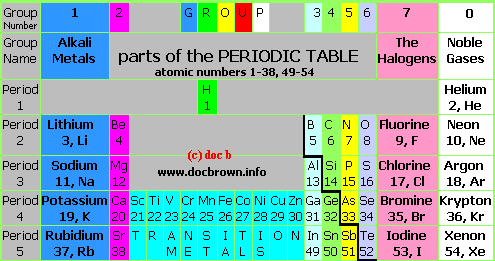 metals \ non-metals (zig-zag line)
 atom combines with
 THREE
THREE  atoms
atoms 


| Website content © Dr Phil Brown 2000+. All copyrights reserved on revision notes, images, quizzes, worksheets etc. Copying of website material is NOT permitted. Exam revision summaries & references to science course specifications are unofficial. |
 For searching