|
GCSE level Physics:
Section 8 Static electricity:
Part 8.1
Introduction and making and simply demonstrating static electricity - a tale of
friction between materials !!!
[Author
©
Dr WP Brown PhD:
Doc Brown's physics exam revision notes suitable for students of UK
IGCSE & GCSE level physics courses, ~ US grades 9-10 physics,
updated Feb 18th 2026 *]
[KEY
POINTS and learning objectives for this page, after initial notes]
[email doc b
query? comment?]
*
[privacy-policies-disclaimer]
*
]SEARCH doc b's
website]
INDEX of physics notes on
static electricity, electrostatics & electric fields
8.1A
Introduction and making and simply demonstrating static electricity - a tale of
friction between materials!!!
This page, I hope, will answer many questions
on static electricity e.g.
What is static electricity? What is an electric field?
How can we produce examples of static
electricity?
Where in the house or everyday life do you
encounter examples of static electricity?
Can static electricity be dangerous?
Can static electricity be useful?
All matter is made up of atoms, which in turn
are made of a nucleus of positive protons and neutral neutrons and a surrounding
cloud of negative electrons in their specific energy levels ('shells').
Most of
matter, most of the time, contains equal numbers of positive and negative
charges so there is net charge of zero and their effects cancel out.
However in
some situations, you can get a build up of negative or positive charge that
cannot flow away like a normal electric current to restore the 'local' zero
balance. This is what we call static electricity.
If a material readily allows the passage
of an electrical current, it is called a conductor.
If a material is poor at conducting an
electrical current, it is referred to as an insulator.
Remember that electrons carry a
negative electrical charge (-).
'Static effects'
We've all noticed at some time the
'crackling' or tiny spark effect when taking off or putting on an article of clothing,
particularly with nylon materials, which can also give a similar effect when used as
bed clothes.
Well, these are examples of what we call 'static electricity'
and you may even experience a small electric shock as the static electricity is
discharged - through you!
The crackling is the discharge of tiny pockets of
static electricity produced by the friction of clothes or bed clothes
rubbing against each other.
The electric charge flow, the current, is so small
it is highly unlikely to cause you any harm, but you might experience a little
shock - a little prick of pain!
Notice that the materials involved
like nylon, are electrical insulators, not metals, so what is going on?
More
on static electricity?
Static electricity is a build up of electric
charge that cannot move or flow as a normal electric current in a conducting
material.
Therefore static electricity usually forms in or on
insulating
materials like plastics (polymers) and glass.
Any static charge produced on an electrically insulating material cannot immediately flow away,
- unless a conductor is brought near
the material to discharge the static electricity,
- or it discharges, heating and
ionising air, causing a spark if the potential difference ('voltage')
becomes high enough.
A static electricity spark is an
electrostatic discharge caused by the sudden flow of an electric
current across an air gap. This heats up and ionises the air,
causing light to be emitted.
The size of the spark depends on the
distance between the (+ and -) sources of electrical charge and the
potential difference in voltage between them. An extreme example is
lightning, with a p.d. of up to a billion volts (p.d. of 108 V !!!)
The heating causes a rapid
expansion and vibration of the air causing the sound of a
thunder clap.
Static charge can be produced when two
electrically insulating surfaces are rubbed together.
The static charge is results from the
movement of electrons due to the friction effect when two insulating material
surfaces rub against each other.
This produces
an excess of electrons (negative area of static charge) in one material and
deficiency
of electrons (positive area of static charge) in the other material.
Note that the positive charge does NOT
move, only the negative electrons move in the transfer of charge.
The excess of positive charge created
will be numerically equal to the excess of negative charge created.
The question of which material is positive
and the other negative, from the direction of electron transfer, depends on the chemical constitution of the two
materials.
If the electrons can
'leap' back from a negative region to a positive region, the static electricity
is discharged and you see a spark or get a tiny electric shock!
8.1B
Simple demonstration and explanation of
static electricity
- creating an
electrostatic energy store
that can do work by picking up bits of paper!
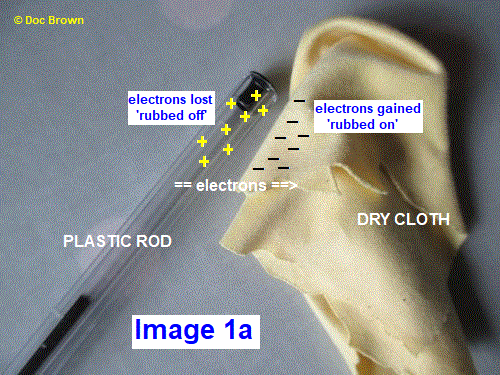
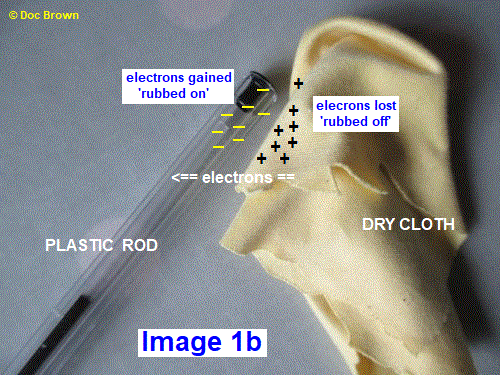
You cannot produce static electricity by
rubbing a metal rod with a cloth because any static electricity formed would
immediately run through the rod into your body or vice versa! However, you can
demonstrate static electricity in a very simple way by rubbing a plastic rod
with a clean dry cloth and getting to pick up little pieces of paper in
which a charge is induced by the electric field of the rod.
You need a bone dry cloth because water,
although a very poor electrical conductor (due to minute
concentrations of H+ and OH- ions), any static
charge would drain away.
I used a polystyrene biro case and a small
duster
cloth used for cleaning my camera lenses (illustrated above).
The duster must be dry so that any static
charge created cannot drain away - water is a very poor conductor, but it
does conduct a little!
Image 1a and Image 1b
illustrate the
two
possibilities of creating static charge by removing electrons with a force of
friction acting between the plastic surface and cloth surface,
but, depending on the two plastic and
cloth materials involved, the electrons can move one way or another between
them.
Image 1a
assumes negative electrons are rubbed off by the cloth making it negative and
the plastic rod becomes positive (deficient in negative charge - electrons).
This tends to happen with acetate plastic rods.
Image 2a
assumes negative electrons are rubbed onto the plastic rod by the cloth making
it negative and the cloth becomes positive (deficient in negative charge -
electrons). This tends to happen with polythene plastic rods.
I don't know which situation applies to this
rod and cloth combination, but that's not the point here. The point is that only
one of two possible static electricity creation situations can result from the rubbing
of two insulating surfaces together and the resulting
electron transfer from the force of friction.
The excess of positive charge created is
numerically equal to the excess of negative charge created, I've marked 8 + and
8 - on each image!
In reality we are dealing with many
electrons, not just the transfer of 8 of them, but it simplifies the
explanation picture!
The direction of electron transfer
depends on the nature of the two materials.
You charge plastic rods of cellulose
acetate, Perspex and polythene by rubbing them with a dry dusting cloth.
Polythene becomes negatively charged -
gains electrons, so the duster becomes positively charged - lost electrons.
Perspex and cellulose acetate becomes
positively charged - the plastic loses electrons, so the duster becomes
negatively charged - gained electrons.
You can then suspend the rods, finely
balanced with a fine thread and are perform simple attraction and repulsion
experiments.
e.g. you should be able to
demonstrate that:
two rods of the same plastic
repel - like charges repel,
polythene rod (-) should
attract either a Perspex rod (+) or an acetate rod (+), unlike
charges attract,
a Perspex rod should repel a
cellulose acetate rod.
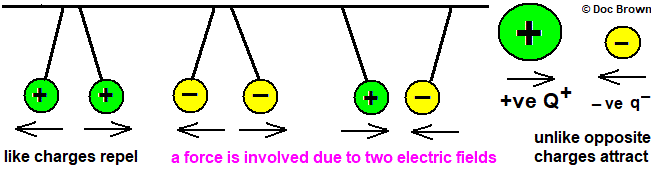
Think of the circles as a
cross section of the plastic rod and the + and - signs as the
static charge on the surface,
(+)
from electron loss and
(-) from electron gain.
8.1C
Three more simple demonstration
methods of detecting static electricity on a charged plastic rod
(1)
Getting the plastic rod to pick up tiny bits of
paper.
I used a few bits of very fibrous kitchen role (a large surface area
which helps) and
a biro case as the plastic rod.
It works even better with a more solid
rod of poly(ethene) ('polythene') or Perspex.
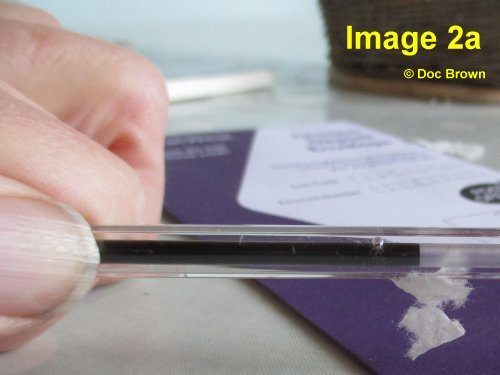
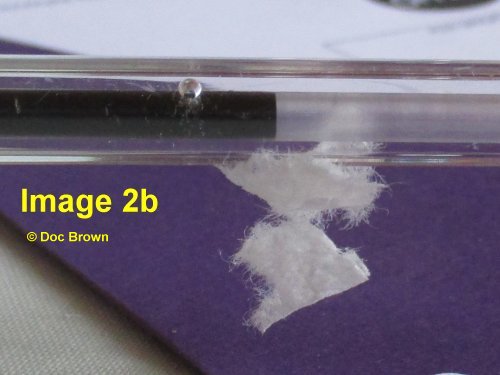
Image 2a: The plastic rod (biro) is charged
by rubbing in vigorously with a clean dry cloth to charge it up with static
electricity.
Image 2b: If the charged rod is carefully
held close to some small bits of uncharged paper, they are picked up and sometimes as a
string.
The charge on the rod induces the opposite
charge on a bit of paper by pulling or pushing electrons on the paper surface.
The
opposite charges then attract each other, so the bits of paper are attracted to
the rod.
The effect can be transmitted to a second bit of paper giving a little
paper chain held together by static charges.
The plastic rod - paper chain will
hold together because both materials are electrical insulators and the
electrical charge is slow to drain away.
You need to imagine the following:
either: plastic - ... + paper bit - ...
+ paper bit -
the negative plastic rod repels the
electrons inducing a positive charge on the paper surface
or: plastic + ... - paper bit
+ ... -
paper bit +, where the positive plastic rod attracts the electrons on the
paper surface
where the dotted line ... represents
the electric field attractive force.
This is actually a simple test to
show the plastic rod was charged up with static electricity.
(2)
Another simple demonstration of an electric field effect
A simple kitchen sink experiment!
A simple 'kitchen sink' experiment that
clearly shows the effect of an electric field.


Image 3a: You get the thinnest continuous
stream of water descending from a tap.
Image 3b: You then charge up the plastic rod
(biro) and carefully hold it quite close to the water stream, BUT not touching
(this discharges the static charge into the water). The plastic rod is to the
right of the stream. The electric field around the plastic rod attracts the
water molecules attracting the water stream towards the plastic rod.
Technical points of explanation (its more
A level chemistry, but no matter!):
Water is an neutral covalent molecule
(not ionic).
However, water is known as a 'polar molecule' and one end
is naturally slightly positive and the other end slightly negative (electrically
neutral overall).
It doesn't matter what the sign of
the charge is on the plastic rod.
If the rod is -ve it attracts the +ve
end of the water molecules, if the rod is +ve it attracts the -ve end of
the water molecule.
Therefore whatever the rod's static
charge sign, the stream of water molecules is attracted towards the
statically charged rod.
Again, this is a simple test to
show that the plastic rod is charged and it doesn't matter whether it
holds a positive or negative charge.
The deflection shows up better as the shadow on the
wall.
(3)
The gold leaf electroscope
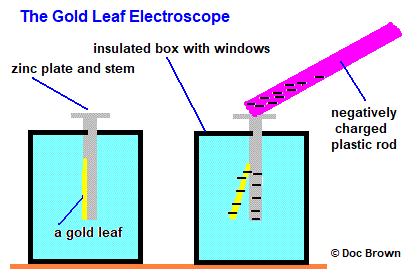 How a gold leaf electroscope works
The gold leaf electroscope consists of a zinc
plate mounted in an insulated wooden box with windows (so you see what
happens!).
Attached to the stem of the zinc plate is a
thin sheet of gold (gold leaf).
Both metals should not be carrying a static
charge - you ensure any charge has been discharged by touching the top with any
conducting rod of metal.
An insulating plastic rod is charged up by
rubbing with a dry duster cloth.
Let us assume it carries an excess of
electrons i.e. the plastic rod carries a negative static charge.
If the plastic rod is touched onto the zinc
plate, you get a charge transfer and some electrons will flow down into the
conducting zinc plate AND the equally conducting gold leaf.
Therefore both the zinc rod and the gold leaf
have the same negative charge and will repel each other (- -), so the
gold leaf moves apart from the zinc rod and curls up.
If you then touch the zinc plate with any
other metal rod, the electrons will flow into it and the static electricity is
then discharged through your hand and the gold leaf falls back against the zinc
rod. This might not work if you are wearing rubber gloves!
Repeat experiment with another plastic rod of
different charge:
If the plastic rod is positively charged
with static electricity, electrons will drain from both
metal strips making them both positive, repulsion
should take place i.e. the gold leaf will be repelled from
the zinc surface.
You can also touch the 'uncharged' zinc
plate with a positively charged insulator and this time the electrons will
flow onto it from the plate making both metals positive. Therefore the gold
leaf will rise due to the like charge repulsion (+ +). Look at the diagram
and just imagine swapping the -ve signs for positive signs, its the same
effect in the end.
Note: Because the zinc and gold leaf are
themselves insulated from the 'earth', in this case, you can have an
electrically conducting material that will hold a static electric charge. In an
exam, never say a metal plate can never hold a static charge!
(4) Finally - The spectacular Van de Graaff
generator experiment
A Van de Graaff machine involves an
insulating belt continuously rubbing over copper contact brushes which are
connected to a steel dome.
The friction causes static charge to
build up in the belt and metal contacts.
The steel dome, despite being a good
electrical conductor, is insulated by the surrounding air (up to a
point!).
Therefore there is no complete circuit
and static electricity can build up.
The static charge gradually builds up as
the machine runs and can be spectacularly released if another conducting
metal sphere is brought near the steel dome,
BUT, if you hold the sphere without
rubber gloves, the static electricity discharges through you with a
spark that jumps across!
BUT, don't worry, although the p.d.
voltage is high, the current is very small and harmless.
The potential difference between the
sphere and dome is so great that the static charge discharges, jumping
through the air to the sphere - the p.d. is so great the hair is heated up
and ionises at high temperature, causing a discharge of light energy and
sound energy too.
However, before switching on the Van
de Graaff generator, you place your hands on the sphere and then switch
the machine on.
You need to be insulated by
standing on a thick plastic or rubber mat - otherwise the charge
leaks away.
The resulting static charge
builds up in your body, including your hair.
The hairs on your head have the
same positive or negative static charge and so they repel,
giving you an impressive 'spaced out' and startling hair style !!!
See later section for full
explanation of why you see a spark.
INDEX physics notes on static
electricity - electrostatics & electric fields
Key points about
static electricity - what is it? demonstrations of static electricity
Information
sources for Doc Brown's key points: IGCSE-GCSE physics are based on
textbooks & syllabus-specifications for students taking the UK AQA, Edexcel,
OCR 21st Century Science, OCR Gateway science suite, WJEC, CCEA and CIE GCSE
physics 9-1 level science examinations
A structured and exam-board-aligned
summary of static electricity for GCSE/IGCSE Physics
students, including demonstrations, key concepts, and revision tips:
What Is Static Electricity?
Static electricity
is the build-up of electric charge on the surface of an insulator due to the
transfer of electrons, typically through friction.
- Electrons
(negative) are transferred between materials when rubbed together.
- The object that gains electrons
becomes negatively charged.
- The object that loses electrons
becomes positively charged.
- Only electrons move -
positive charges do not move.
Demonstrations and Experiments of static
electricity
These are classic and exam-relevant:
| Experiment |
What It Shows |
| Balloon & Hair |
Rubbing a balloon on hair transfers
electrons → balloon sticks to wall due to attraction. |
| Plastic Rod & Cloth |
Rubbing a polythene or acetate rod
with a cloth shows charge build-up. |
| Paper Pieces & Comb |
A charged comb attracts small paper
bits due to induced charge. |
| Van de Graaff Generator |
Demonstrates charge accumulation,
repulsion (hair standing), and sparking. |
| Water Stream Deflection |
A charged balloon deflects a thin
stream of water due to attraction of polar molecules. |
Core Concepts Across Exam Boards
All major UK boards (AQA, Edexcel, OCR, WJEC,
CCEA, CIE) cover these:
Some of these are covered in detail on
other pages, so see static electricity index.
1.
Charging by Friction
- Insulators become charged when rubbed.
- Example: acetate rod becomes
positive, polythene rod becomes negative.
2.
Forces Between Charges
- Like charges repel,
opposite charges attract.
- These are non-contact forces.
3.
Electric Fields
- A charged object creates an electric
field.
- Field lines go away from positive,
towards negative.
- The closer the lines, the stronger
the field.
4.
Sparking and Discharge
- When the potential difference is large
enough, electrons jump across the gap → spark.
- Example: touching a metal doorknob after
walking on carpet.
5.
Dangers of Static Electricity
- Fuel vapour ignition
during refuelling.
- Lightning
caused by charge separation in clouds.
- Prevented
by earthing (providing a path for charge to flow safely).
6.
Uses of Static Electricity
- Photocopiers
and laser printers (charge attracts toner).
- Electrostatic precipitators
(remove pollutants from chimneys).
- Paint spraying
(charged paint particles stick evenly).
Student Tips for Exam Success
- Use correct terminology:
say “electrons are transferred,” not “charge moves.”
- Always specify
which object gains or loses electrons.
- Draw field diagrams
with arrows and spacing to show strength and direction.
- Link to real-world examples
(e.g. lightning, fuel tankers).
- Practice explaining
why a balloon sticks to a wall or why hair stands up.
- Avoid vague terms like “charge moves” or
“positive charge flows.”
Keywords, phrases and learning objectives
on the
nature and demonstrations of static electricity
Be able to describe and explain, with the aid of
diagrams, what causes static electricity.
Explain how friction produces static electrically
charged objects.
Be able to describe simple demonstrations of static
electricity with plastic
rods rubbed with a cloth to pick up bits of paper, bending a
stream of water.
Given a diagram, explain how gold
leaf electroscope detects electric charge.
Appreciate a Van de Graaff generator
produces a great charge flow build up to produce very voltage
discharges.
WHAT NEXT?
TOP of page
INDEX for physics notes on
STATIC ELECTRICITY
ALL my electricity and magnetism
notes
email doc
brown - comments - query?
INDEX of all my PHYSICS NOTES
Basic Science Quizzes for
UK KS3 science students aged ~12-14, ~US grades 6-8
Biology * Chemistry
* Physics for UK
GCSE level students aged ~14-16, ~US grades 9-10
Advanced Level Chemistry
for pre-university age ~16-18 ~US grades 11-12, K12 Honors
Find your GCSE/IGCSE
science course for more help links to all science revision notes
Based on the syllabus-specifications
for students taking the IGCSE/GCSE level physics examinations summary
revision notes and key points on demonstrating examples of static
electricity for students taking the AQA
igcse/gcse physics notes on demonstrating examples of static electricity, Edexcel gcse
physics notes on demonstrating examples of static electricity, OCR 21st century GCSE
physics notes on demonstrating examples of static electricity, OCR gateway
GCSE physics notes on demonstrating examples of static electricity, WJEC gcse physics notes on
demonstrating examples of static electricity, CCEA
gcse physics notes on demonstrating examples of static electricity for students taking CIE Cambridge igcse
physics, or any other GCSE or IGCSE level physics exams notes on
demonstrating examples of static electricity, useful for US grade 9-10 physics courses,
Explaining the importance of charged plastic rods & static
electricity, gold leaf electroscope & Van de Graaf generator
experiments in GCSE level physics, What you need to know about
charged plastic rods & static electricity, gold leaf
electroscope & Van de Graaf generator experiments for GCSE level
physics, Explaining what is the use of charged plastic rods &
static electricity, gold leaf electroscope & Van de Graaf generator
experiments knowledge in GCSE level physics, Examples of charged
plastic rods & static electricity, gold leaf electroscope &
Van de Graaf generator experiments explained when studying GCSE
level physics, What is the significance of charged plastic rods &
static electricity, gold leaf electroscope & Van de Graaf generator
experiments in GCSE level physics, Describing and explaining the
theory of charged plastic rods & static electricity, gold leaf
electroscope & Van de Graaf generator experiments when studying GCSE
level physics, revision notes for charged plastic rods &
static electricity, gold leaf electroscope & Van de Graaf generator
experiments in exams, online exam help for charged plastic rods &
static electricity, gold leaf electroscope & Van de Graaf generator
experiments, revision notes for charged plastic rods & static
electricity, gold leaf electroscope & Van de Graaf generator
experiments, what do I need to learn about charged plastic rods &
static electricity, gold leaf electroscope & Van de Graaf generator
experiments for by GCSE physics exam? revision summary for charged
plastic rods & static electricity, gold leaf electroscope &
Van de Graaf generator experiments, help in teaching charged plastic
rods & static electricity, gold leaf electroscope & Van de
Graaf generator experiments, learning notes for charged plastic rods
& static electricity, gold leaf electroscope & Van de Graaf
generator experiments, help to understand the charged plastic rods &
static electricity, gold leaf electroscope & Van de Graaf generator
experiments topic in preparation GCSE physics exam question, how to
prepare for questions involving charged plastic rods & static
electricity, gold leaf electroscope & Van de Graaf generator
experiments
SITEMAP
Website content © Dr
Phil Brown 2000+. All copyrights reserved on Doc Brown's physics revision notes, images,
quizzes, worksheets etc. Copying of website material is NOT
permitted. Exam revision summaries and references to GCSE science course specifications
are unofficial.
INDEX physics notes on static
electricity - electrostatics & electric fields
|
