|
14. LINCOLN CATHEDRAL Streets and other buildings in Lincoln Pictures and Notes on Eastern England Lincoln Cathedral, Lincolnshire Cathedral Index: Introduction * 1. West end - exterior and interior 2. North, South & SE Transepts - exterior & interior 3. East end - exterior and interior 4. The Angel Choir and St Hugh's Choir 5. Chapter House, Cloisters, Refectory Cafe, Treasury and Library 6. The Nave and Crossing [Author & photographer © Dr Phil Brown PhD (plus text help from AI these days), page updated May 16th 2026]Email: chem55555@hotmail.com See also 13. The City of Lincoln - High Street, The Strait and Steep Hill - history and buildings 15. Roman Lincoln, The Collection Museum and the Usher Art Gallery 16. Lincoln - other buildings and sights 17. Lincoln Castle and Victorian Gaol *
INTRODUCTION - some key architectural historical points
Lincoln Cathedral, Lincoln Minster (Cathedral
Church of the Blessed Virgin Mary of Lincoln, St Mary's
Cathedral situated in Lincolnshire, eastern England. Lincoln Cathedral is the seat of the Anglican Bishop of
Lincoln. Theuilding of Lincoln Cathedral started in 1072 and continued in several phases
of the Gothic style throughout the medieval period.
Lincoln Cathedral was the tallest building in the world for 238 years (1311–1548), though the central spire collapsed in 1548 and was not rebuilt. Lincoln Cathedral is the fourth largest in the UK (in floor area) at around 5,000 square metres (54,000 sq ft), after Liverpool, St Paul's and York Minster.[5] It is highly regarded by architectural scholars liker John Ruskin and Nikolaus Pevsner.
Remigius built the first Lincoln Cathedral on the present
site, finishing it in 1092. In 1124, the timber roofing of Lincoln Cathedral was destroyed in a fire. Alexander
(bishop, 1123–48) rebuilt and expanded the cathedral, but much was
destroyed by an earthquake about forty years later, in 1185. The damage to
Lincoln Cathedral was very extensive. Only the lower part of the west
end and its two attached towers remain of the pre-earthquake current
building.
After the earthquake, the new bishop of Lincoln Cathedral was Hugh de Burgundy of Avalon, France, who became known as St Hugh of Lincoln and began a massive rebuilding and expansion programme. Rebuilding began with the choir (St Hugh's Choir) and the eastern transepts between 1192 and 1210 and the central nave was then built in the Early English Gothic style followed other architectural advances of the time e.g. pointed arches, flying buttresses and ribbed vaulting were added to the cathedral, allowing larger windows.
There are thirteen
bells in the south-west tower, two in the north-west tower, and five in the
central tower, including Great Tom which accompanies the cathedral's large
bell, Great Tom of Lincoln, a quarter-hour striking clock which was
installed in the early 19th century. The two large stained glass rose
windows, the matching Dean's Eye and Bishop's Eye, were added to the
cathedral during the late medieval times. The Dean's Eye in the
north transept dates from the 1192 rebuild begun by St Hugh, finally being
completed in 1235. The Bishop's Eye, in the south transept was reconstructed
a hundred years later in 1330.
After the additions of the Dean's eye and other major Gothic additions it is considered that errors in the support of the tower occurred, because in 1237 the main tower collapsed. A new tower was soon started and in 1255 the Cathedral petitioned Henry III to allow them to take down part of the town wall to enlarge and expand the Cathedral, including the rebuilding of the central tower and spire. They replaced the small rounded chapels (built at the time of St Hugh) with a larger east end to the cathedral to accommodate the increasing number of pilgrims to the Cathedral, who came to worship at the shrine of Hugh of Lincoln.
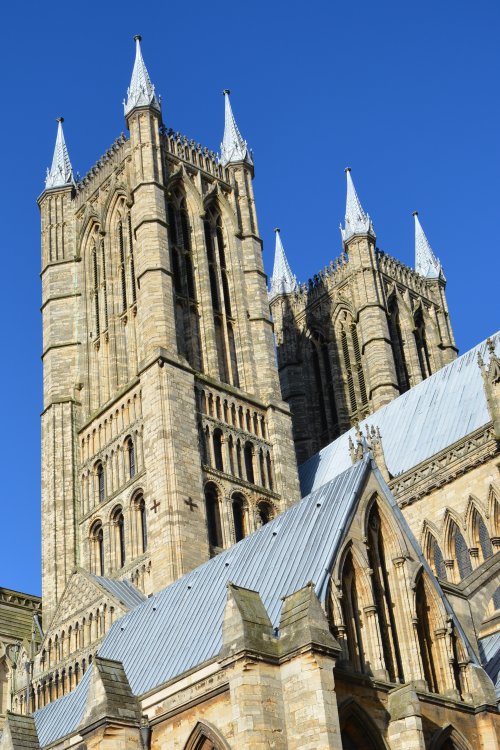
Between 1307 and 1311 the central tower was raised to its
present height of 271 feet (83 m). The two western towers (south and north
towers) and west front of the cathedral were improved and raised in height.
At this time, a tall lead-encased wooden spire topped the central tower but
this was blown down in a storm in 1548. With its spire, the tower reputedly
reached a height of 525 feet (160 m) making it the world's tallest
structure. Other
additions to the cathedral at this time included its elaborate carved screen
and the 14th-century misericords in St Hugh's Choir.
Hugh of Wells, Bishop of Lincoln, was one of the signatories to Magna Carta
and Lincoln Cathedral held one of the four remaining copies of the original,
but it is now securely displayed in Lincoln Castle.
In August 1255 the body of an eight-year-old boy was found in a well in Lincoln and had been missing for nearly a month. This incident became the source of a blood libel in the city, with Jews accused of his abduction, torture, and murder. Many Jews were wrongly arrested and eighteen were hanged. The boy became named as Little Saint Hugh to distinguish him from Saint Hugh of Lincoln, but he was never officially canonised. Despite the story being completely false and unjust, the cathedral benefited from these events because Hugh was seen as a martyr, and many devotees came to the city and cathedral to venerate him. Geoffrey Chaucer mentions the case in "The Prioress's Tale" and a ballad was written about it in 1783. In 1955 a plaque was put up near "the remains of the shrine of 'Little St Hugh'" in the cathedral, that decries the "Trumped up stories of 'ritual murders' of Christian boys by Jewish communities." Lincoln Cathedral features two major rose windows, on the north side of the cathedral there is the “Dean's Eye” which survives from the original structure of the building and on the south side there is the “Bishop's Eye” which was most likely rebuilt around 1325–1350. This south window is one of the largest examples of curvilinear tracery (continuous curves) seen in medieval architecture. The glazing of these window is very difficult because of the complex shape.
Lincolnshire was home to many Bomber Command airfields
during the Second World War and nicknamed 'Bomber County'. The RAF station
badge nearby Waddington depicts Lincoln Cathedral rising through the clouds. Until the opening of the RAF Bomber Command Memorial in
2012, Lincoln Cathedral had the only memorial in the United Kingdom dedicated to
Bomber Command's large losses of aircrew [in the Second World War.
Lincoln Cathedral is one of the few English cathedrals built from the rock it is standing on and owns the existing quarry, on Riseholme Road from which the cathedral's stonemasons use more than 100 tonnes of stone per year for maintenance and repairs. More on the history of Lincoln Cathedral
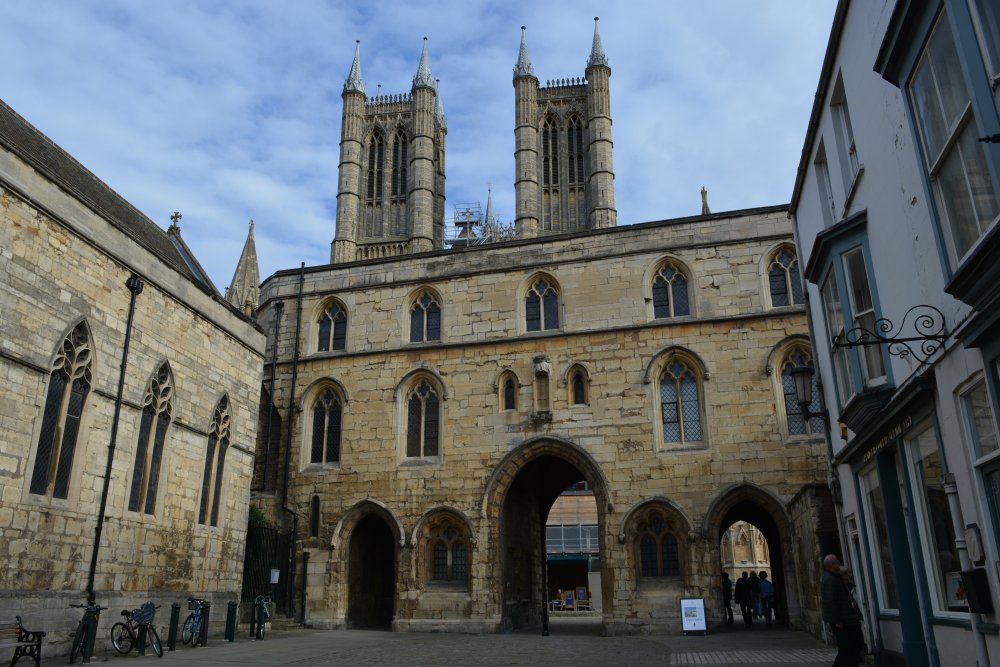
The entrance to Lincoln Cathedral precinct.
*
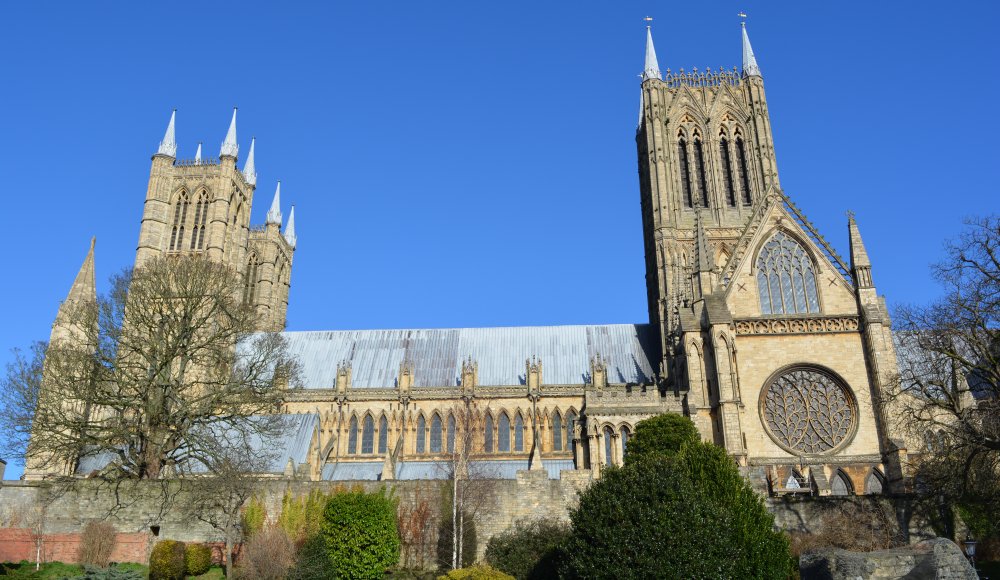
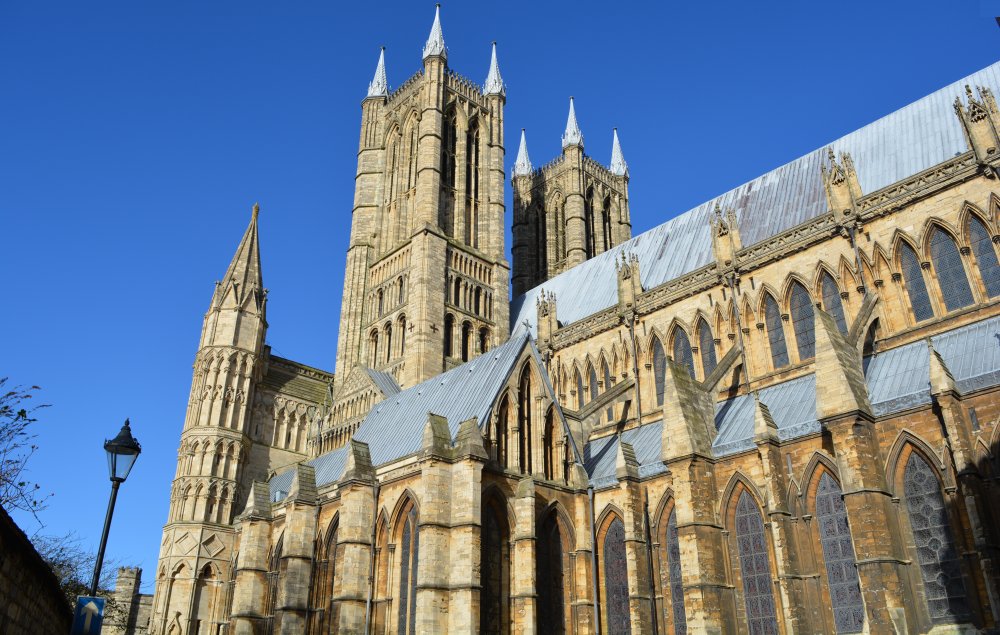
The general view from the south near the Bishop's Palace
1. The West End - exterior and interior architecture of Lincoln Cathedral
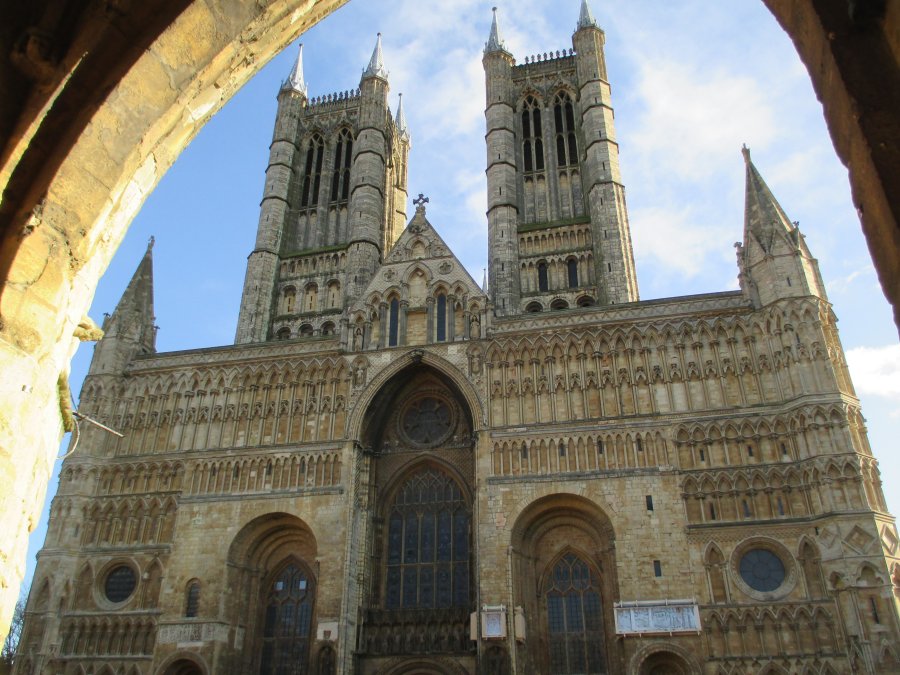
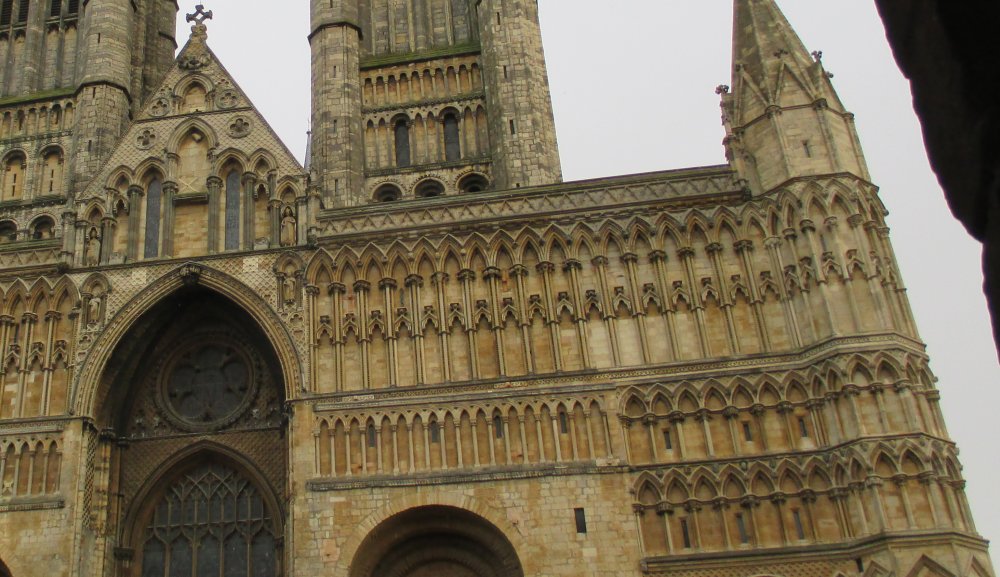
The magnificent Norman west front of Lincoln Cathedral.
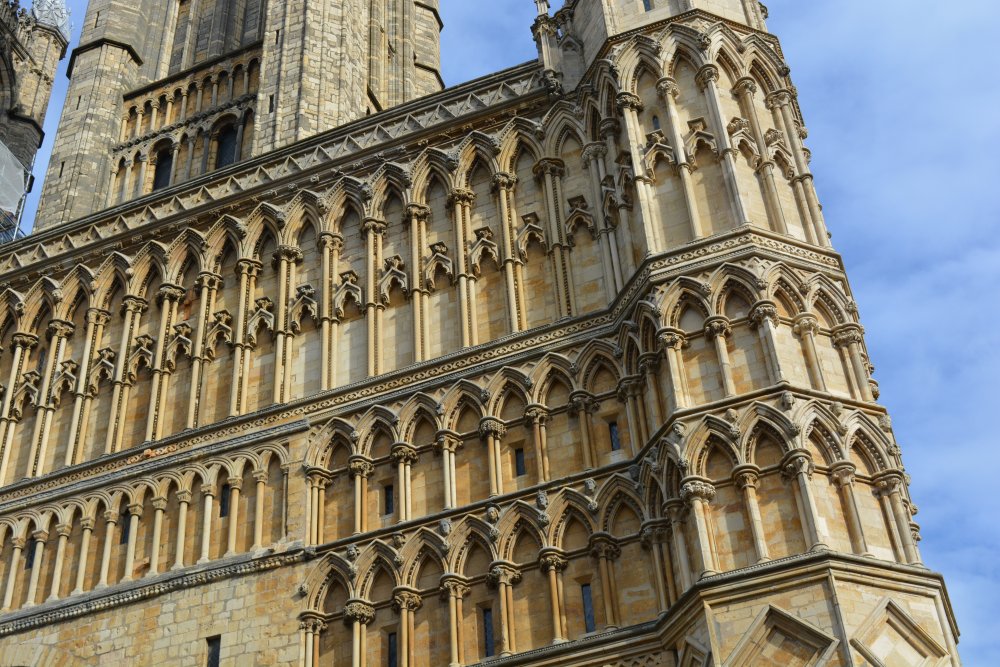
Such carving!!!
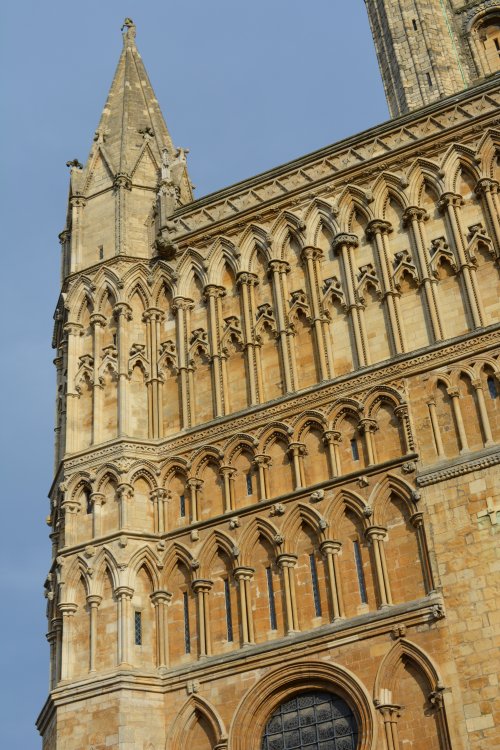
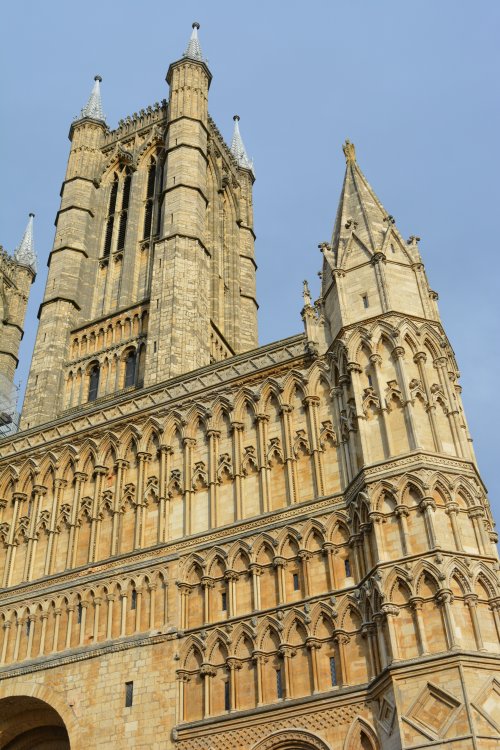
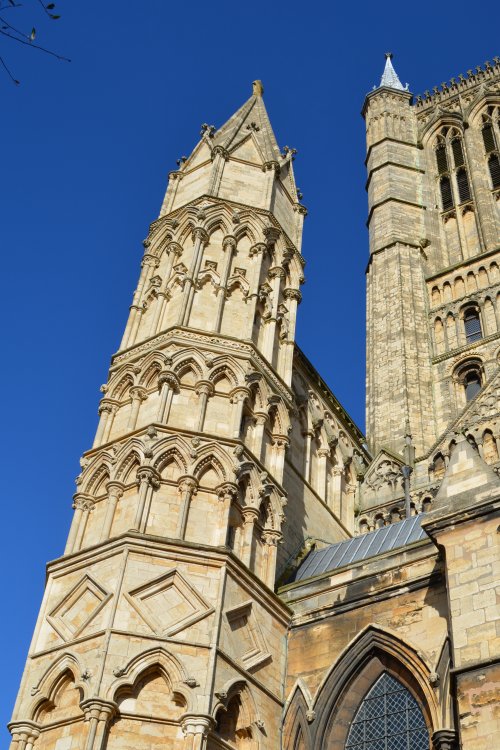
The southwest tower and turret, details of the southwest turret of Lincoln Cathedral
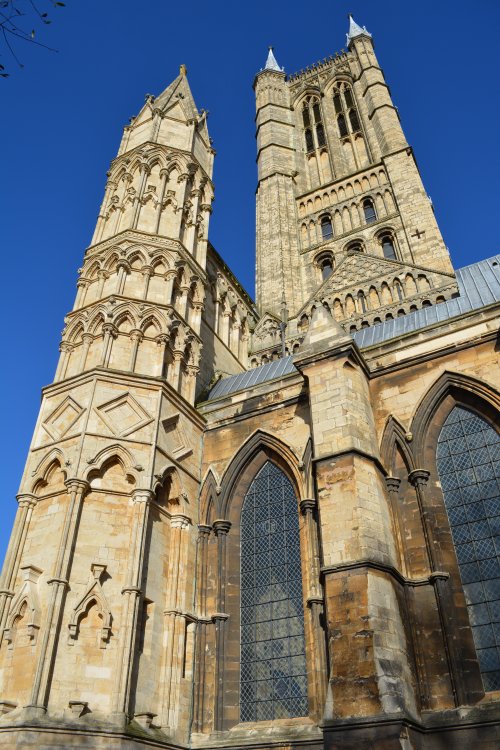
A general view of the southwest architecture of Lincoln Cathedral
The (south and north) west towers of Lincoln Cathedral
The west end of the Nave of Lincoln Cathedral
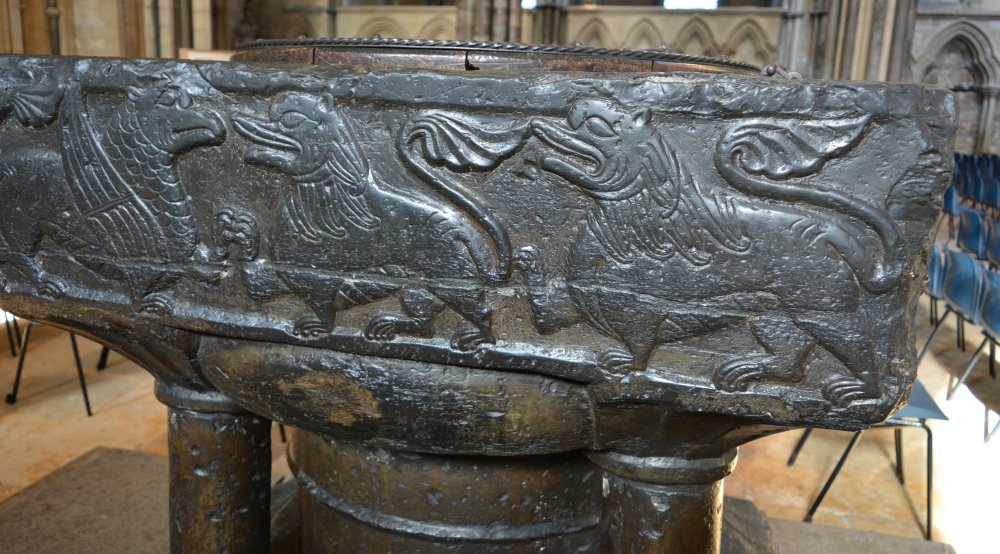
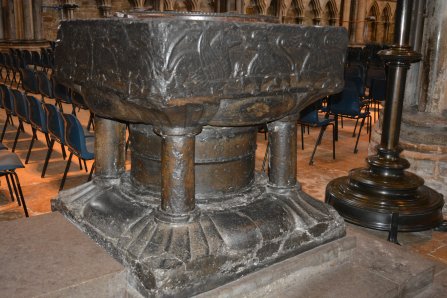
The wonderfully carved font in the south-west end of the Nave of Lincoln Cathedral - elaborately carved in black Tourney marble.
2. South Transept and North Transept - exterior and interior, and the Treasury of Lincoln Cathedral The North Transept of Lincoln Cathedral
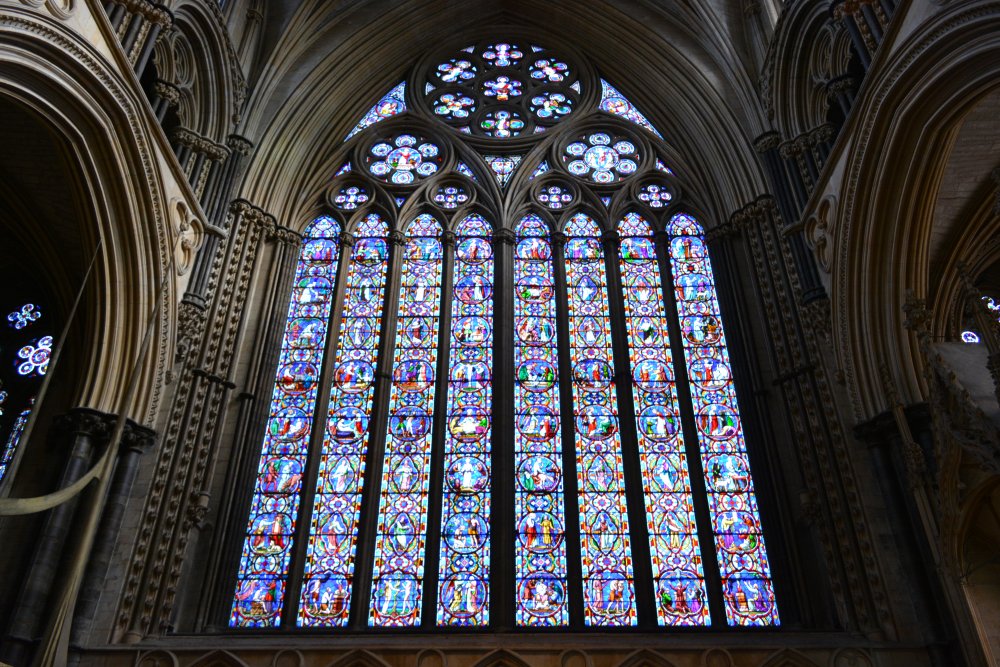
The architecture of North Transept Rose Window known as the Dean's Eye. Lincoln Cathedral features two major rose windows, on the north side
of the cathedral there is the “Dean's Eye” which survives from the original
structure of the building and on the south side there is the “Bishop's Eye”
which was most likely rebuilt around 1325–1350. This south window is one of
the largest examples of curvilinear tracery (continuous curves) seen in medieval architecture. The glazing of these window
is very difficult because of the complex shape.
The 'Airmen's Chapel' in the north transept of Lincoln Cathedral
Stained glass windows in the 'Airmen's Chapel', Lincoln Cathedral
The 'Seamen's Chapel' in the north transept of Lincoln Cathedral
Above and below: The 'Soldier's Chapel' in the north transept of Lincoln Cathedral.
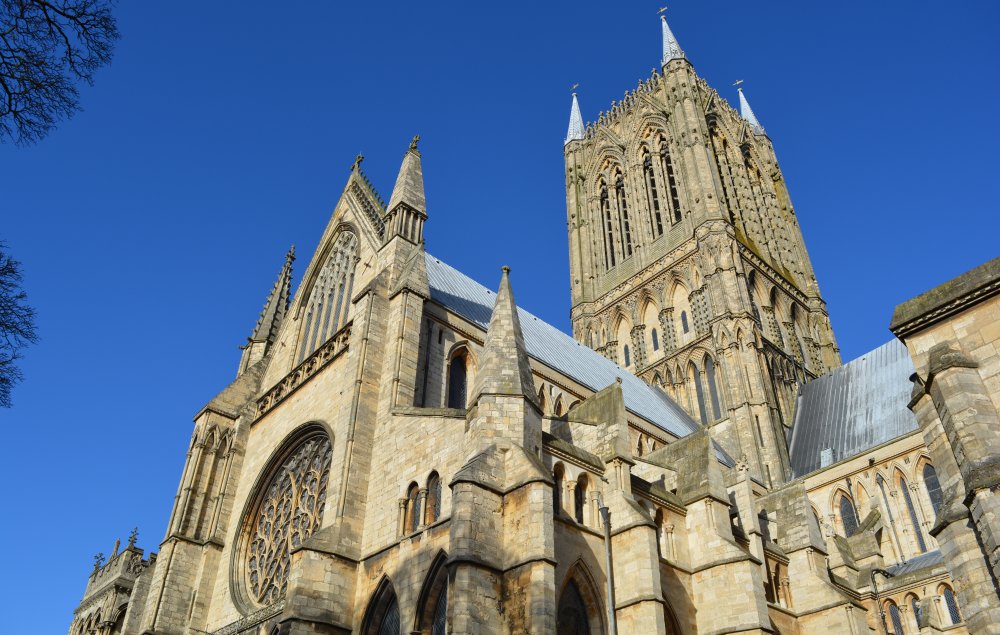
The South Transept of Lincoln Cathedral
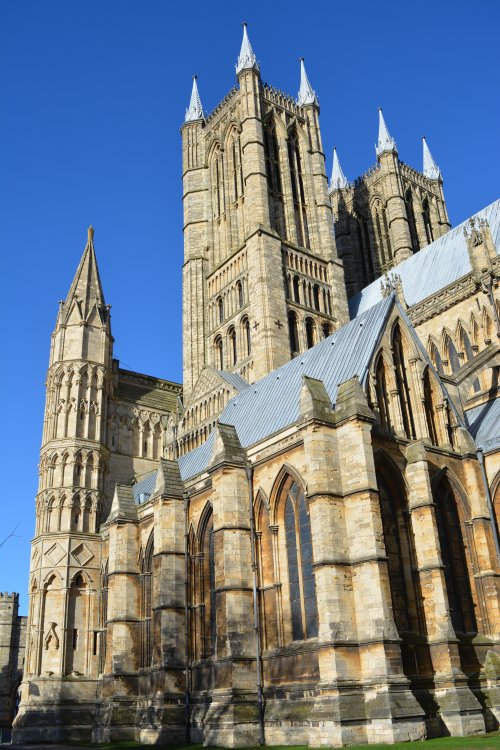
The south transept and beyond, the central tower of Lincoln Cathedral
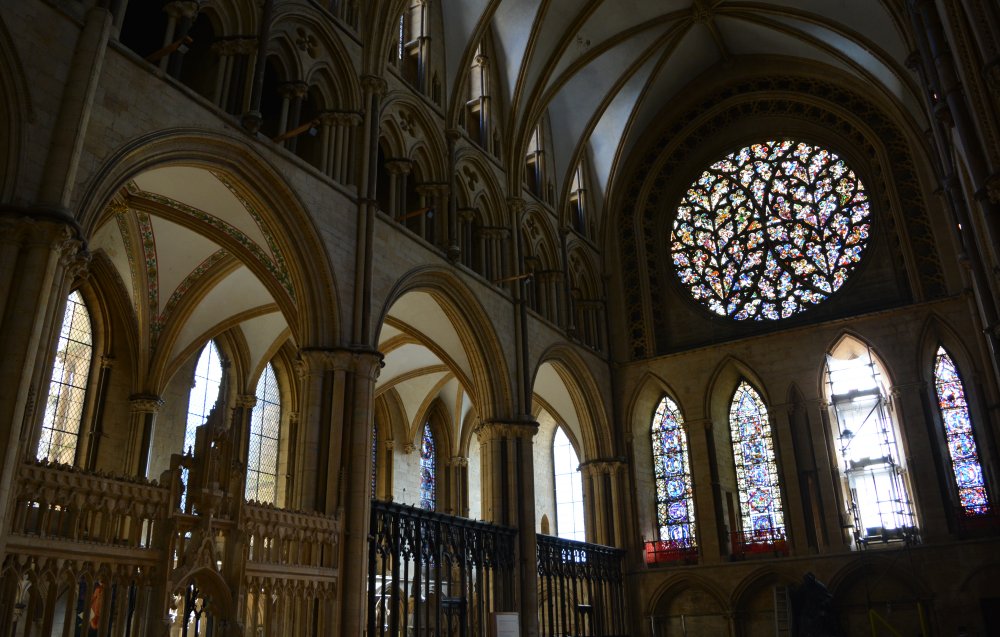
The interior of the South Transept of Lincoln Cathedral
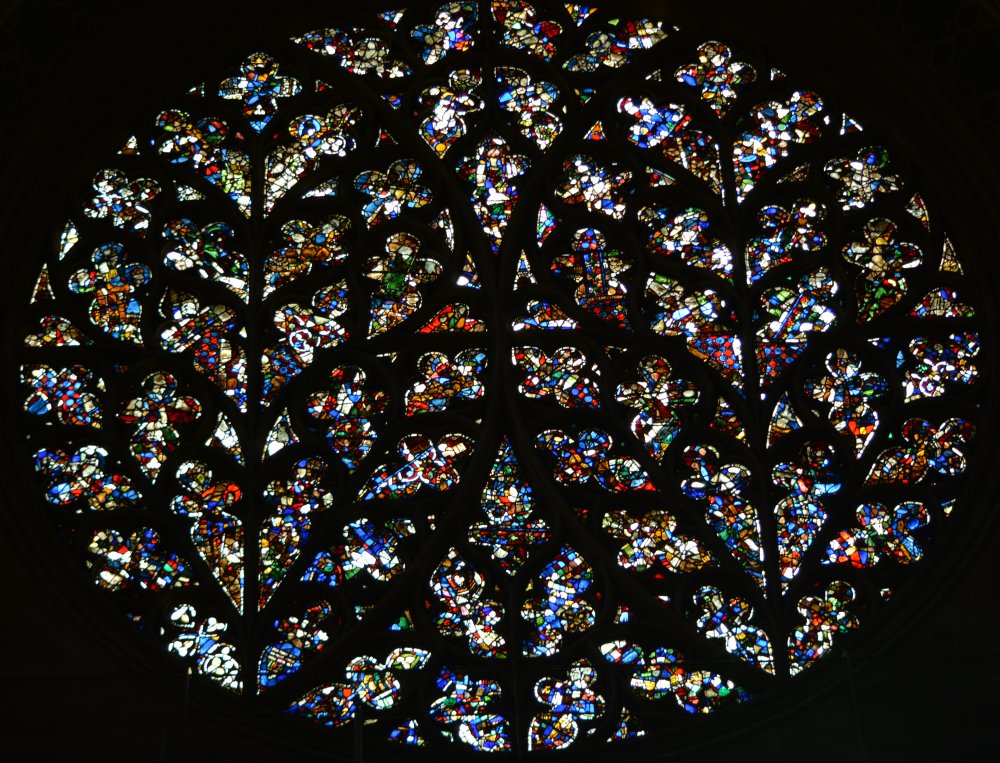
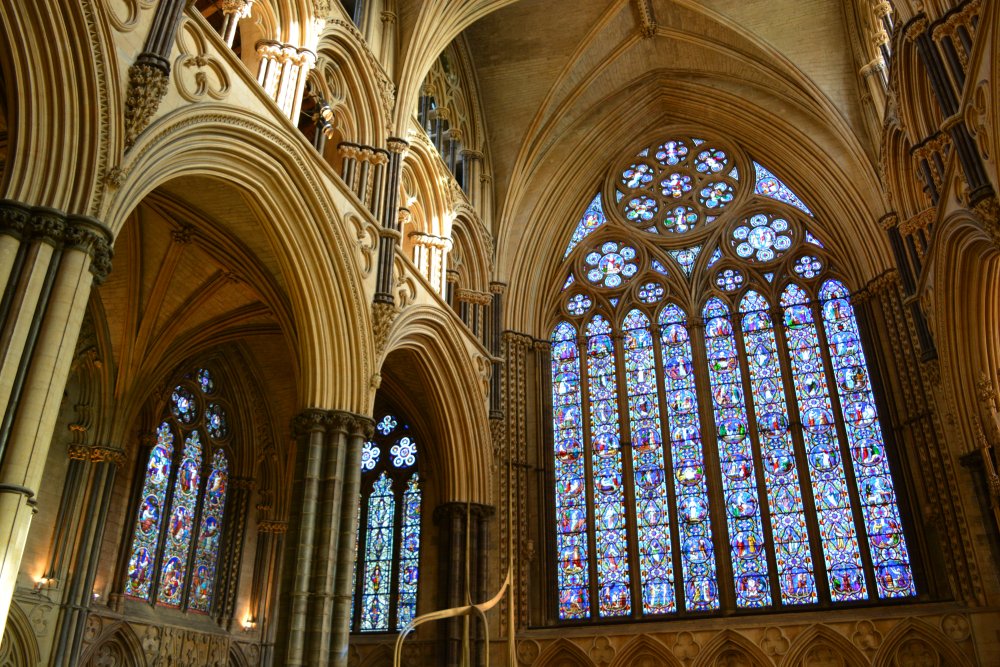
The Rose window in the south transept of Lincoln Cathedral.
Details of the Rose Window of the South Transept
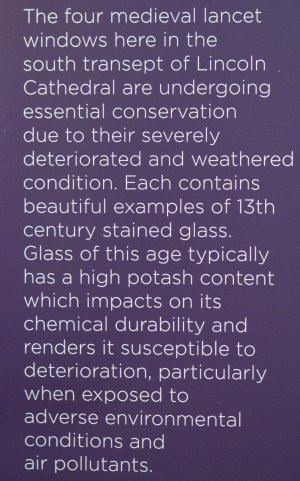
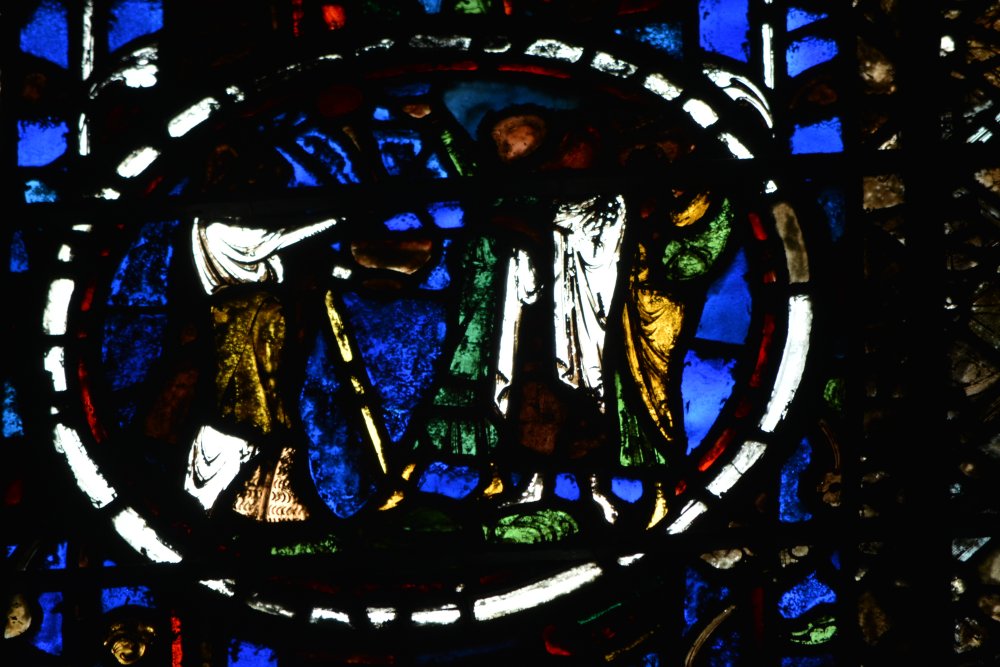
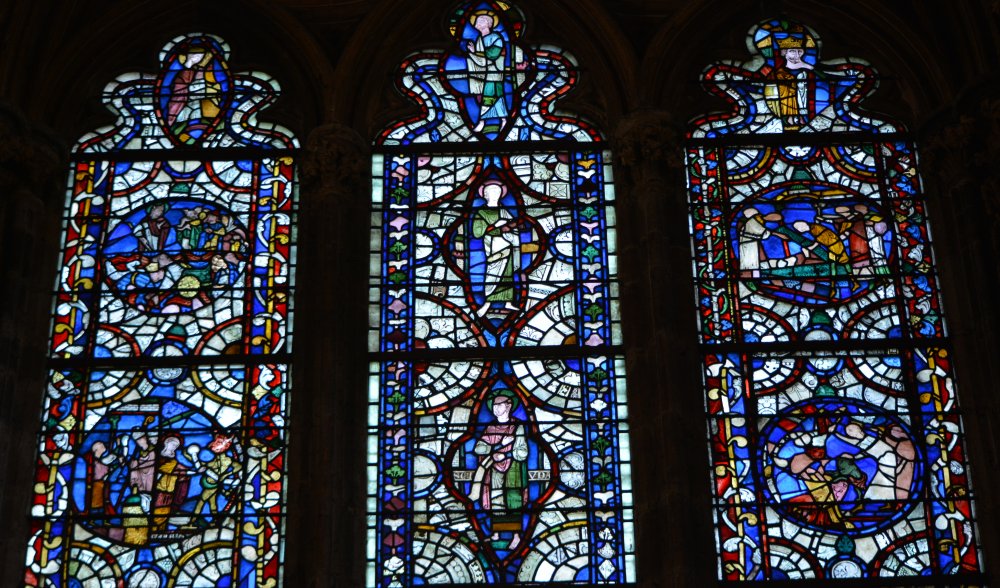
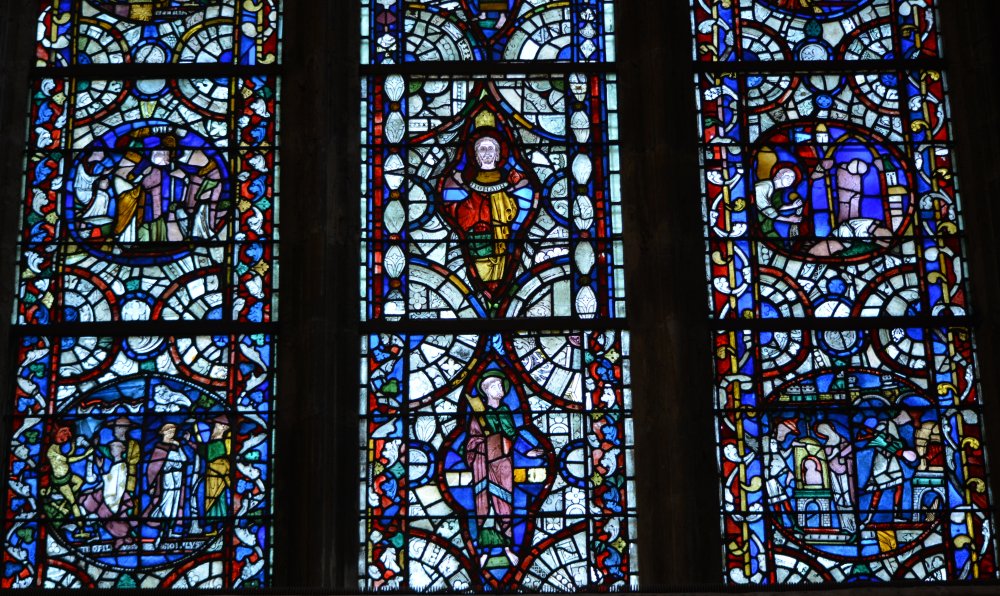
Four images of the restored 13th century medieval glass in the south transport of Lincoln Cathedral.
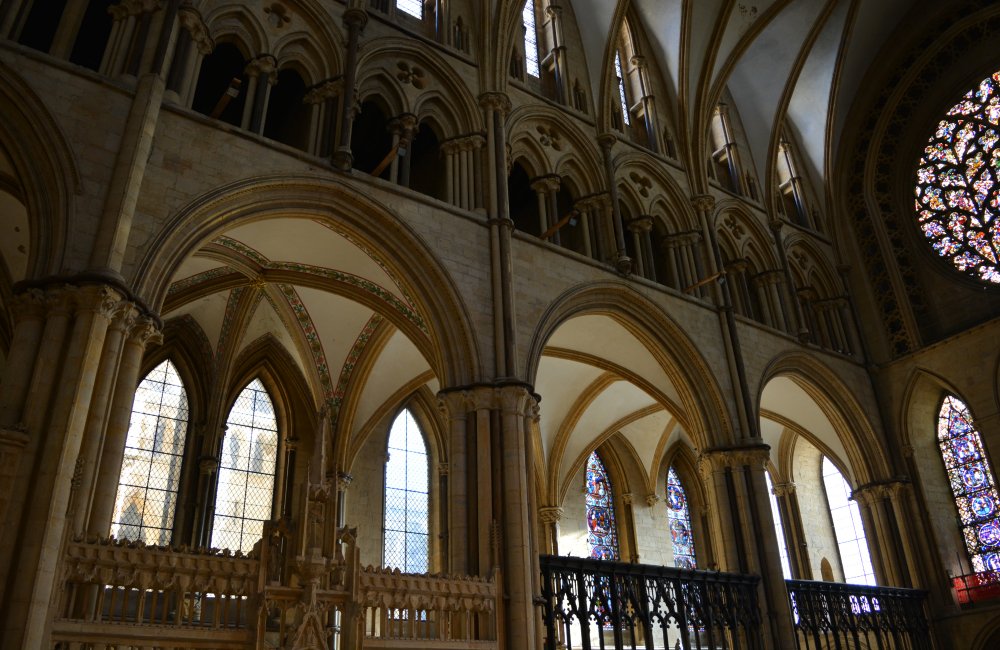
Details of the east side of the south transept - wonderful ribbed vaulting.
The South East Transept of Lincoln
Cathedral
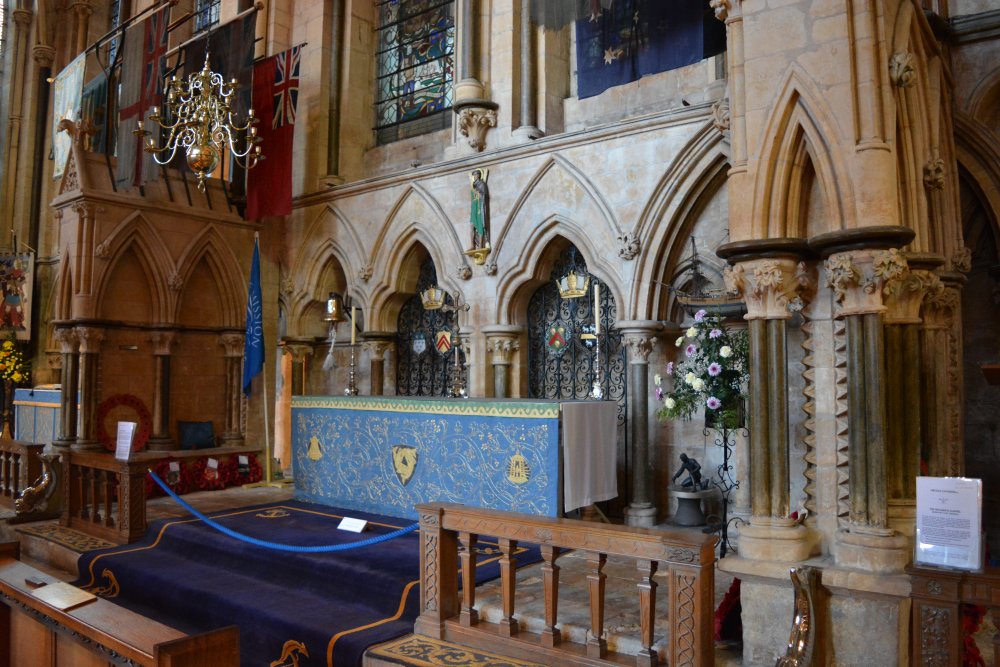
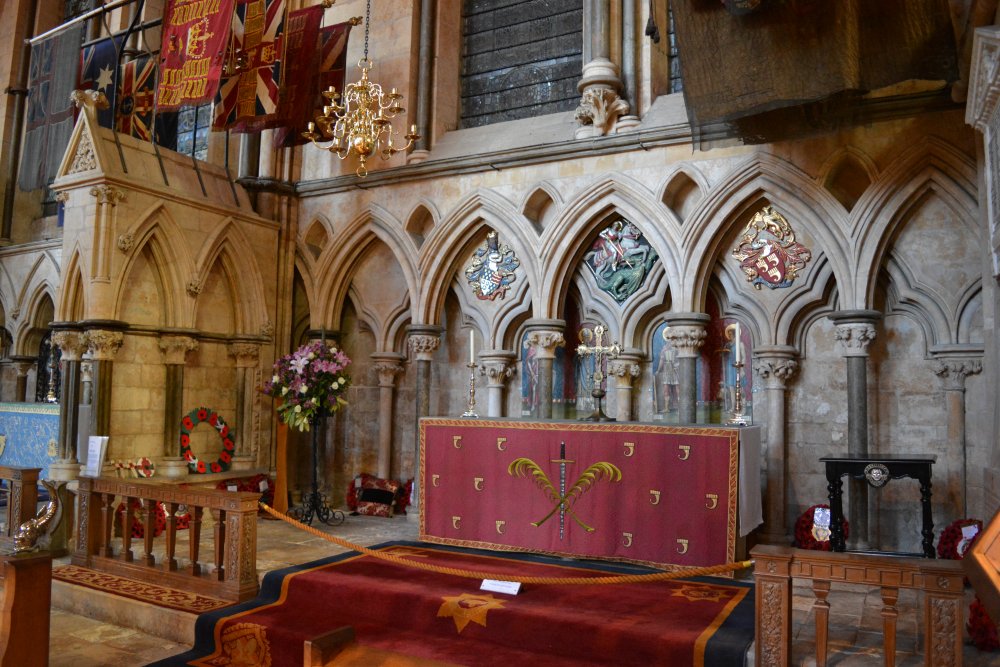
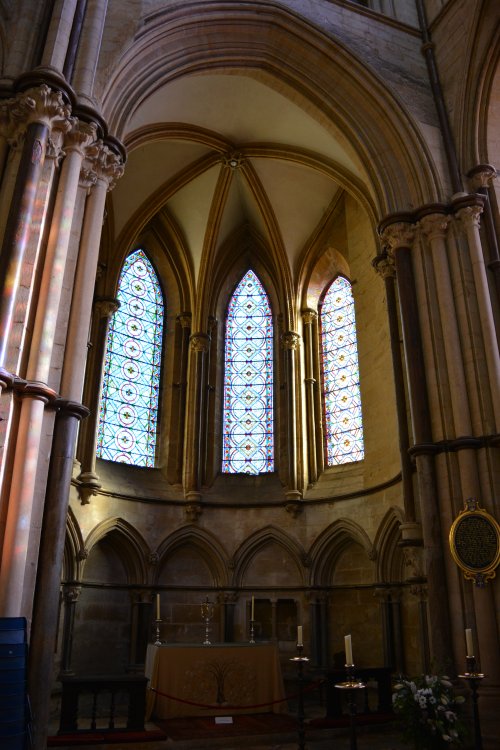
The chapel in the south east transept of Lincoln Cathedral 3. The east end - exterior and interior architecture of Lincoln Cathedral
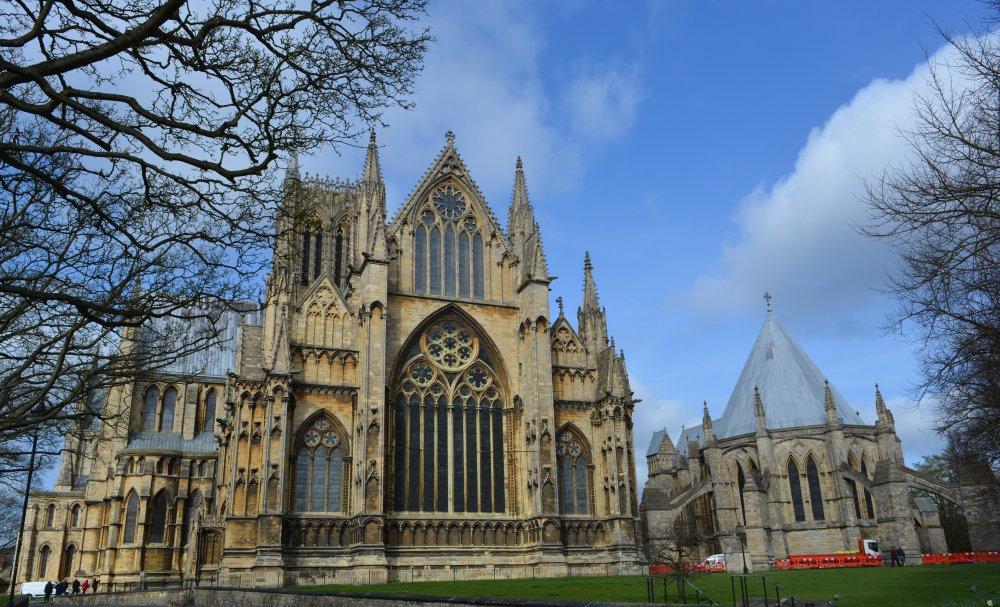
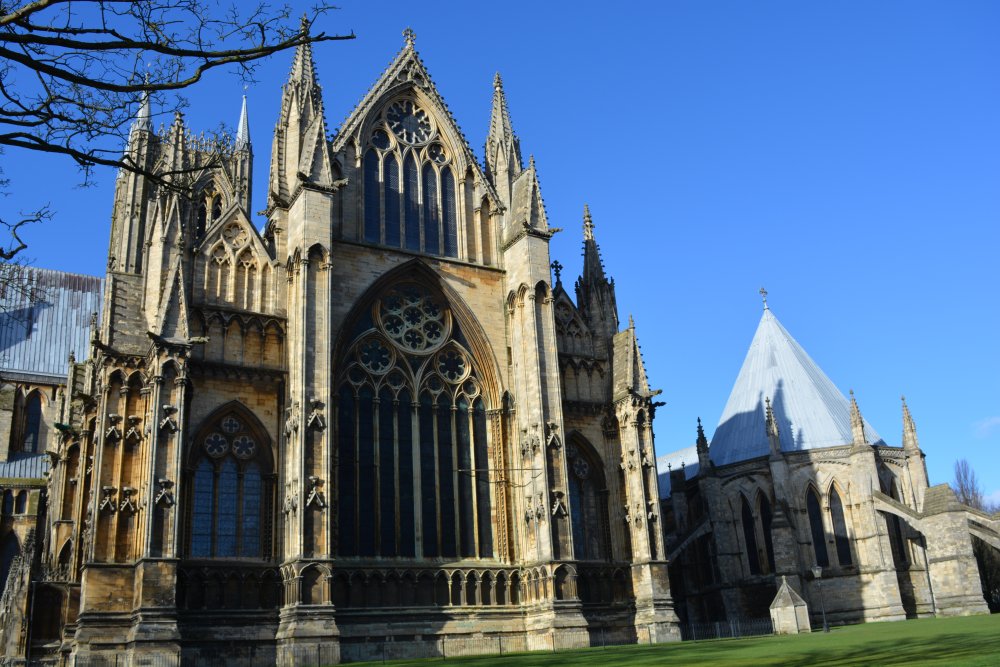
A general view of the east side of Lincoln Cathedral - the Chapter House is on the right
the east end with the Chapter House on the right
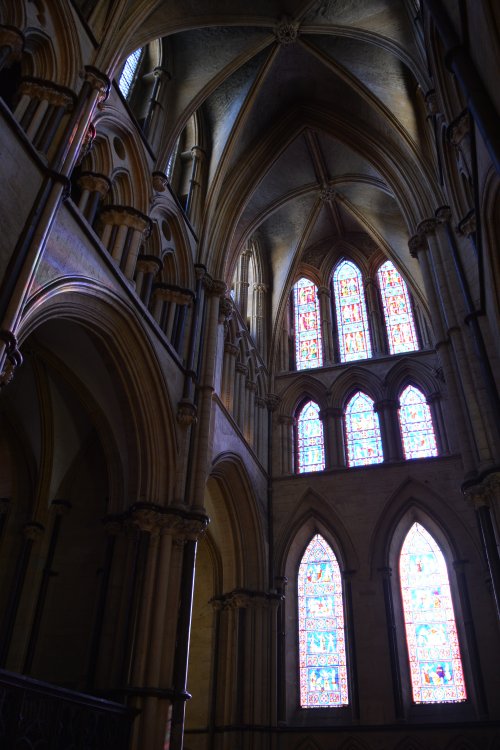
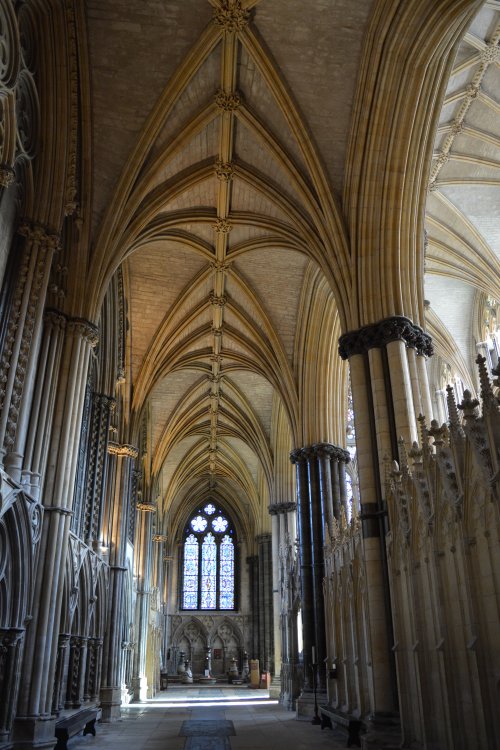
Looking east down the north-east aisle of St Hugh's Choir and the Angel Choir of Lincoln Cathedral
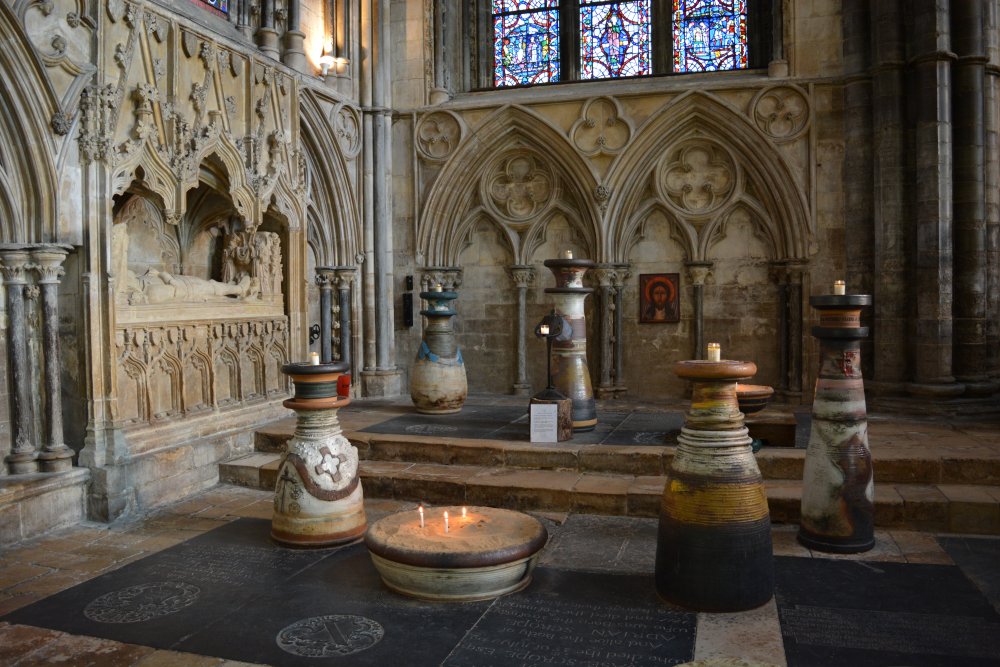
Left: Looking east down the north aisle of the east end and the Gilbert Pots, named after the Lincolnshire monk, Gilbert of Sempringham, where you can light candles for prayer Right: Looking north down the Slype Corridor
The Gilbert Pots and prayer candles in Lincoln Cathedral
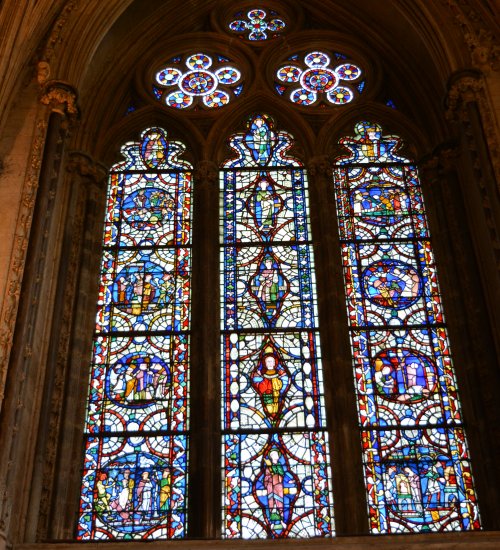
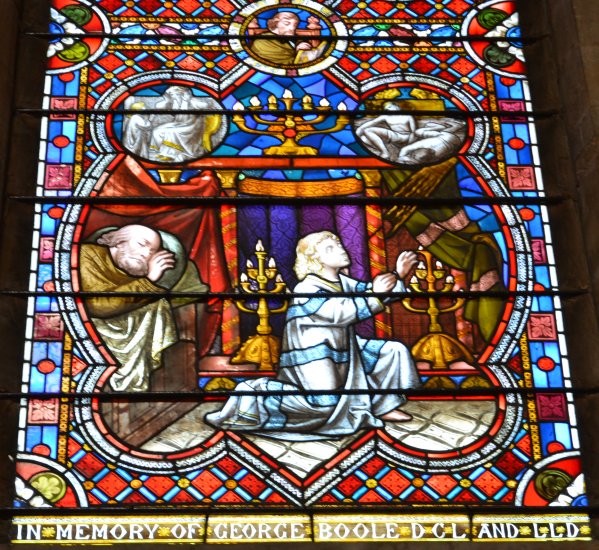
Left: The stained glass window above the Gilbert Pots shrines, northeast corner of Lincoln Cathedral.
The great east window of Lincoln Cathedral.
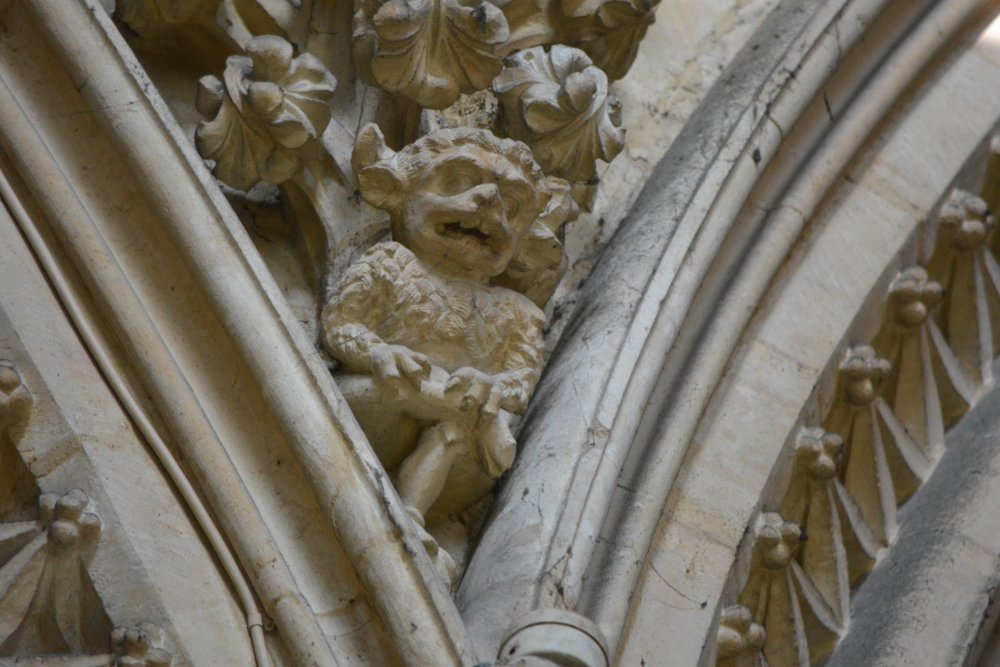
The north-east Chapel and the Imp high up in the vaulting of the Angel Choir of Lincoln Cathedral. One of the stone carvings high up in
the Angel Choir is the Lincoln Imp. There are various legends surrounding the figure
e.g. in the
14th-century apparently two mischievous imps were sent by Satan to do evil work
on Earth. After causing mayhem elsewhere in Northern England the two imps
headed to Lincoln Cathedral, where they smashed tables and chairs and
tripped up the Bishop! An angel appeared in the Angel Choir and ordered them
to stop, but one of the imps sat atop a stone pillar and started throwing rocks
at the angel whilst the other cowered under the broken tables and chairs.
The angel turned the first imp to stone, allowing the second imp to escape. In 1398 John of Gaunt and Katherine Swynford founded a chantry in the cathedral to pray for the welfare of their souls - a common practice for wealthy people in medieval times. In the 15th century the building of the cathedral turned to chantry or memorial chapels in which prayers were said for the benefactors. Those next to the Angel Choir were built in the Perpendicular style, with an emphasis on strong vertical lines, which survive today in the window tracery and wall panelling.
Details of the north-east window of the east wall of the east end of Lincoln Cathedral
The Great East Window of Lincoln Cathedral
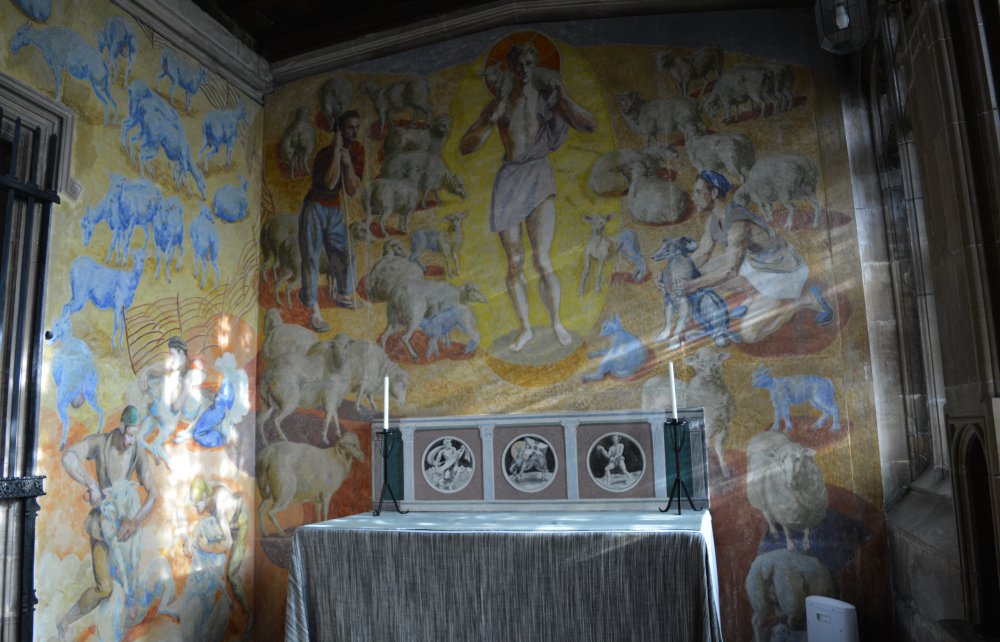
Above and below: The mural paintings in the chapel in the south east, off the
south east aisle of the Angel Choir, of Lincoln Cathedral.
From the Crossing looking east down the south aisle of the choirs of Lincoln Cathedral (see also below)
Left: Looking east down the south aisle of the choir towards the chapel of ? Right: The ? chapel in the far south east corner
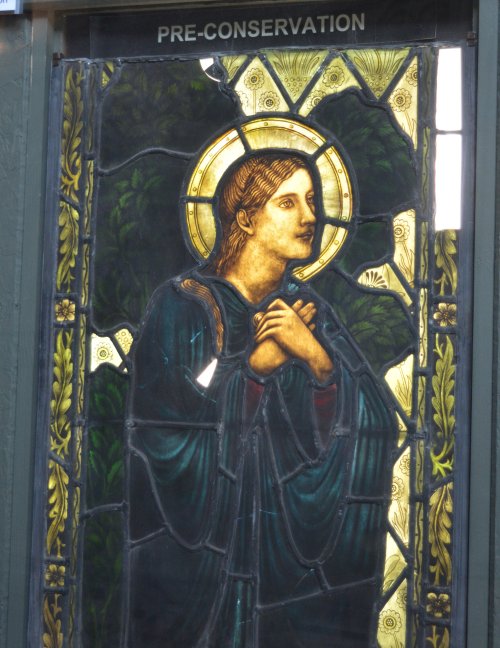
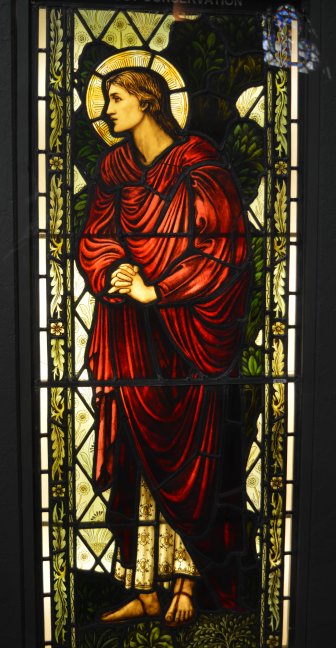
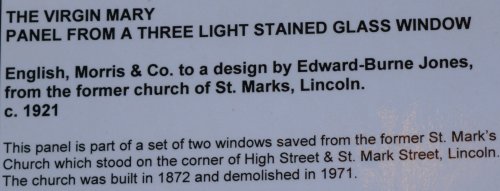
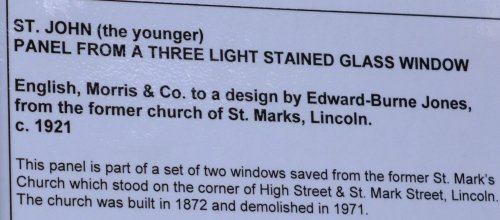
Some of the restored 'pre-Raphaelite' glass panels in Lincoln Cathedral. 4. The Angel Choir and St Hugh's Choir of Lincoln Cathedral
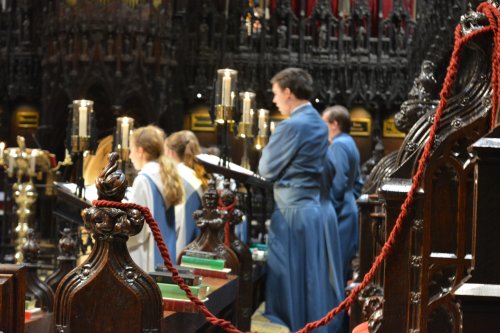
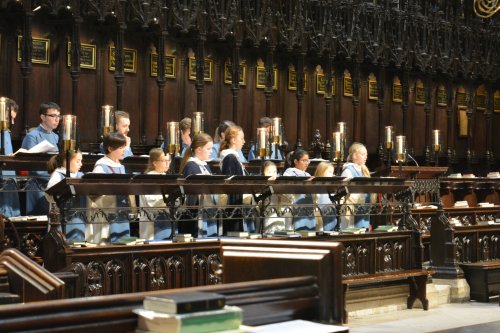
Evensong in the Choir of Lincoln Cathedral in St Hugh's Choir
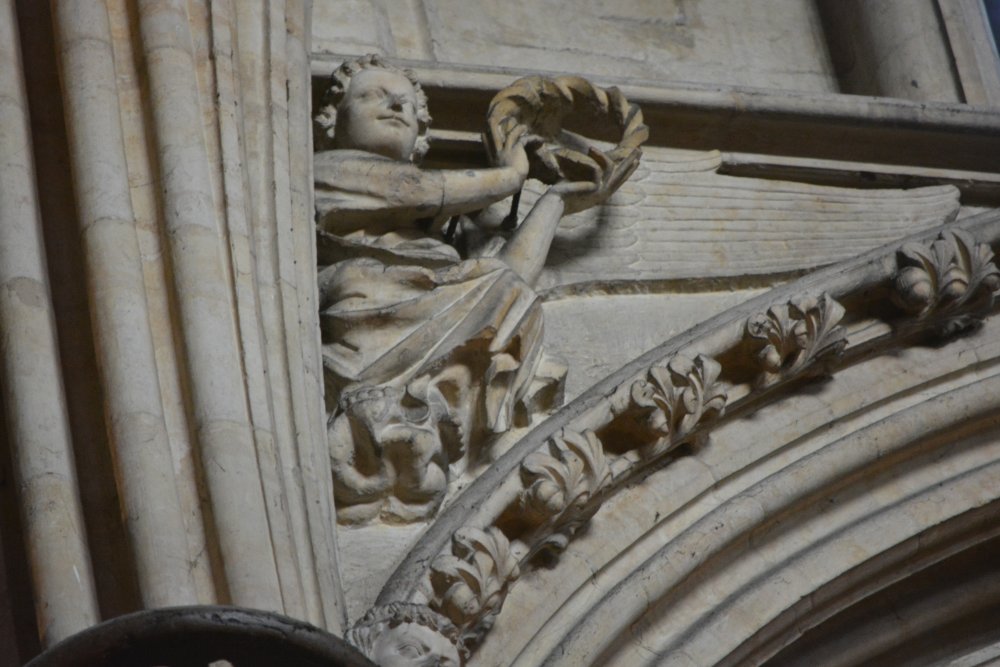
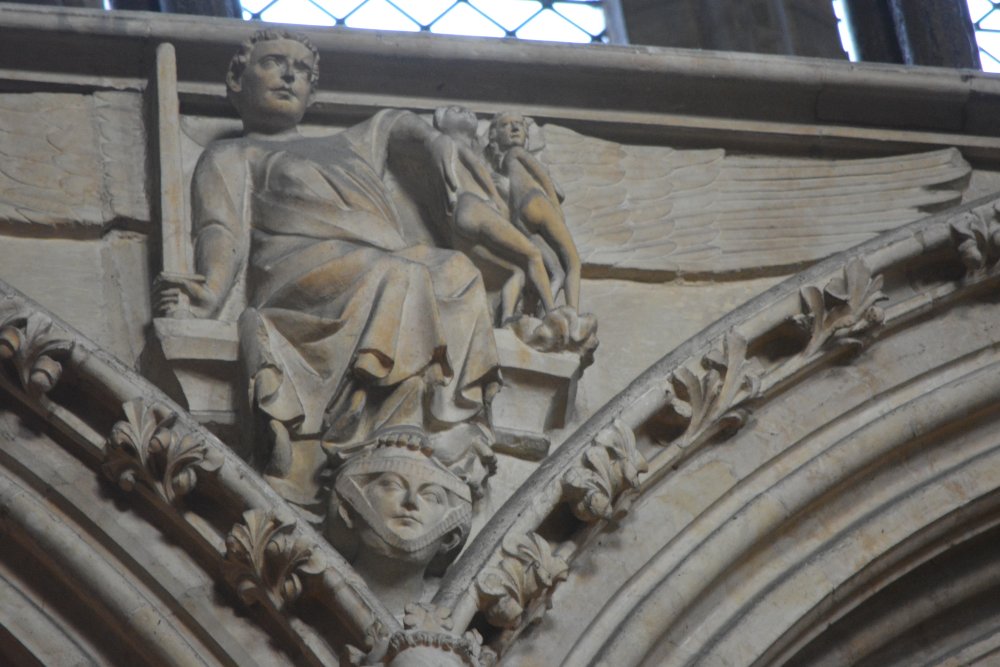
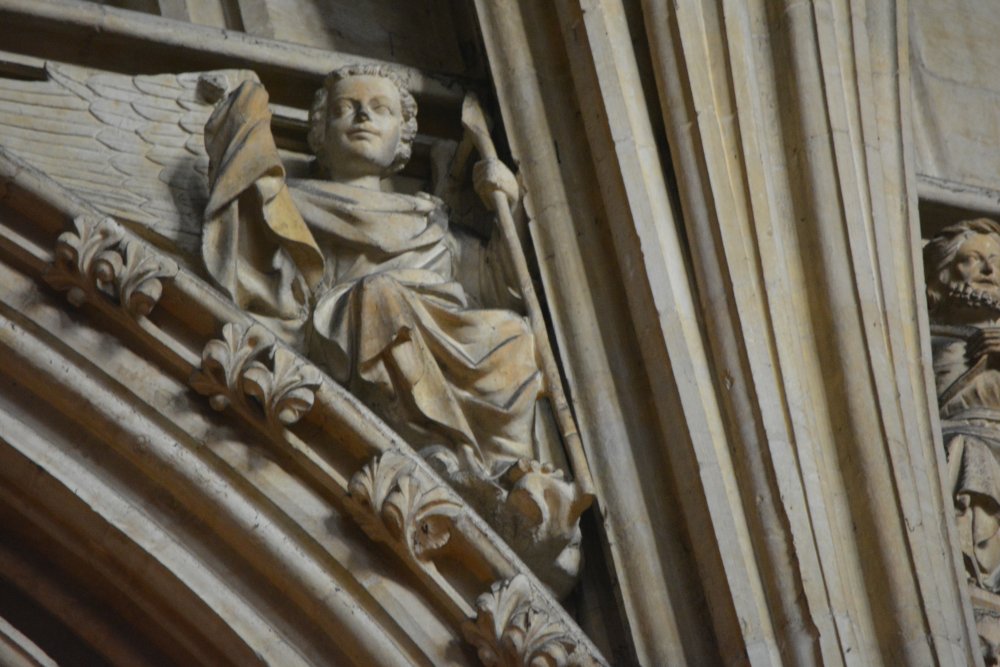
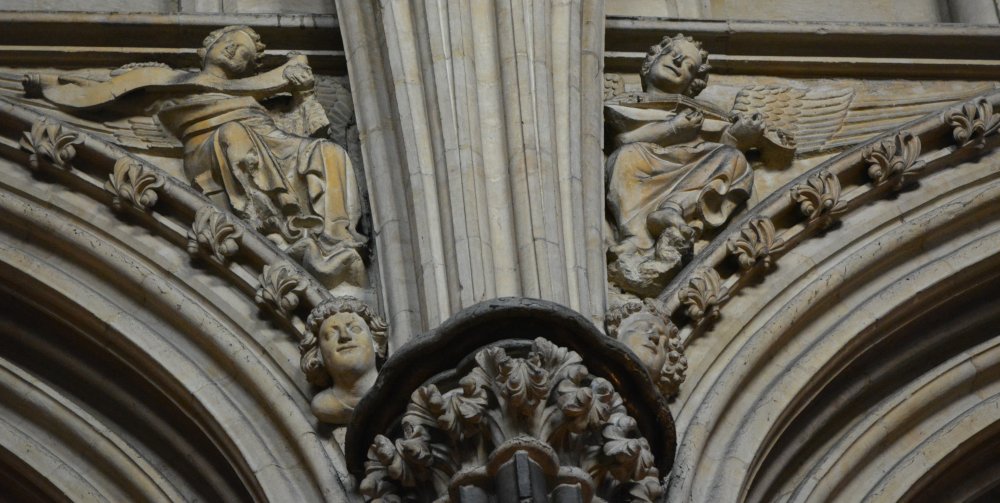
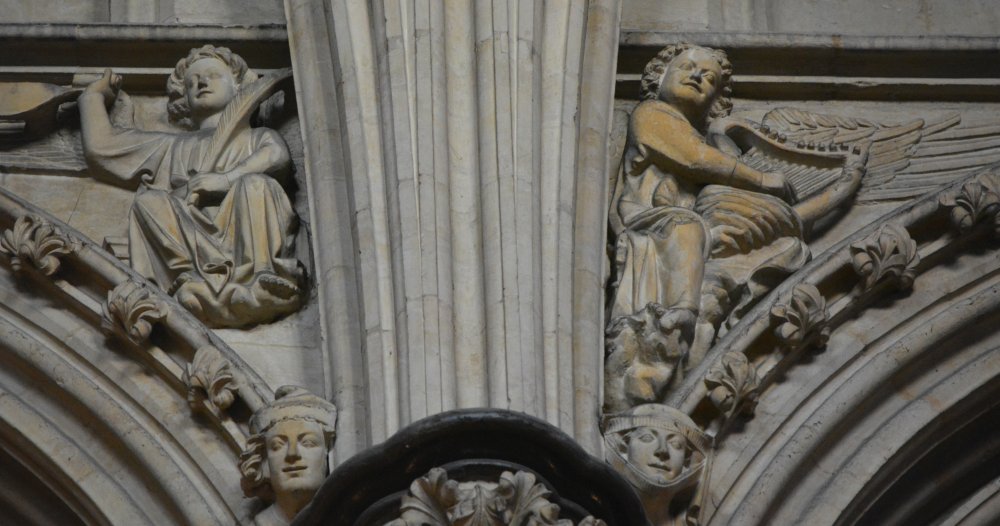
Images of the carvings high up in the Angel Choir of Lincoln Cathedral. The following images speak for themselves.
The famous Imp high up in the north arches of the Angel Choir of Lincoln Cathedral.
Looking towards the East Window from the Angel Choir of Lincoln Cathedral.
Details of northeast corner and east window of the Angel Choir
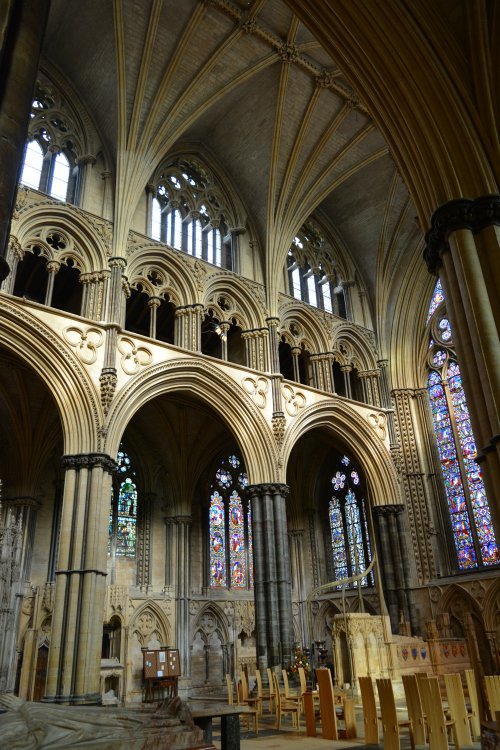
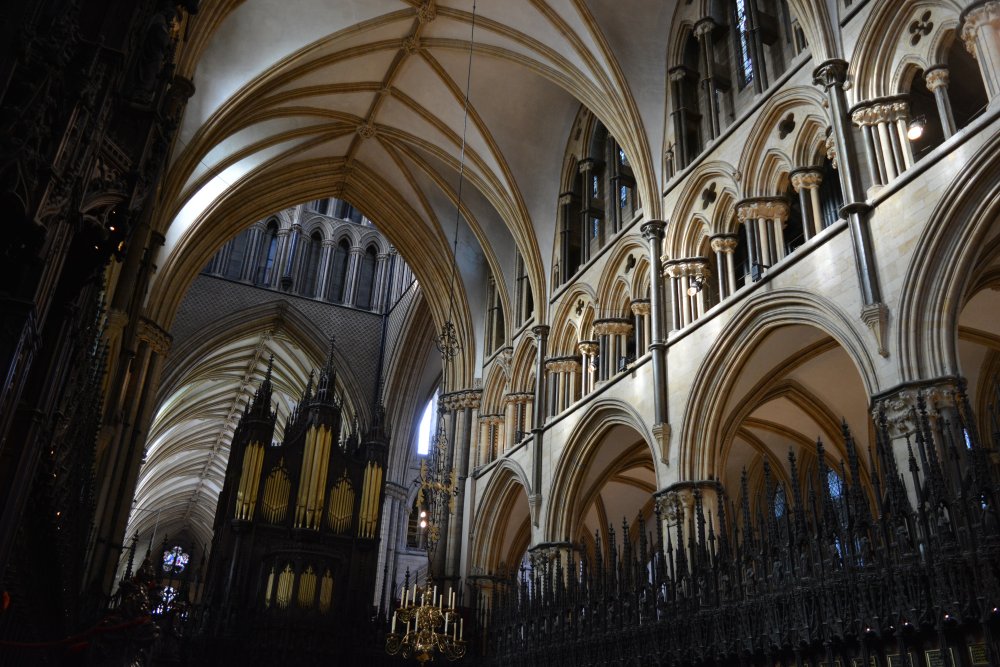
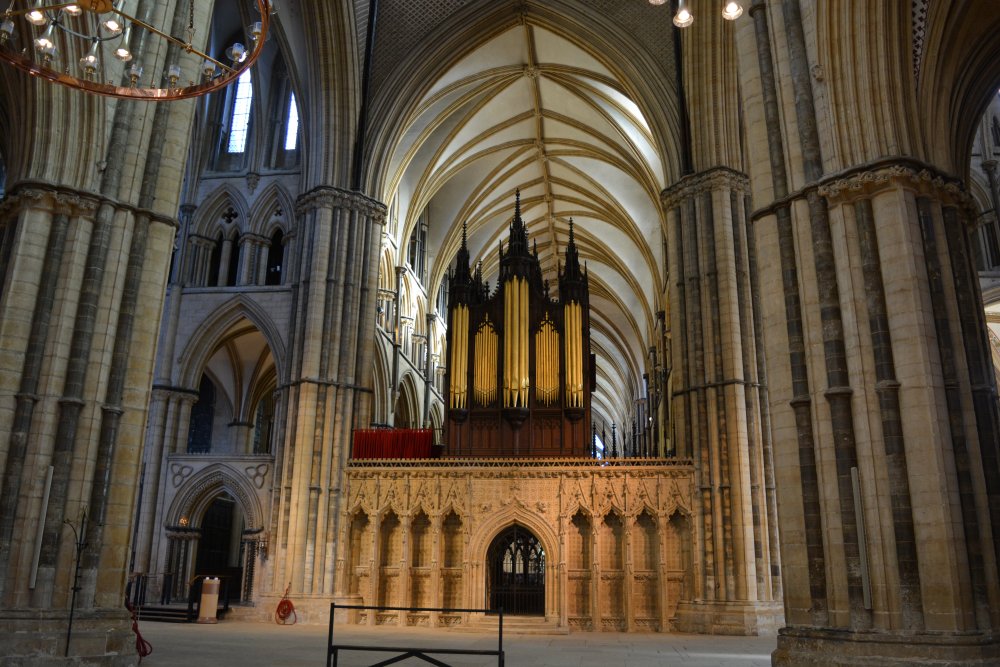
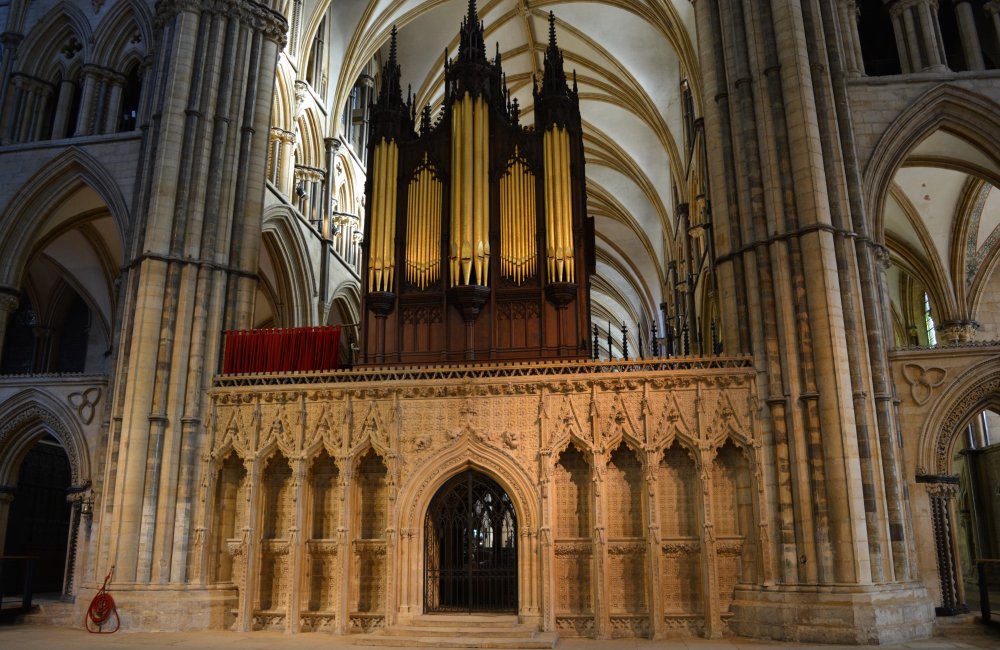
The organ in the choir of Lincoln Cathedral. The organ is one of the finest examples of the work of "Father" Henry Willis, dating from 1898. It was Willis' last cathedral organ before his death in 1901. It has undergone two restorations, in 1960 and 1998, by Harrison & Harrison. The records of cathedral organists at Lincoln are continuous from 1439 when John Ingleton was the incumbent and notable organists of Lincoln Cathedral include the Renaissance composers William Byrd and John Reading. Note in the same photograph, another major wonderful architectural feature of Lincoln Cathedral are the spectacular 'ceiling-roofing' vaults some are said to be both original and experimental. The vaults especially, clearly define the experimental aspect seen at Lincoln Cathedral. There are all kinds of vaults differing between the nave, aisles, choir, and chapels of the cathedral. e.g. Saint Hugh's Choir exhibits extremely unusual vaults including a series of asymmetrical vaults that appear to almost be a diagonal line created by two ribs on one side translating into only a single rib on the other side of the vault dividing up the space of the vaults and bays, perfectly placing the emphasis on the bays.
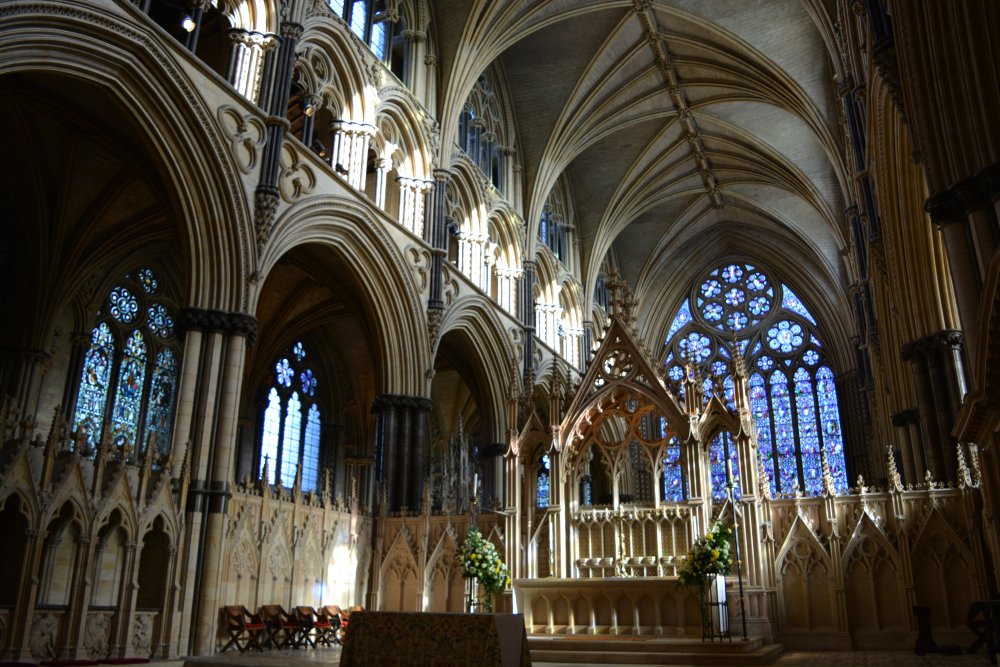
Looking east towards the High Altar from inside the choir.
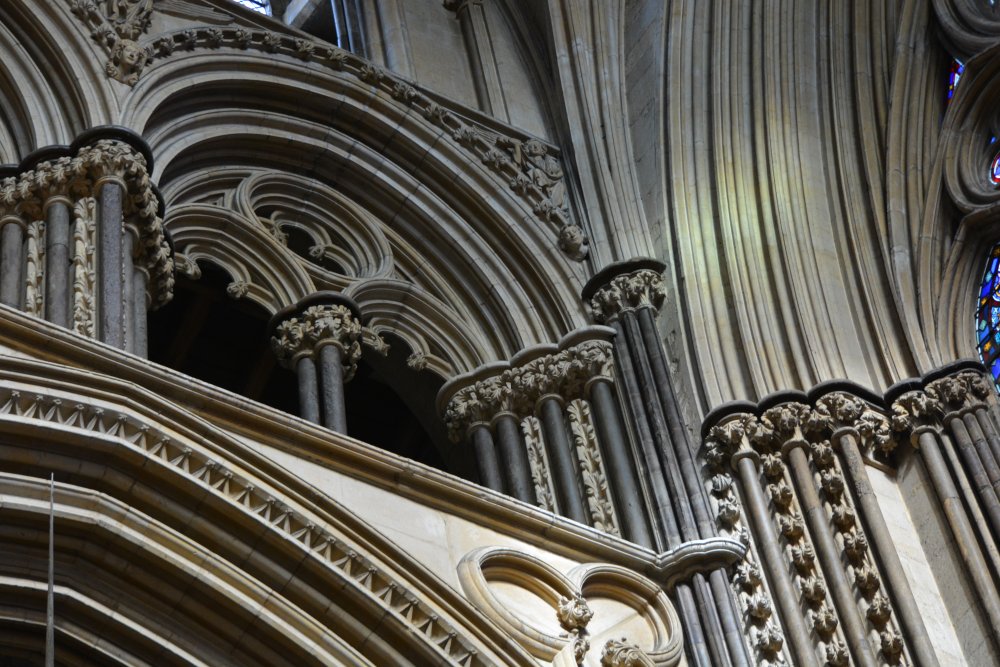
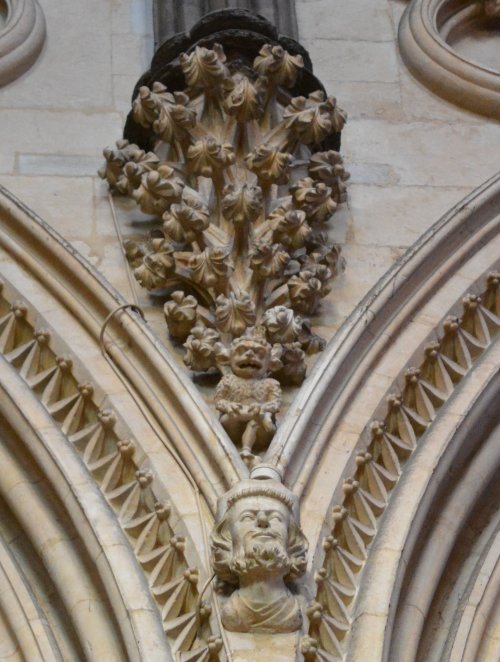
Decorative detail of the north arches of the Angel Choir of Lincoln Cathedral.
Details of northeast corner and east window, east end of Angel Choir
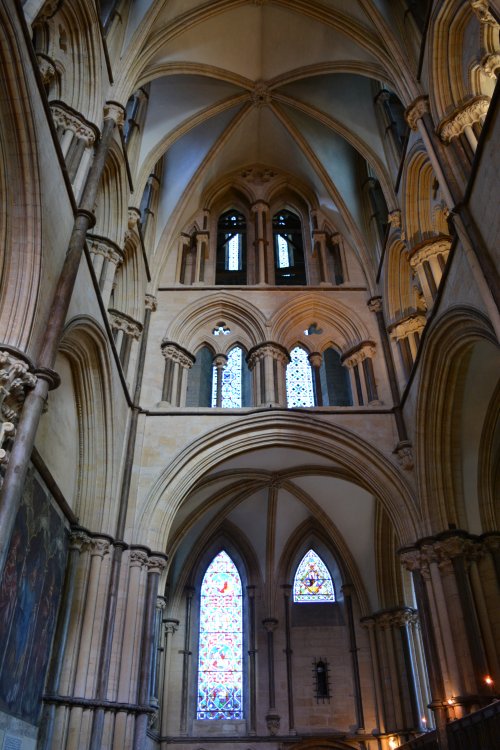
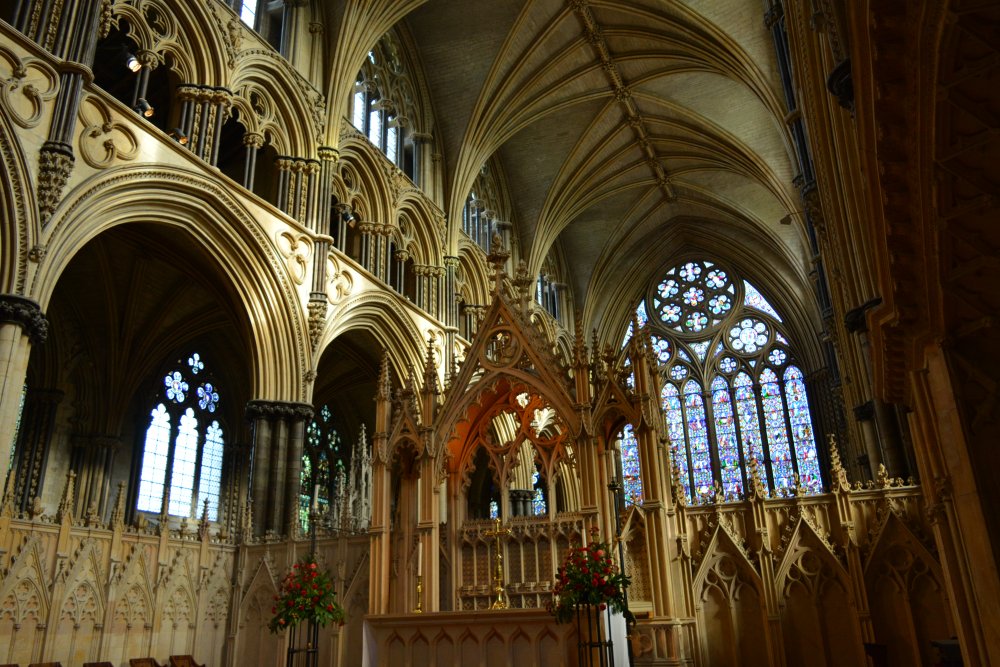
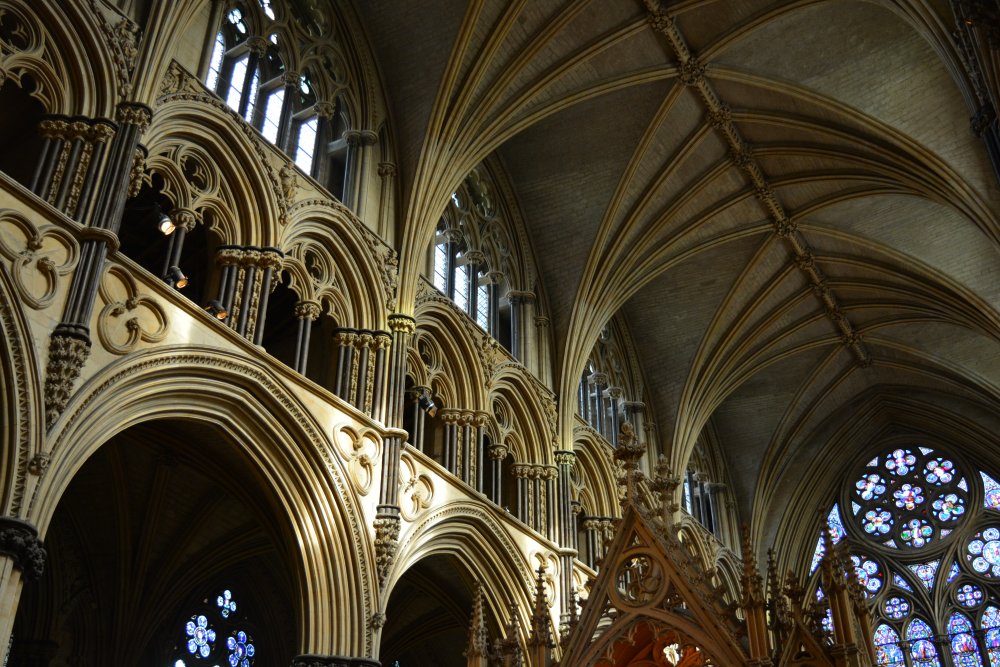
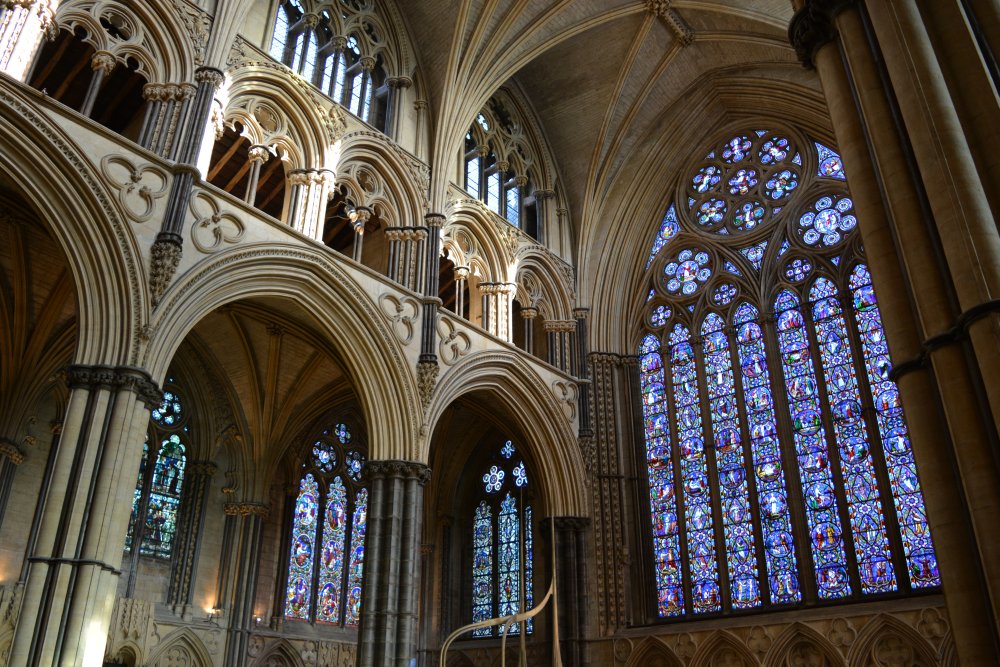
Northeast architecture around the 'Lincoln Imp', details of the pointed arches, triforum and clerestory windows of the Angel Choir
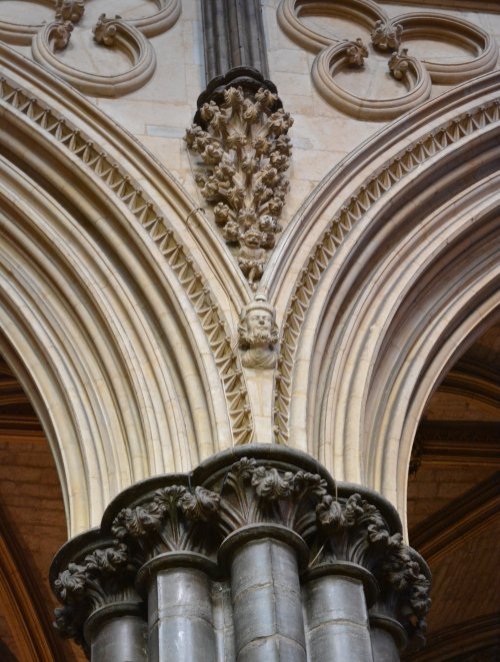
Decorative detail of the north arches at the eastern end of the Angel Choir of Lincoln Cathedral.
Above and below: The east end of St Hugh's Choir and looking west down St Hugh's Choir and Angel Choir.
Another view of the organ and choir stalls.
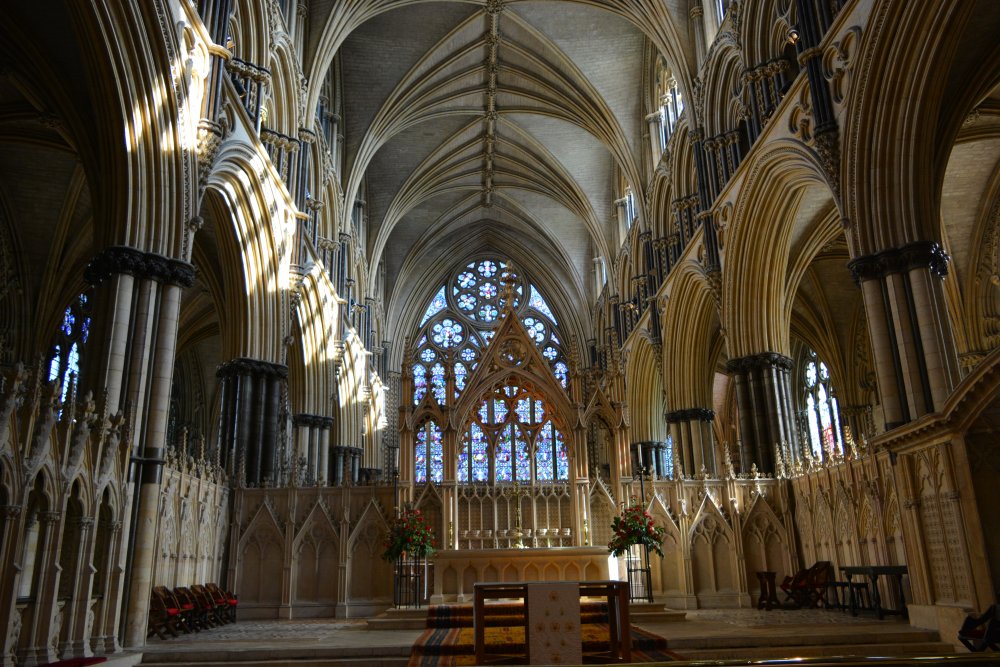
Above and below: Looking east down St Hugh's Choir to the High Altar and Angel Choir
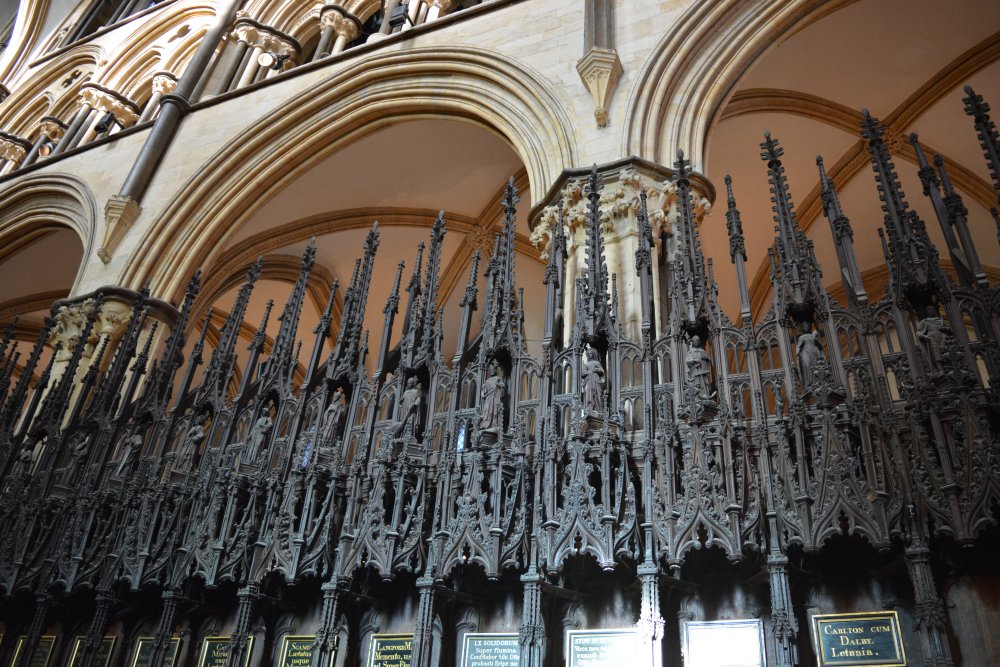
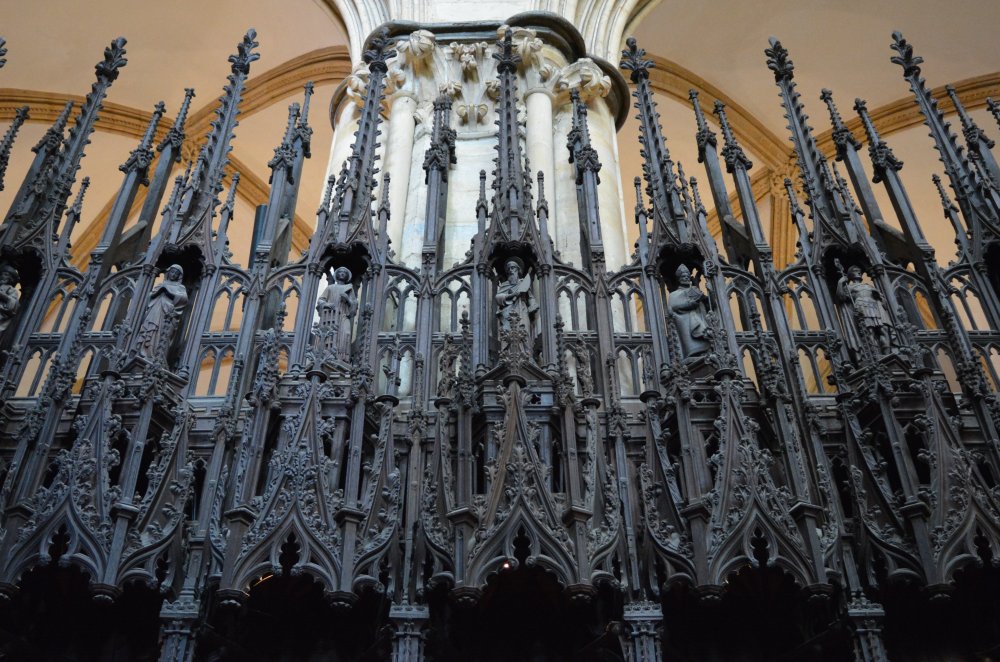
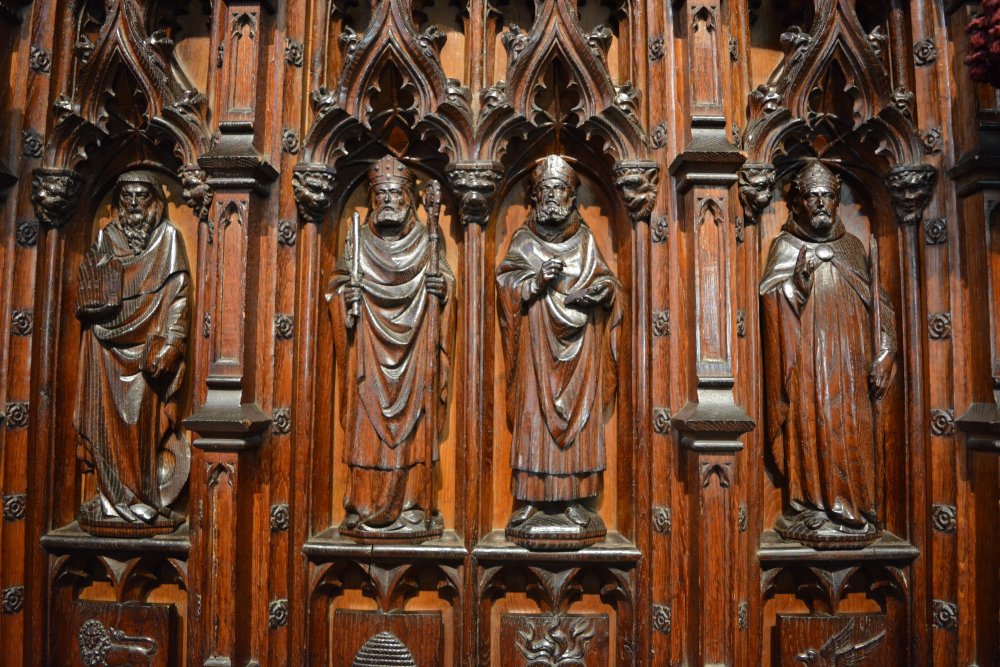
The elaborate carving of the choir stalls of St Hugh's Choir of Lincoln Cathedral.
Canopy carvings in St Hugh's Choir
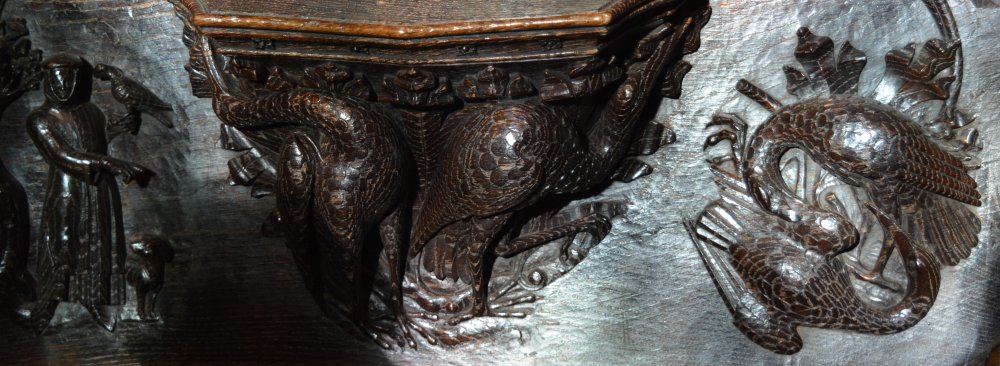
Examples of the misericords in the choir stalls of Lincoln Cathedral.
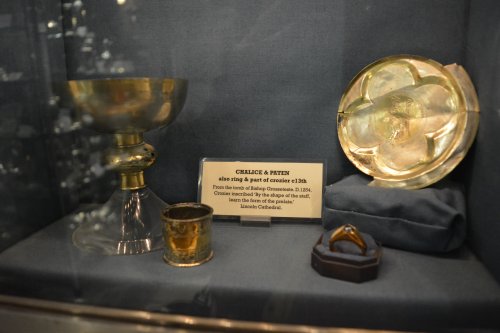
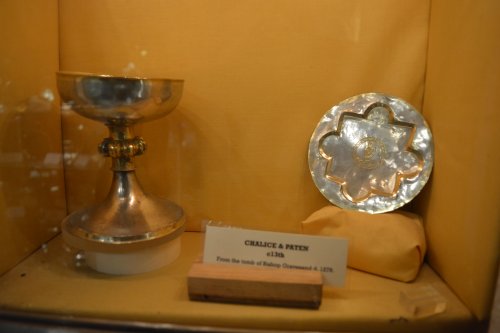
5. The Chapter House, Cloisters, Refectory Cafe, Treasury and Library
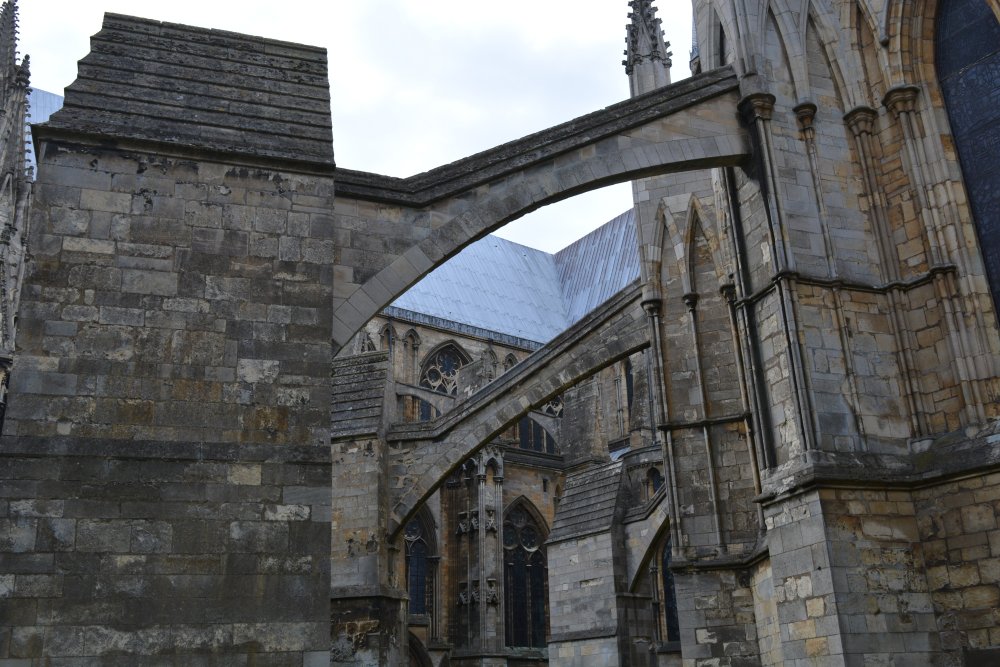
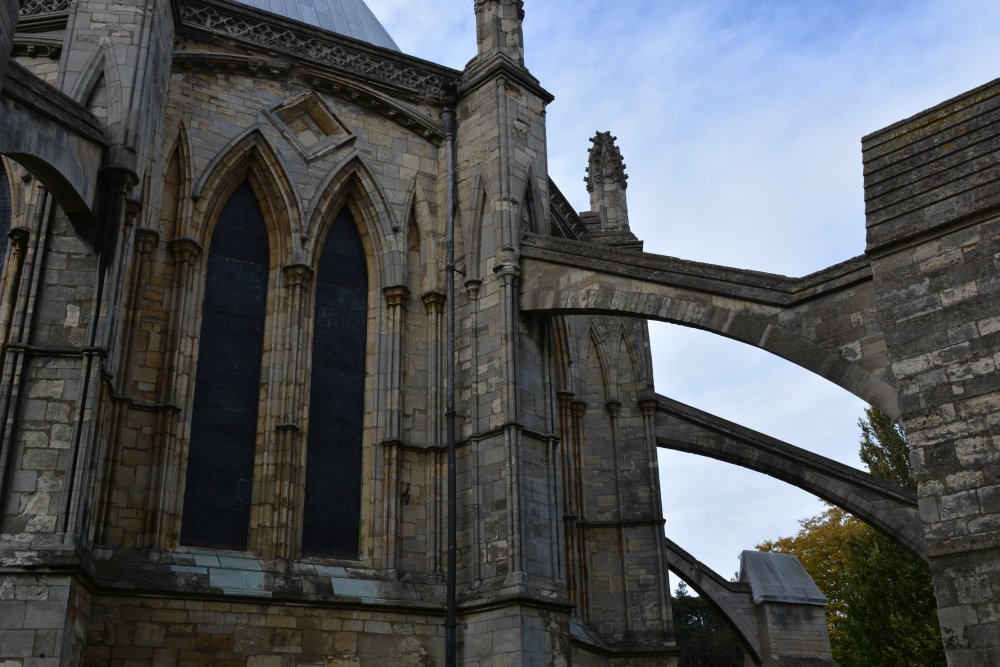
The flying buttresses of the Chapter House of Lincoln Cathedral.
The entrance to the Chapter House of Lincoln Cathedral.
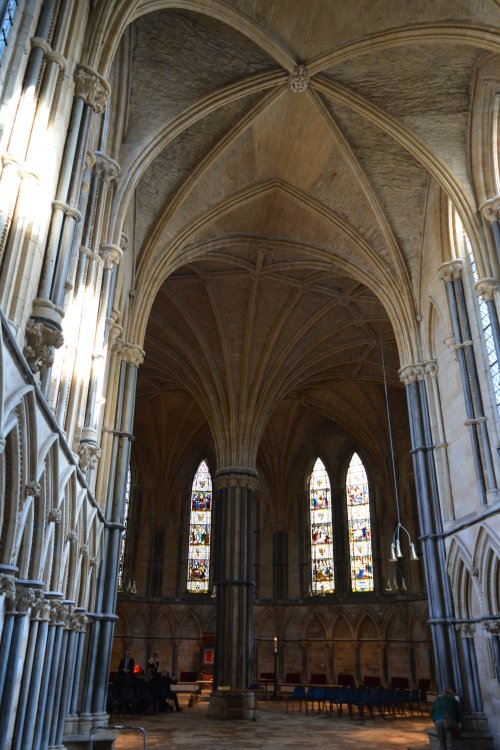
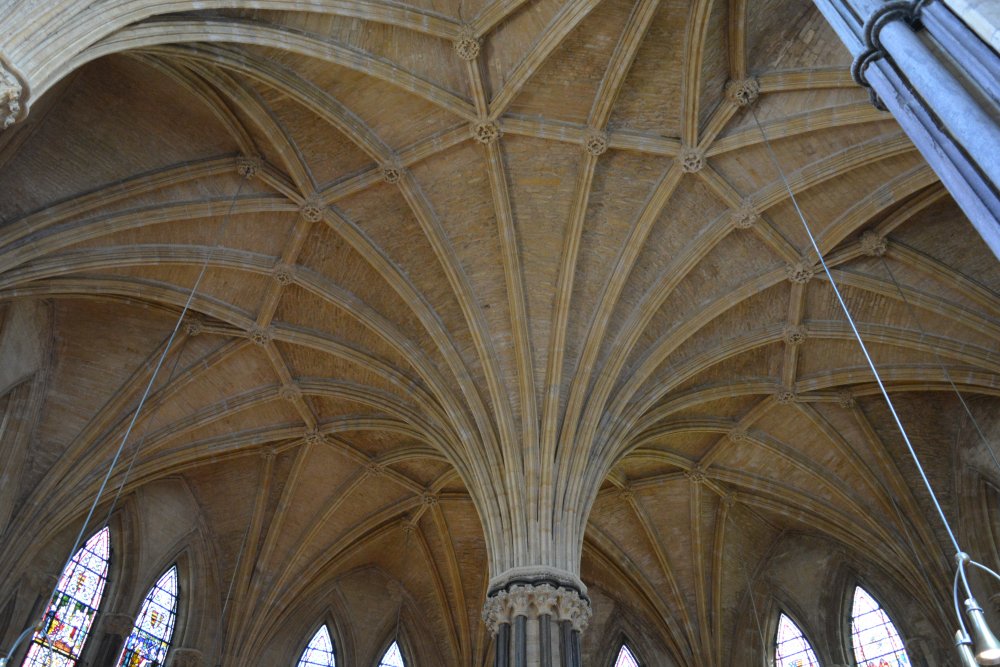
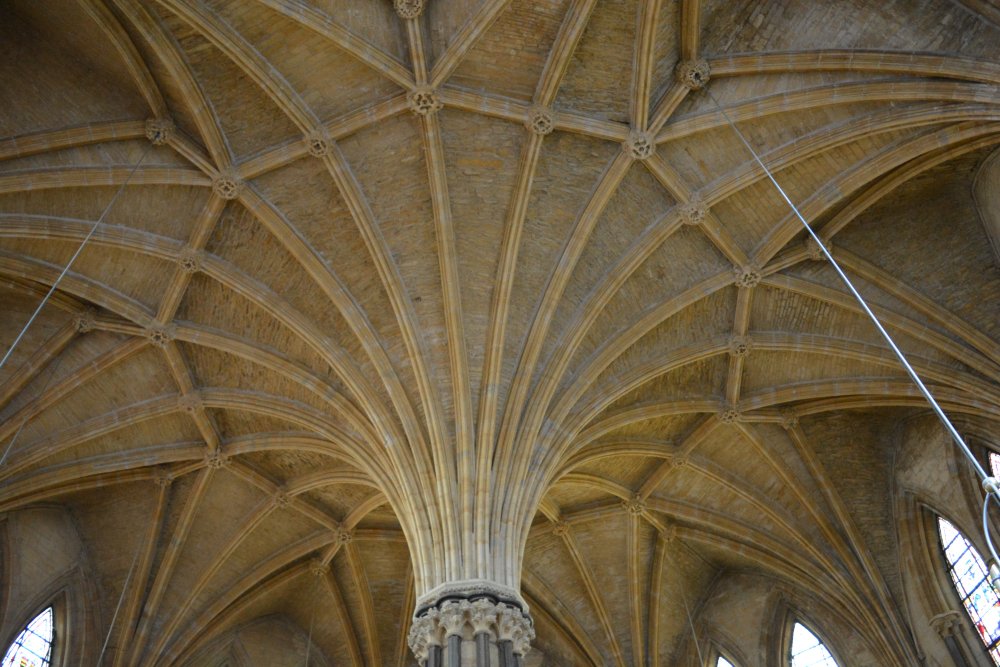
The Chapter House of Lincoln Cathedral is a decagonal
building with a single, central column that twenty ribs rise from. The
chapter house vaults are spectacular and each separate area of Lincoln can
be identified solely by the different vaults of the space. Each vault is
original displaying the innovative thinking and great creativity of the
medieval stone masons.
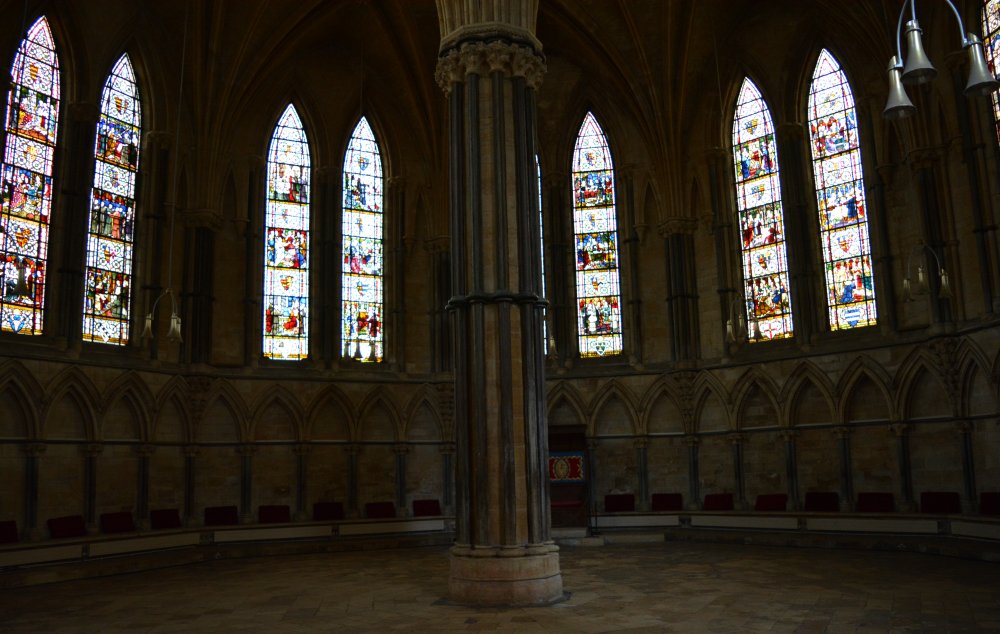
The stained glass windows of the Chapter House
The wonderful fan vaulting of the Chapter House of Lincoln Cathedral
Some of the stained glass window panels of the Chapter House
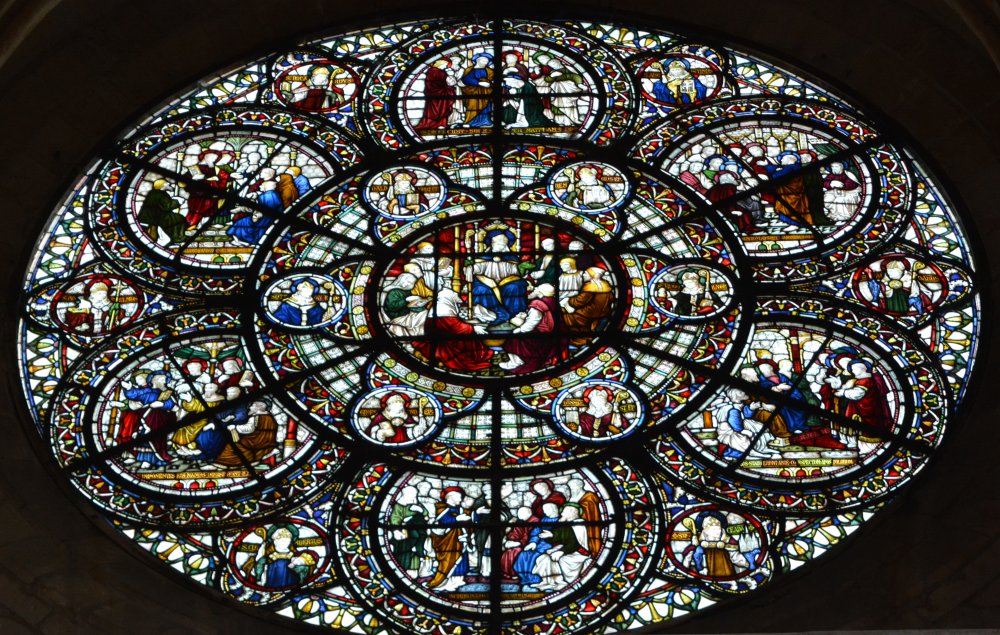
The Chapter House Rose Window
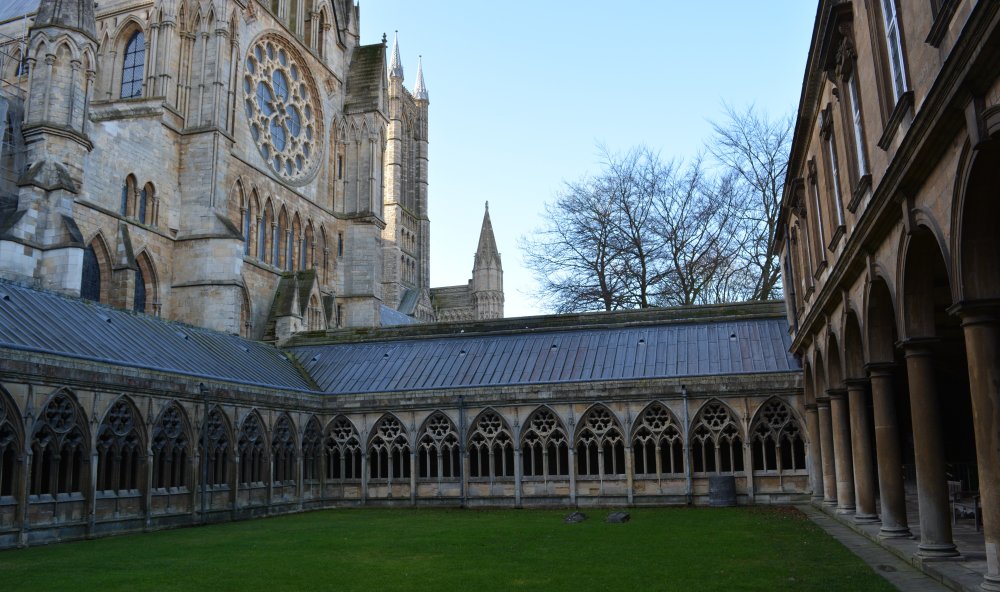
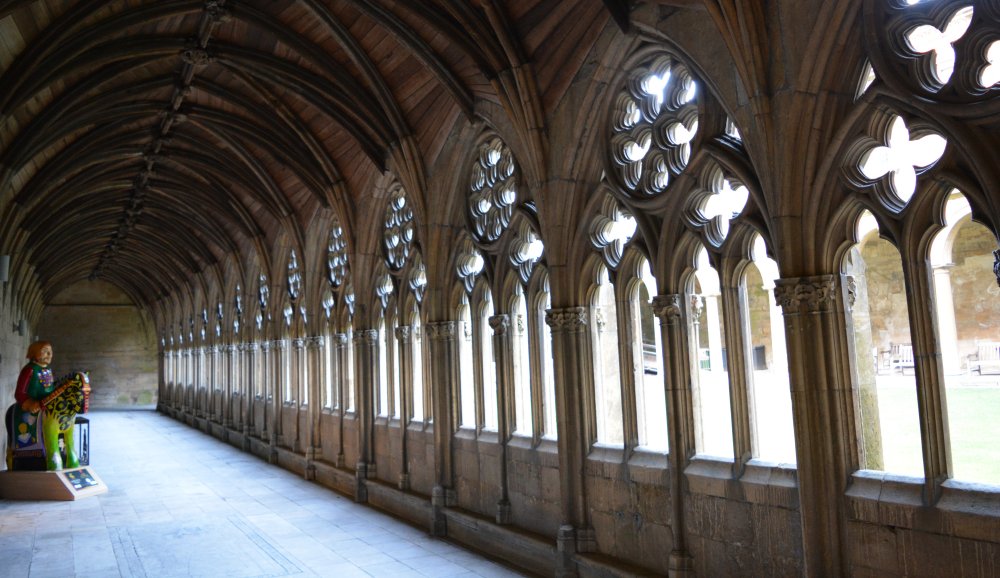
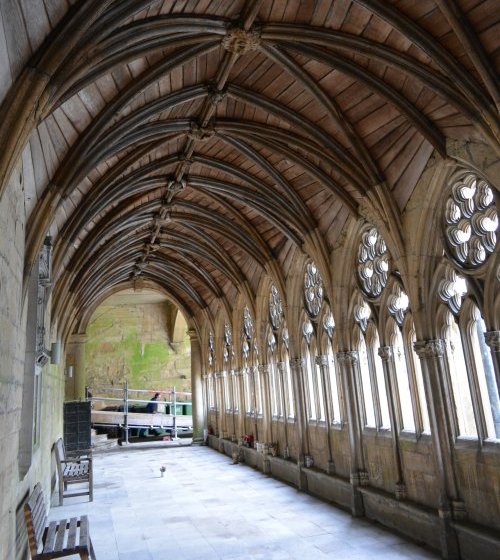
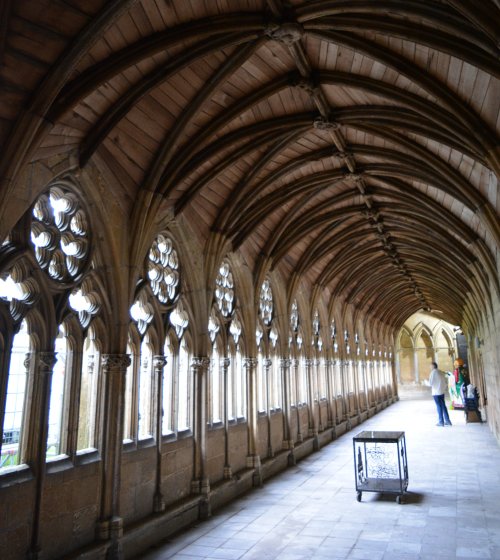
The Cloisters
One side of the Cloisters of Lincoln Cathedral.
The Refectory Cafe tearoom of Lincoln Cathedral.
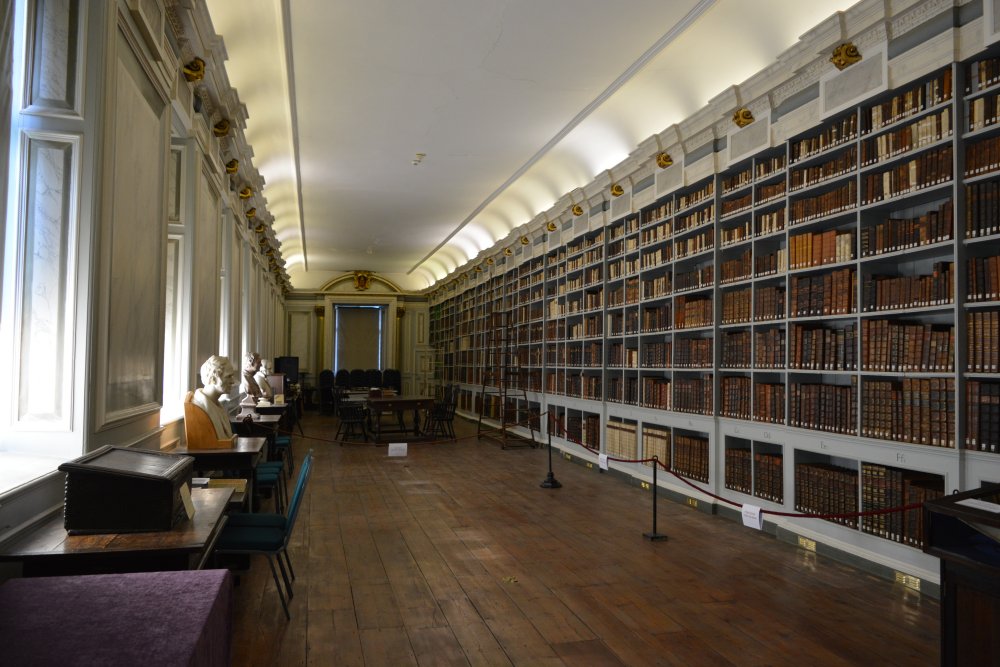
The fine long gallery of the library of Lincoln Cathedral, designed by the architect Christopher Wren The Wren Library houses a rare collection of over 277 manuscripts, including
a text by the Venerable Bede. 6. The Nave
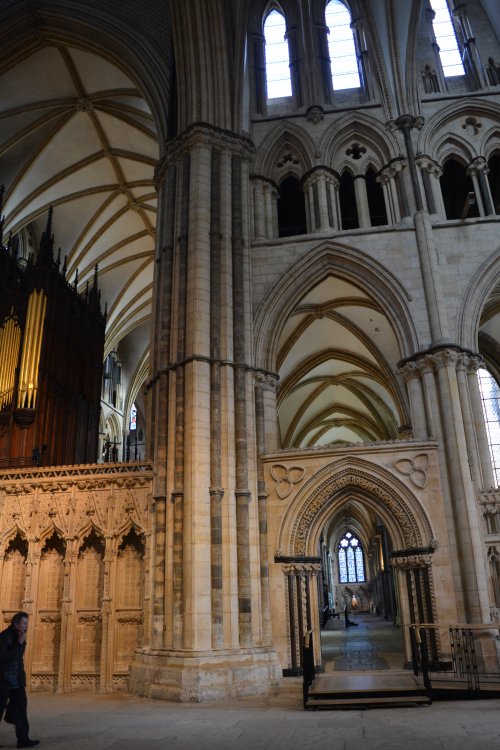
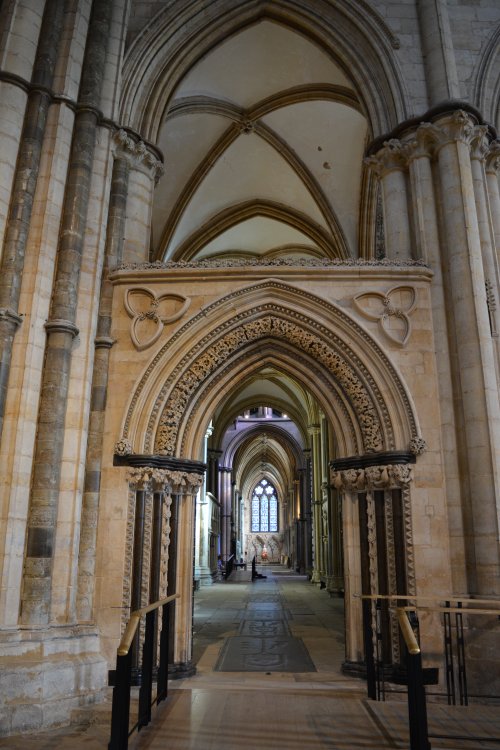
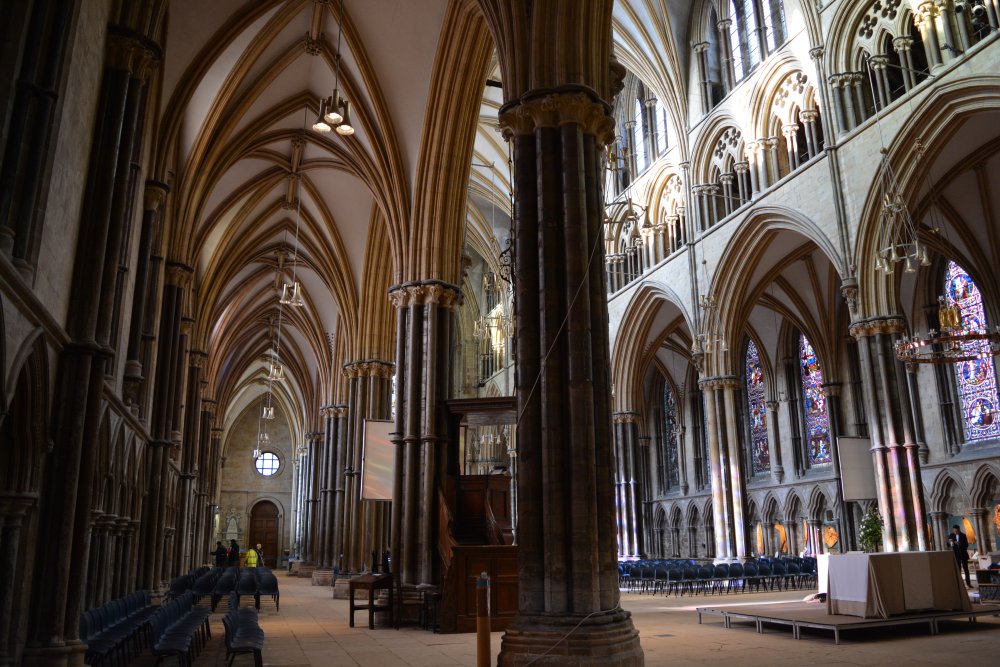
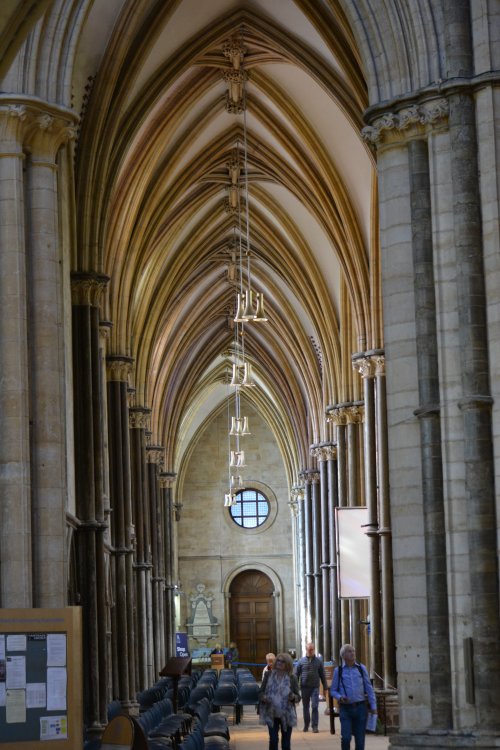
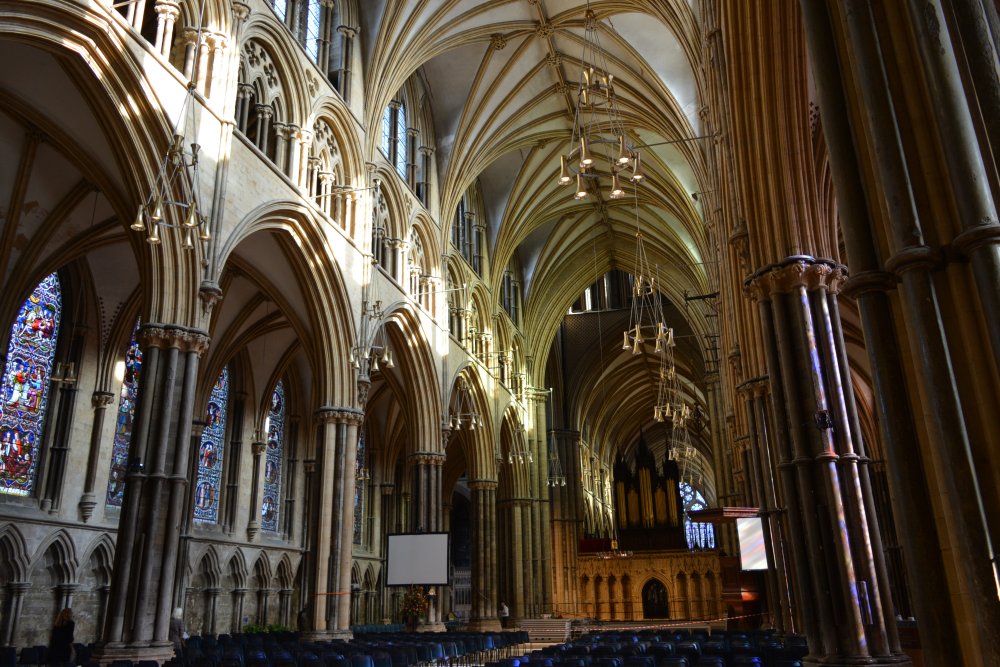
Looking west down the south aisle of the nave of Lincoln Cathedral, note the wonderful roof vaulting
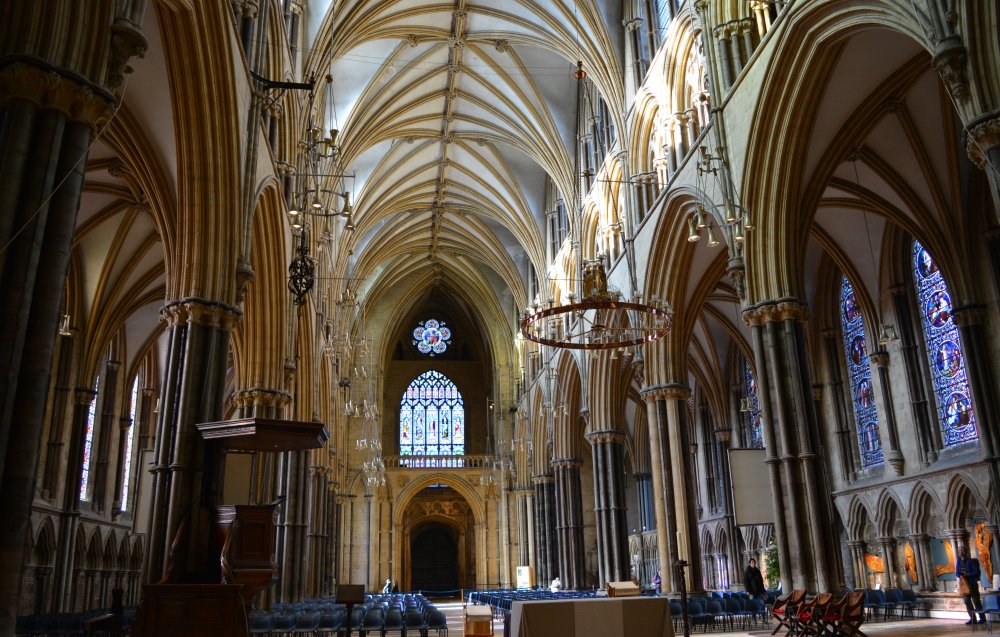
Lincoln Cathedral - Looking east down the Nave in the direction of the north aisle on the left
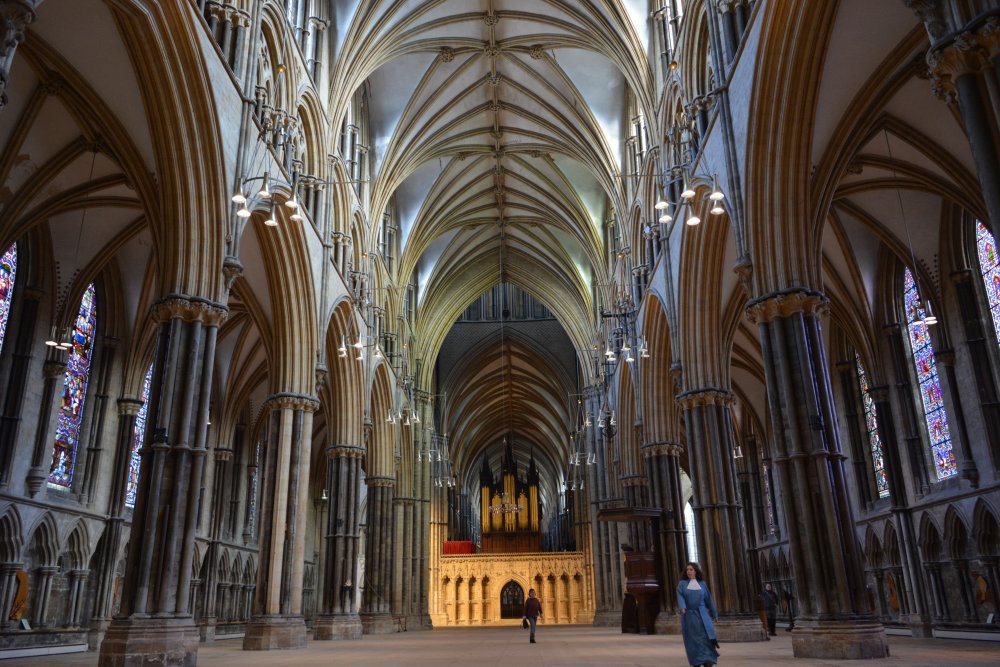
Above and below: Looking west down the great nave of Lincoln Cathedral.
Above and below: Looking west from the nave to the entrance to St Hugh's Choir at the Crossing of Lincoln Cathedral
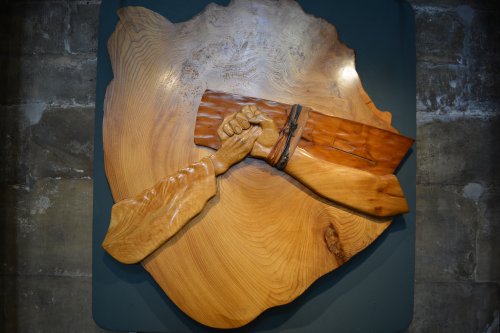
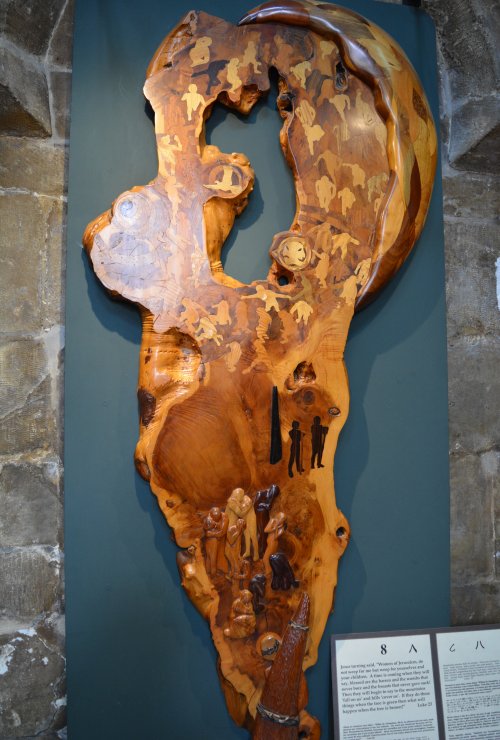
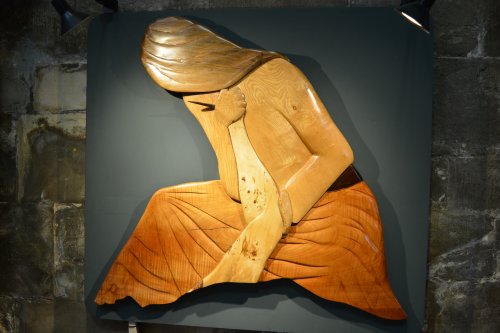
Some wonderful wooden sculptures in the North Aisle - The Stations of the Cross by ? - since moved to ?
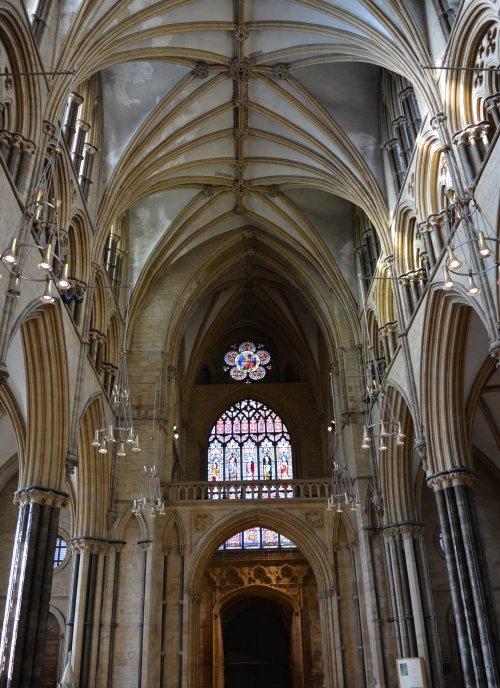
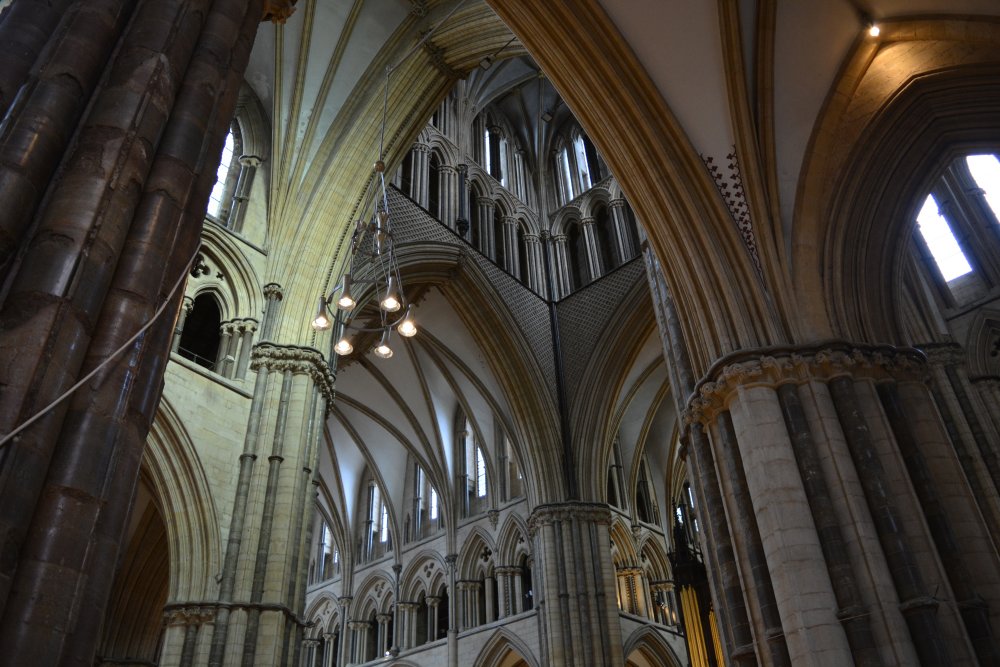
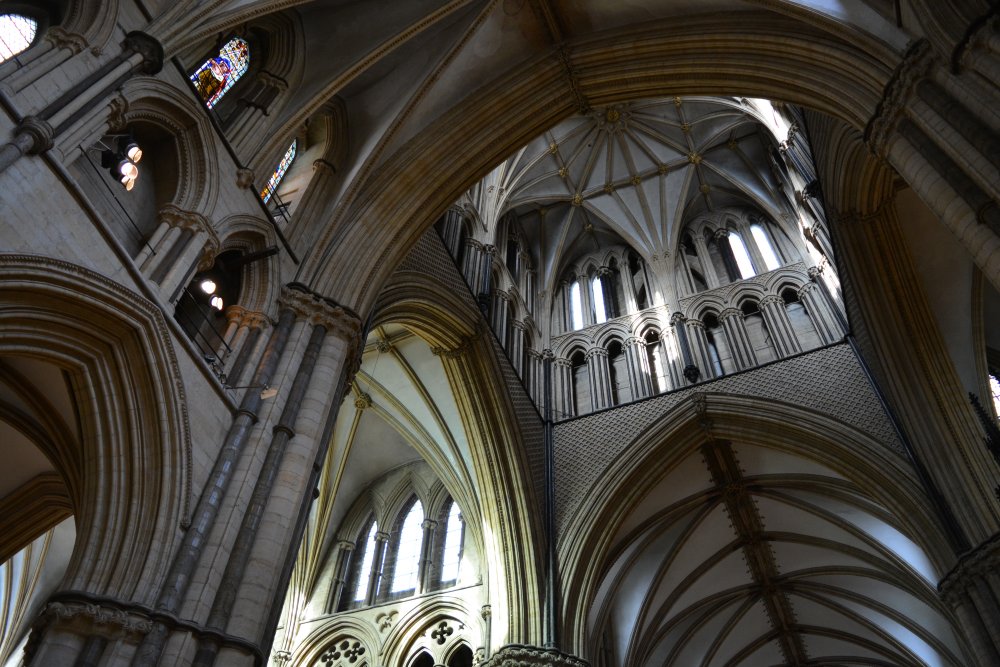
Above and below: Looking up into the central tower at the Crossing
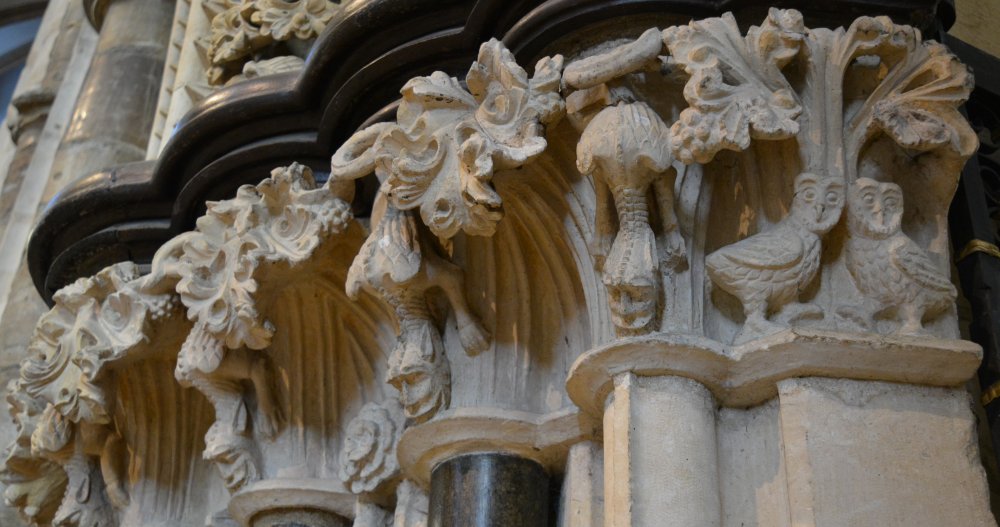
Some of the carvings near the south-east corner entrance to the south aisle of the Angel Choir of Lincoln Cathedral One of the details is lovely carving of a pair of owls.
A history of Lincoln Cathedral Lincoln Cathedral is one of the most important buildings in European medieval architecture — a masterpiece of Norman, Early English, Decorated, and Perpendicular Gothic, a centre of pilgrimage, learning, and civic identity, and for more than two centuries the tallest building in the world. What follows is a deep, structured, evidence‑based guide to its history, architecture, notable people, and social significance, synthesising the most authoritative sources available. Lincoln Cathedral was founded by Bishop Remigius in 1072, consecrated in 1092, devastated by an earthquake in 1185, and rebuilt under St Hugh into one of the greatest Gothic cathedrals in Europe. Its central tower and spire reached 160 m (525 ft) in 1311, making it the tallest building in the world until the spire blew down in the 1540s. It remains a centre of worship, music, scholarship, and civic identity, and houses one of the four surviving Magna Carta originals. 1. Historical development1.1 Norman foundation (1072–1185)
Catastrophe of 1185
1.2 Early English Gothic rebuilding (1186–1250)
1.3 The Angel Choir and Decorated Gothic (1256–1300)
1.4 The world’s tallest building (1311–1548)
1.5 Later history (16th century–present)
2. Architectural significance2.1 Overall styleLincoln Cathedral is a palimpsest of medieval architecture:
2.2 Key architectural features
2.3 The Angel Choir
2.4 Materials and conservation
3. Notable people associated with the cathedral3.1 Bishop Remigius de Fécamp (founder)
3.2 St Hugh of Lincoln
3.3 King John
3.4 Queen Eleanor of Castile
3.5 John Ruskin
4. Social, cultural, and civic significance4.1 A symbol of medieval power and identity
4.2 Pilgrimage centre
4.3 Magna Carta
4.4 Music and worship
4.5 Learning and manuscripts
4.6 Tourism and film
5. Why Lincoln Cathedral matters todayLincoln Cathedral remains:
Its layered history — Norman conquest, Gothic innovation, medieval pilgrimage, Reformation survival, Victorian admiration, and modern conservation — makes it a uniquely rich monument in the English landscape. Here is a full visitor’s
route guide to Lincoln Cathedral, written
in the same structured, narrative, heritage‑focused style you prefer
for your railway and landscape guides. ⭐ Lincoln Cathedral — A Complete Visitor’s Route GuideRoute: West Front → Nave → North Transept → South Transept → Choir → Angel Choir → Shrine of St Hugh (site) → Retrochoir → Cloisters → Chapter House → Wren Library → Exterior Close This guide assumes entry through the West Front, the traditional ceremonial entrance. 1. The West Front — Norman Power and Medieval GrandeurWhat you see:
Why it matters: Visitor’s experience: 2. Entering the Nave — Light, Height, and the “Crazy Vaults”What you see:
Why it matters: Visitor’s experience: 3. The North Transept — The Dean’s EyeWhat you see:
Why it matters: Visitor’s experience: 4. The South Transept — The Bishop’s EyeWhat you see:
Why it matters: Visitor’s experience: 5. The Choir (St Hugh’s Choir) — Early English PurityWhat you see:
Why it matters: Visitor’s experience: 6. The Angel Choir — One of Europe’s Greatest Gothic SpacesWhat you see:
Why it matters: Visitor’s experience: 7. Site of the Shrine of St HughWhat you see:
Why it matters: Visitor’s experience: 8. Retrochoir and Eastern ChapelsWhat you see:
Why it matters: Visitor’s experience: 9. Cloisters — Monastic Life RevealedWhat you see:
Why it matters: Visitor’s experience: 10. Chapter House — A Masterpiece of Early GothicWhat you see:
Why it matters: Visitor’s experience: 11. The Wren LibraryWhat you see:
Why it matters:
Visitor’s experience: 12. The Cathedral Close — The Best Exterior ViewsWhat you see:
Why it matters: Visitor’s experience: See also 13. The City of Lincoln - High Street, The Strait and Steep Hill - history and buildings 15. Roman Lincoln, The Collection Museum and the Usher Art Gallery Lincolnshire Wolds Eastern England and East Anglia docspics images pictures photos photographs © Phil Brown England travel tours top tourist destinations tourist information weekend breaks mini-breaks family holidays restaurants touring coach trips pleasure cruises, Walks, Holidays in Lincolnshire, Norfolk, Suffolk, Essex, Cambridge, Cambridgeshire, Fen Country, Top tourist attractions, bargain accommodation, self-catering cottages flats, luxury hotels, B&B, pubs with history & character, lively bars, good places to eat, dining out, restaurants, walking, cycling, coach tours, museums, art galleries, historic buildings, castles, churches, medieval houses, abbeys, heritage steam railways, historic medieval towns, pretty villages, visual arts exhibitions, self-catering cottages & holiday flats, rural lanes to cycle along in the Fen country docspics images photos of Lincoln Cathedral © Phil Brown Tourist information on Lincoln Cathedral, Walks near Lincoln Cathedral, Having holidays near Lincoln Cathedral, England, Top tourist attractions near Lincoln Cathedral, luxury hotels near Lincoln Cathedral, self-catering holiday cottages near Lincoln Cathedral, airbnb air B and B near Lincoln Cathedral, quality B&B near Lincoln Cathedral, friendly pubs near Lincoln Cathedral, cafes near Lincoln Cathedral, eating out in fine restaurants near Lincoln Cathedral, weekend breaks near Lincoln Cathedral, wining & dining weekends near Lincoln Cathedral, walking holidays around Lincoln Cathedral, touring coach tours including Lincoln Cathedral, pretty villages near Lincoln Cathedral, historic towns and pretty village near Lincoln Cathedral, museums near Lincoln Cathedral, local art galleries near Lincoln Cathedral, guided walks from Lincoln Cathedral, excellent fell hill walking around Lincoln Cathedral, rambling near Lincoln Cathedral, exploring the landscape near Lincoln Cathedral, good places to eat near Lincoln Cathedral, tourist attractions near Lincoln Cathedral, tourist information for places near Lincoln Cathedral, good places for wining and dining near Lincoln Cathedral, good walks near Lincoln Cathedral, properties for sale near Lincoln Cathedral, renting a flat or house near Lincoln Cathedral, property for rent near Lincoln Cathedral, houses for sale near Lincoln Cathedral, lettings near Lincoln Cathedral, places to rent near Lincoln Cathedral, holiday cottage accommodation near Lincoln Cathedral |




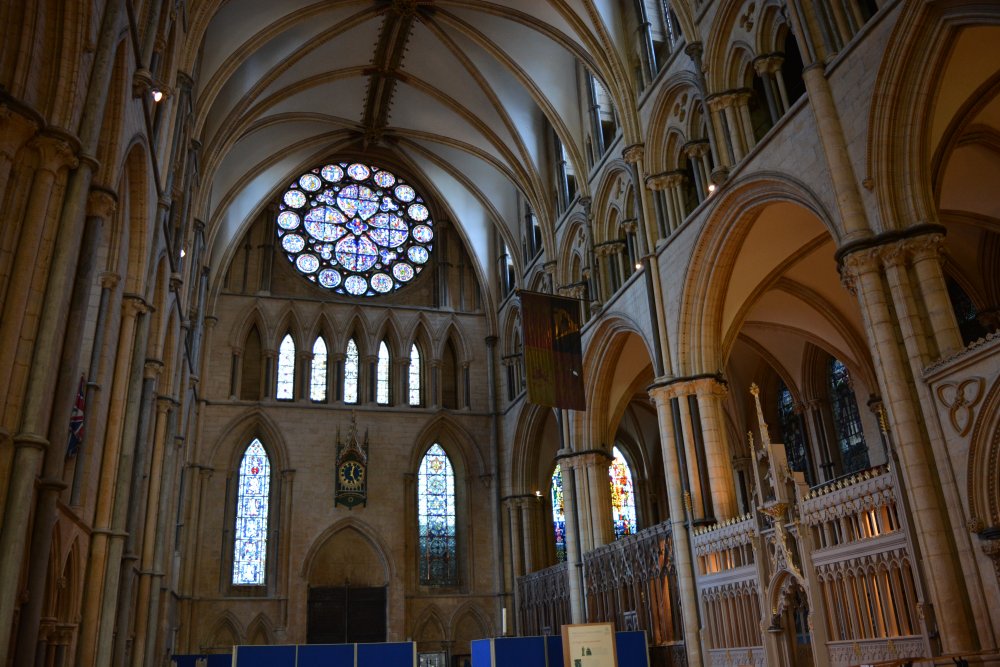
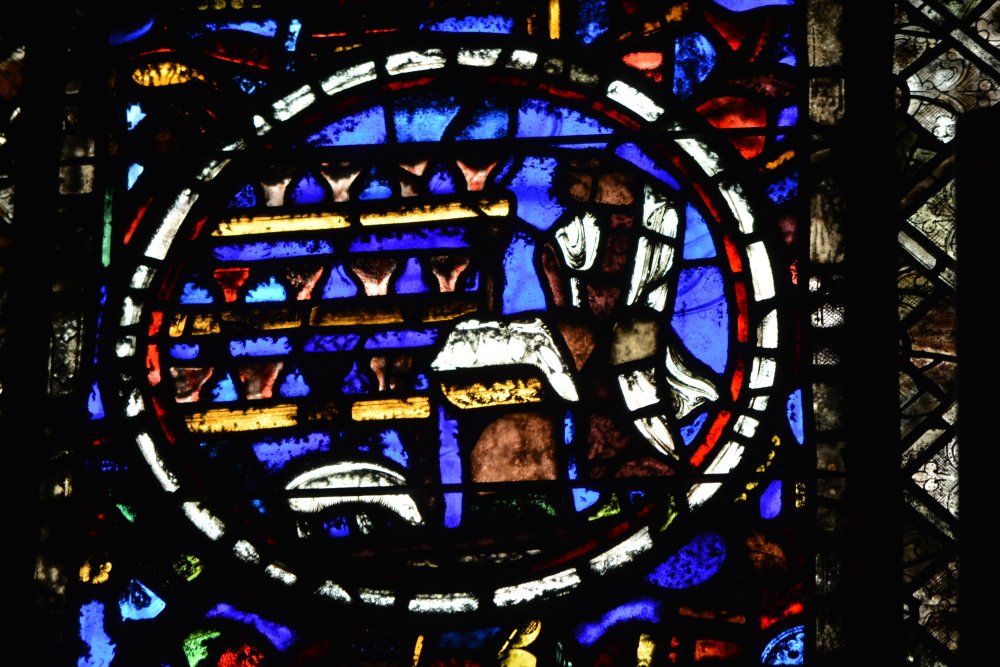
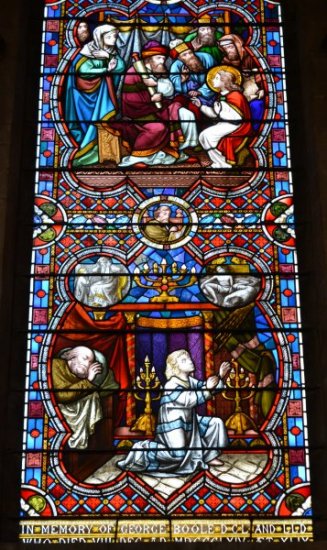
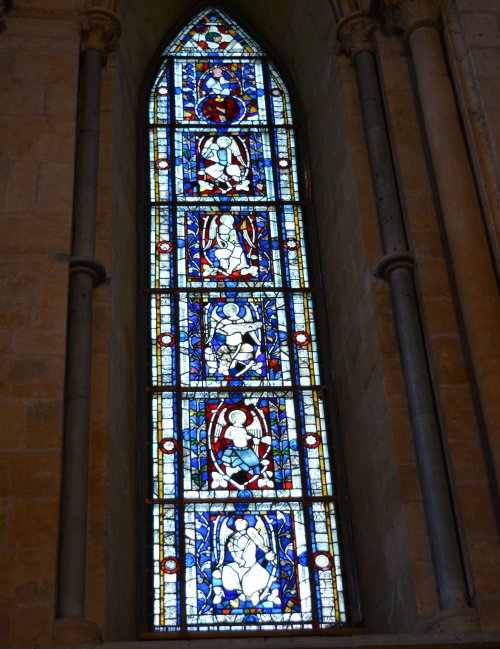 stained glass panels beneath the Rose Window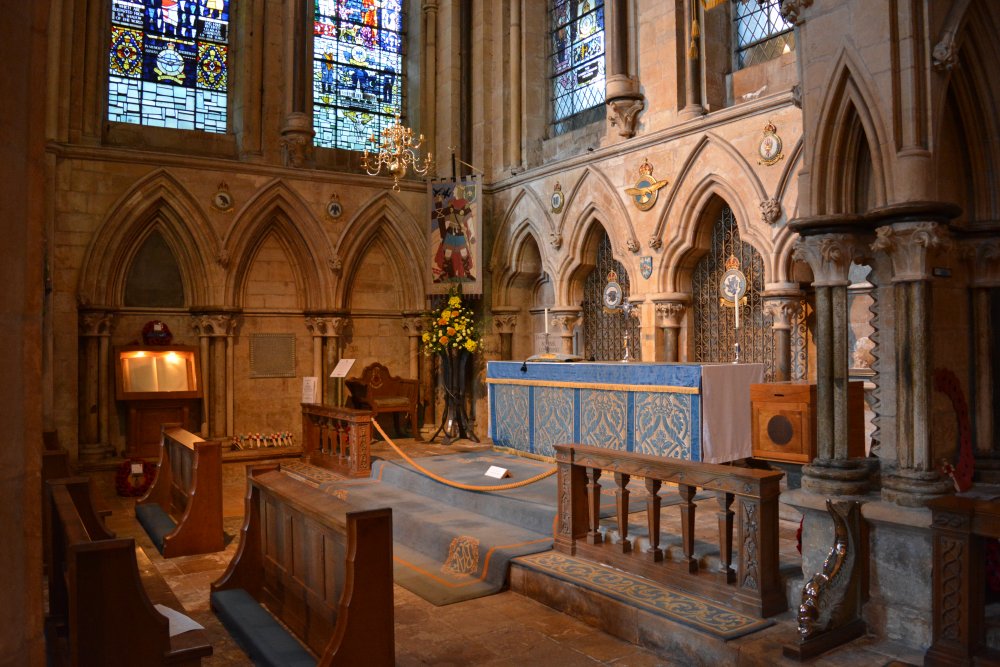









































 Enter place, walk, village, town, city, feature, historic site or
building, museum, anything of interest!
Enter place, walk, village, town, city, feature, historic site or
building, museum, anything of interest!